
Livraison le jour même ou le lendemain

Qualité garantie

Débloquez vos offres de bienvenue: Livraison GRATUITE | Jusqu'à -80 % | 30 jours d'essai gratuits à JoyPlus
Téléchargez l'application
Choosing cat food isn’t just about comparing flavour or packet weight. Between dry kibble, wet food, moist meals and treats, packaging is packed with promises that can sometimes be hard to decipher.
Three common pitfalls cat owners often encounter:
If the product is meant to form the basis of your cat’s daily diet, look for the phrase “complete food for adult cats”. This means the manufacturer intends it to cover daily nutritional requirements, provided you follow the recommended amounts.
On the other hand, cat treats, liquid sticks and lickable purées usually carry the label “complementary food”. They add variety or reward your pet, but their quantity should be limited. Some guides recommend not exceeding 10% of daily food intake with this type of supplement.
Dry cat food for adult cats suits animals that have finished growing, but the portion also depends on weight and physical activity. A cat that lives exclusively indoors doesn’t necessarily have the same needs as a very active one.
For dry cat food for neutered cats, check in particular:
The Ultima reference shown below, for example, has 35% crude protein and 12% fat, with portions suited to cats weighing 2 to 7 kg. These figures let you compare products concretely, without being swayed by slogans printed on the packet.
Wet cat food generally contains a lot of water. In the product sheets we looked at, recipes in pouches or tins show between 79% and 82% moisture, while an Inaba lickable purée contains 86%. Analytical constituents should therefore be compared taking this difference from dry kibble into account.
When it comes to storage, choose the format based on how quickly you use it:
Once opened, wet food should generally be kept in the fridge and consumed within 24 to 48 hours, depending on the instructions on the product.
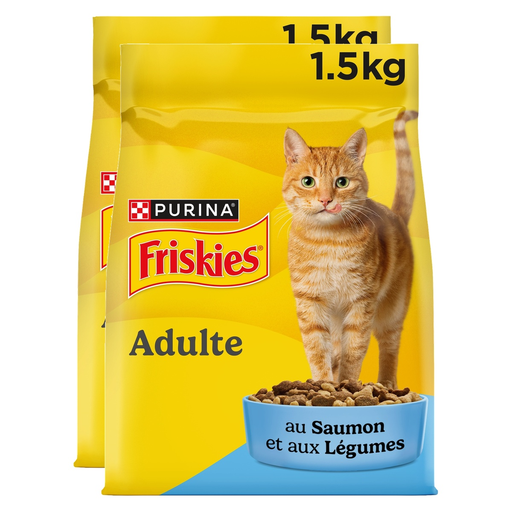
Why this suits this profile: This 3 kg bag is a sensible size for trying a dry cat food recipe without storing too much. The product sheet presents it as a complete food for adult cats, with 30% crude protein and 11% fat.
The complete food status is clearly stated. So there’s no risk of confusing this product with a treat or supplement meant to accompany the main meal. The ingredients also show that salmon makes up 3% of the total.
3 kg format, ready-to-serve dry recipe and stated absence of artificial colours, flavours and preservatives.
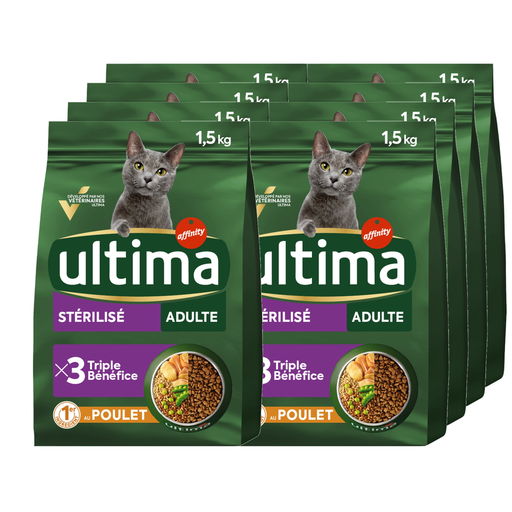
Why this suits this profile: This large format is aimed at households with one or more neutered adult cats who want to avoid reordering too often. The product sheet shows 17% chicken, 35% crude protein and 12% fat.
The feeding guide details the amounts to serve according to the cat’s weight. A useful benchmark to avoid overfeeding, which is often a risk with large bags – as long as you stick to the daily amount.
12 kg bag, suitable for neutered cats and advice on a gradual transition over 7 to 10 days.
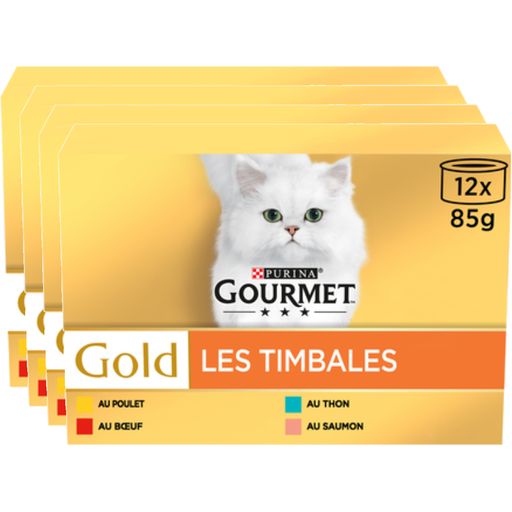
Why this suits this profile: This box contains 48 portions of 85 g, with a soft texture and several recipes designed for adult cats.
Each portion is pre-portioned and the product sheet states it is a complete food for adult cats. You still need to adjust the number of tins to your cat’s weight and activity level.
Large multipack, individual 85 g portions and refrigeration required after opening.
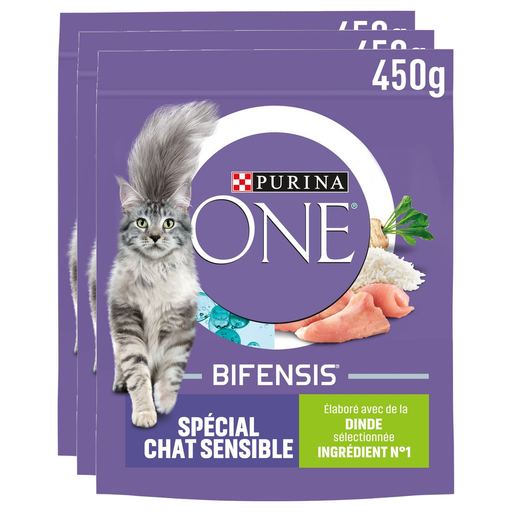
Why this suits this profile: This pack of three bags, totalling 1.35 kg, is aimed at owners who want to try a sensitive cat food without starting with a large quantity.
The product sheet details the ingredients, analytical constituents and a suggested portion of 55 to 65 g for a 4 kg cat. If problems persist, a vet’s advice is still essential.
36% crude protein, 14% fat and resealable packaging after each use.
We’ve put together a comprehensive, real-time updated list of products that meet these strict selection criteria and European safety regulations.
Wet cat food can be served on its own if it’s complete, or combined with dry kibble as long as you adjust the total portion. Serve it at room temperature and don’t leave an open portion in the bowl for several hours.
Chicken, salmon or catnip treats remain supplements. For cat treats, stick to the amounts stated and slightly reduce the main meal if needed. Liquid sticks and products like Inaba Churu are handy for adding variety, but they shouldn’t replace a complete and balanced cat food.
The amount depends on weight, age, activity, neutering status and the type of food. Start by checking the table on the packaging, weigh the kibble and regularly monitor your cat’s body condition. Any change in portion should be made gradually.
Yes, as long as you calculate the total portion. Both products must be complete if they both form part of the main meals. This mix can also help with transitioning to a new recipe, usually over several days.
Store it in a cool, dry place, ideally in an airtight container. Keep the original packaging so you can check the batch number and best-before date. For wet food, put the leftover portion in the fridge and follow the time stated on the product, often between 24 and 48 hours.