
Livraison le jour même ou le lendemain

Qualité garantie

Débloquez vos offres de bienvenue: Livraison GRATUITE | Jusqu'à -80 % | 30 jours d'essai gratuits à JoyPlus
Téléchargez l'application
Choosing a cat food isn’t simply about picking your pet’s favourite flavour. Between promises of easier digestion, “indoor” recipes and bulk packs, some essential information can easily get overlooked. Yet a careful read of the label is all it takes to avoid many disappointing purchases.
A wet food with an appealing name isn’t necessarily designed to replace all meals. Start by checking for the words “complete food”. Conversely, a soup or liquid treat may simply supplement the daily diet.
The Sheba Soup Tuna & Chicken Fillet pouches, for example, are presented as a hydration supplement. They should not replace complete meals, and the amount of dry food should be adjusted when a pouch is served.
The name of a recipe doesn’t always give an accurate idea of how much of the featured ingredient is actually present. In some salmon cat kibble, the salmon may only account for a limited part of the composition. The percentage stated on the packaging is therefore worth a look.
The same goes for chicken cat kibble. Also check the order of ingredients, the crude protein level, the fat content and the fibre.
A 7.5 kg bag can be good value in a multi-cat household, provided you can store it properly. Once opened, the food can gradually lose its aroma and freshness. For a single cat, a 1.4 to 1.5 kg format is often easier to keep and allows you to monitor tolerance more effectively.
For an adult cat, look for an explicit indication such as “from 1 year”. After spaying or neutering, energy requirements can change depending on the animal’s activity level and physical condition. A food for neutered cats should be given following the manufacturer’s recommended amounts, then adjusted according to the cat’s body condition and behaviour.
A cat that goes outside every day doesn’t have the same needs as one that lives mainly indoors. An indoor cat food may contain more fibre, but that doesn’t mean you can skip monitoring the portions.
The analytical constituents provide concrete benchmarks for comparing two recipes. Pay particular attention to the following:
Dry foods contain little water. A bowl of clean, fresh water must therefore always be available. Wet food contributes more to hydration, but it too must carry the words “complete food” if it forms the basis of meals.
When changing brand or recipe, introduce the new food gradually over around seven days, if the instructions recommend it. This transition makes it easier to spot any digestive reaction or loss of appetite.
Store kibble in a cool, dry place, reseal the bag carefully after each use and respect the best-before date. After opening, avoid tipping the food into a container that isn’t perfectly clean.
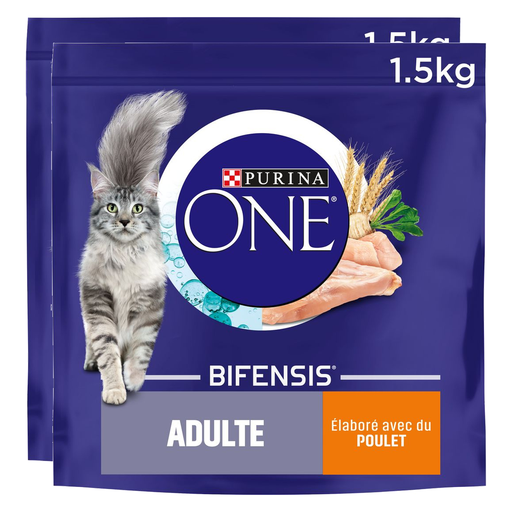
Why this choice suits this profile: The 3 kg split across two bags makes a practical format for a first purchase of adult cat kibble, easier to store than a very large bag.
The listing states that it is a complete food for adult cats from 1 year old and details the daily feeding amounts.
34% crude protein, 14% fat and two 1.5 kg bags.
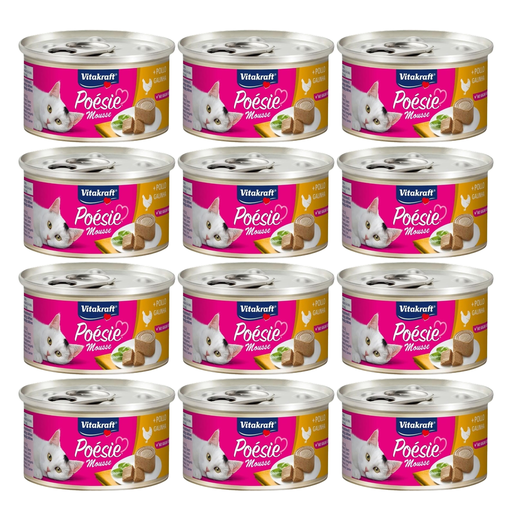
Why this choice suits this profile: Its mousse texture and 85 g portions may suit cats that prefer wet cat food.
The listing clearly states that it is a complete food for adult cats, not a simple treat.
Light mousse, no added sugar or cereals, with 78% moisture.
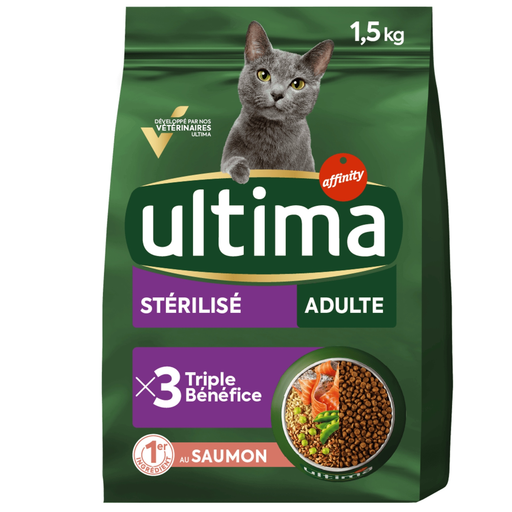
Why this choice suits this profile: This recipe is designed for neutered adult cats and provides a feeding table based on weight.
The label clearly distinguishes its use for neutered cats and recommends a gradual transition of seven to ten days.
35% crude protein, 12% fat and 4% fibre.
We’ve put together a comprehensive list, updated in real time, of products that meet these demanding selection criteria and European safety regulations.
A flea treatment for cats shouldn’t be chosen based solely on the weight stated in the title. The Advantage pipettes are available here in two versions: for cats under 4 kg and for those 4 kg or over. According to the information provided, they are intended for cats from 8 weeks of age.
Follow the instructions carefully, apply the product to healthy skin and avoid contact with the treated area until it is completely dry. Imidacloprid also poses a risk to aquatic organisms: during the period stated on the label, do not let your animal access waterways. If in doubt, ask a vet or pharmacist for advice.
Kibble is easy to portion and simple to store. Wet food provides more water and its texture can be more appealing to some cats. The two can be combined, provided each food is suitable and the total amount remains consistent with the animal’s weight and activity level.
It depends on the packaging and the manufacturer’s recommendations. Reseal the bag after each use, store it in a dry place and regularly check the smell, appearance and best-before date. Choosing a size that matches your household’s actual consumption also helps reduce waste.
It’s best to plan a gradual transition over about a week. Each day, mix a slightly larger amount of the new food with the old one, while monitoring your cat’s appetite and digestion. If your animal has a particular health condition, ask a vet for advice before changing its diet.