
Livraison le jour même ou le lendemain

Qualité garantie

Débloquez vos offres de bienvenue: Livraison GRATUITE | Jusqu'à -80 % | 30 jours d'essai gratuits à JoyPlus
Téléchargez l'application
Choosing a cat food isn't just about comparing flavours and offers. Between wet food, dry kibble, individual pouches and multipacks, the ingredients, storage requirements and nutritional profile can dramatically change how suitable a product really is.
A food that looks good on paper can also be completely wrong for your cat's age, weight or lifestyle. Here's what to check before you add it to your basket.
The term "complete food" means the product is designed to form the basis of your cat's diet, as per the stated use. In contrast, a treat or complementary food should never replace daily meals.
This is especially true of liquid cat snacks, even when they contain taurine or have a particularly tempting texture. They should remain occasional and be counted as part of the overall daily allowance.
A recipe described as "with chicken" or "with salmon" must state the proportion of the featured ingredient. In the products shown here, several recipes contain 4% of the stated ingredient. This proportion corresponds to the regulatory threshold typically associated with the "with X" formulation.
That obviously doesn't mean the product contains only that meat or fish. Always take the time to check the full ingredients list, which is ordered by descending weight.
A 12 kg bag or a multipack of 44 pouches can lower the price per portion, but only if your cat actually likes the recipe and you can store the product properly. Once opened, the food must be kept dry, away from heat and moisture. For wet food, leftovers should be placed in the fridge and used quickly, following the instructions on the packaging.
Kitten food doesn't meet the same needs as food for an adult cat. During growth, a kitten needs a recipe specifically formulated and declared for that life stage. Similarly, kibble for neutered cats is designed for adult neutered or spayed cats, with feeding guidelines tailored accordingly.
A cat that lives exclusively indoors doesn't necessarily burn as much energy as a very active animal. The amount you serve should therefore take into account your cat's weight, activity level and body condition, rather than just the marketing claims.
Check that the packaging carries a statement such as "complete food for adult cats" or "complete food for kittens". Then look at the analytical constituents: crude protein, crude fat, fibre, ash and moisture.
These values can't be compared directly without accounting for the moisture content. Wet food contains a lot of water, while kibble is much more concentrated. The simplest approach is to start with the manufacturer's recommended portions, then adjust gradually based on your cat's weight and activity.
Wet cat food comes in different forms: mousse, chunks in sauce or pâté in a pouch. Portions of 50 g or 85 g minimise leftovers and make it easy to serve several meals throughout the day.
Kibble is simpler to store, but the bag must be carefully resealed after each use. If you're changing recipes, plan a gradual transition over about seven days. This precaution helps limit digestive upsets caused by a sudden change.
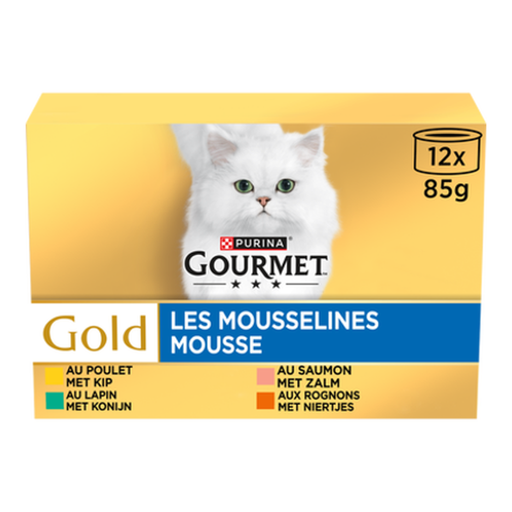
Why this suits this profile: The 12-can, 85 g format lets you try several pâté recipes without committing to a huge stock straight away.
It's a complete food for adult cats, not just a treat. The different varieties and featured ingredients are clearly stated.
An easy-to-eat mousse, individual portions and several recipes to vary mealtimes.
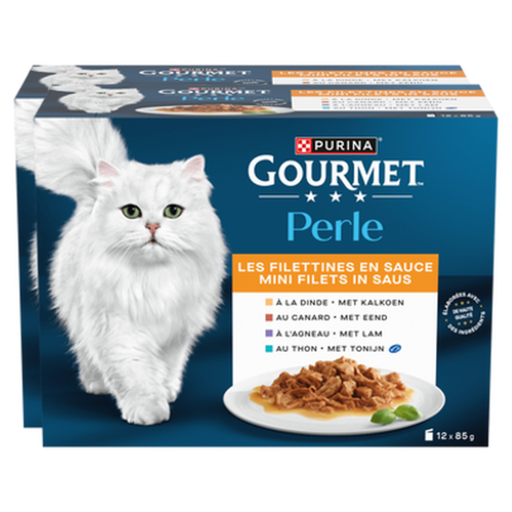
Why this suits this profile: This multipack of 24 pouches is ideal for households that want a refined presentation and several flavour combinations.
Individual pouches mean you don't have to keep an open tin for several days, as long as you follow the refrigeration instructions.
24 portions of 85 g, four recipes and a declared complete food for adult cats.
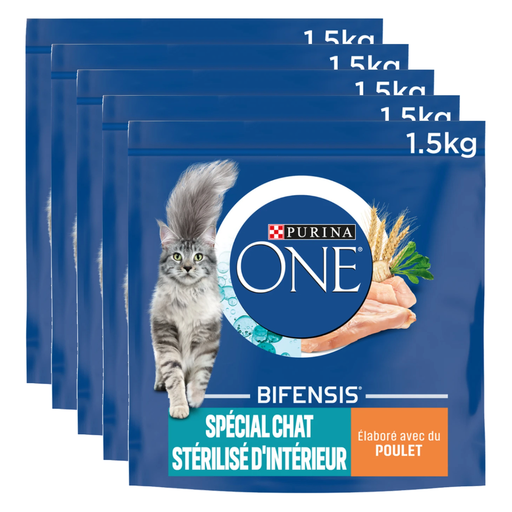
Why this suits this profile: This 7.5 kg pack is suitable for households with one or more adult neutered cats that live mainly indoors.
The product page clearly targets "adult neutered or spayed cats living mainly indoors", rather than presenting the recipe as universal.
An economical multi-pack format, 37% crude protein and 5.5% crude fibre according to the stated data.
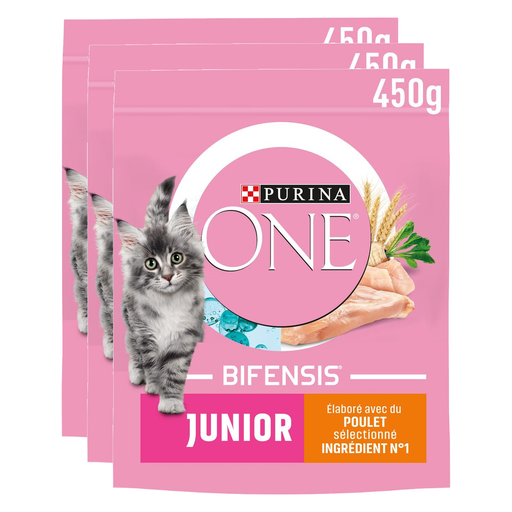
Why this suits this profile: This recipe is stated as suitable for kittens after weaning and up to 12 months, as well as for pregnant or nursing queens.
The target age is clearly stated, which avoids accidentally choosing a food meant for adult cats.
41% crude protein, 20% crude fat and a 1.35 kg format that's ideal for the first few weeks of use.
We've put together a comprehensive, real-time updated selection of products that meet these strict criteria as well as European safety regulations.
Yes, as long as both products are suitable for your cat's age and the total daily amount remains consistent. If you add wet food, reduce the amount of kibble based on the feeding guidelines for each product.
Put the leftovers in the fridge and follow the storage time stated on the packaging. Many products recommend using the wet food within 24 to 48 hours. Serve it at room temperature and throw away any portion where the packaging is swollen or damaged.
Start with a recipe declared for adult neutered cats, then adjust the amount based on your cat's activity, weight and body condition. If your cat has a health problem or a significant change in weight, ask your vet for advice before making a long-term change to their diet.