
Livraison le jour même ou le lendemain

Qualité garantie

Débloquez vos offres de bienvenue: Livraison GRATUITE | Jusqu'à -80 % | 30 jours d'essai gratuits à JoyPlus
Téléchargez l'application
Choosing a cat food isn’t just about picking your pet’s favourite flavour. Between promises of easier digestion, recipes for neutered cats and larger, more economical packs, some essential information can easily slip under the radar. Here are the criteria to check before buying dry cat food, wet cat food or treats that suit your situation.
A product marketed as a treat, paste or tasty morsel isn’t necessarily intended to replace the main meal. Start by checking the legal description on the packaging:
INABA treats and VITAKRAFT creamy paste, for example, are complementary foods. They can enhance meals, but their quantity should be limited. INABA specifically recommends not exceeding 10% of the daily food intake.
The flavour highlighted on the packet doesn’t always tell you what proportion of the ingredient is actually in the recipe. The mention ‘with chicken’ can refer to dry food that contains only 4% chicken in part of the recipe, as indicated in the composition of certain WHISKAS references. Conversely, PURINA ONE Sterilised dry food contains 16% beef offal, while MJAMJAM beef wet food states 67% beef in its composition.
So take the time to read the ingredient list and the quantitative declaration when available, rather than relying solely on the picture printed on the packet.
A 7.5 kg or 12 kg bag can lower the price per kilogram, but it’s only worthwhile if your cat finishes it before the dry food loses its freshness. After opening, reseal the bag carefully or transfer the contents into an airtight container. Store it in a cool, dry place, away from direct sunlight.
For wet food, individual portions help to limit waste. An opened tin or tray should generally be kept in the fridge and consumed within the time stated on the packaging.
For adult cat food, choose a formula intended for an animal at least 1 year old, unless the manufacturer states otherwise. A neutered cat doesn’t necessarily have the same energy needs as a very active animal. Recipes designed for neutered cats often have a controlled ration and a precise fat content.
A cat that mainly lives indoors can also benefit from indoor cat dry food. The fibre content is then worth a look on the nutritional panel. In any case, the daily amount should be adjusted according to the cat’s weight, activity and body condition, rather than being served freely.
The analytical composition allows you to compare products on a concrete basis. Look in particular at:
PURINA ONE Bifensis Sterilised, for example, has 37% protein and 13% fat, while MJAMJAM chicken wet food has 10.2% protein, 5% fat and 80% moisture. These values cannot be compared directly without taking into account the difference between dry and wet food.
Even a complete and balanced cat food may not suit every animal. When changing dry food, gradually mix the old and new recipes over about 7 days, or follow the instructions on the packaging.
For sensitive cat food or a diet designed to aid digestion, choose a recipe with a clear composition and avoid changing treats or wet food at the same time. If problems persist, ask your vet for advice before permanently changing your cat’s diet.
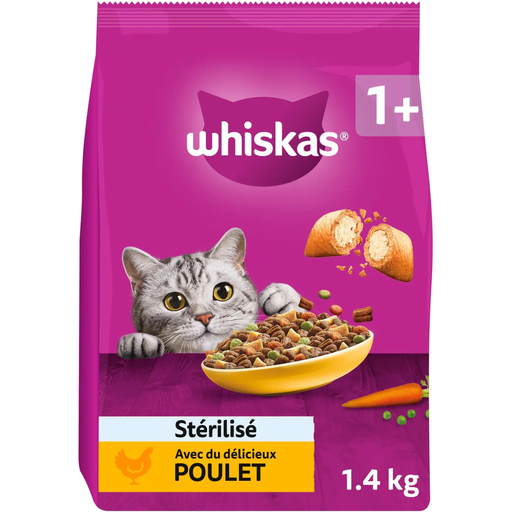
Why this choice suits this profile: With its 1.4 kg bag, this recipe lets you try an adult neutered cat food without committing a large budget or cluttering up your cupboards.
The product page clearly states it is a complete food for neutered cats aged 1 year and over, with detailed rations based on weight.
The recipe has 30% protein, 11.5% fat and 4.1% fibre.
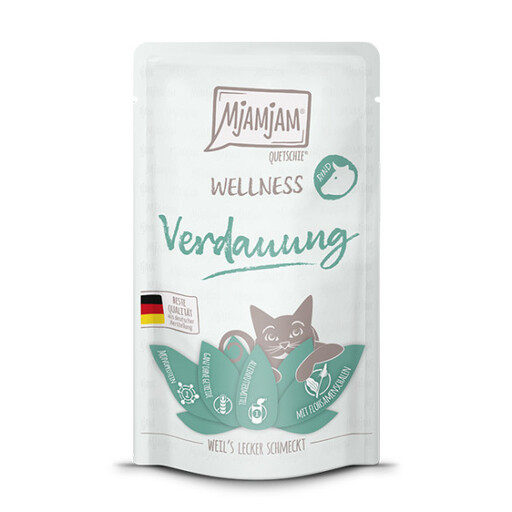
Why this choice suits this profile: This wet food is aimed at owners looking for a beef recipe with a high proportion of animal-derived ingredients.
The composition clearly breaks down 67% beef, 29.8% broth and 76% moisture, making the recipe easy to understand.
It is a complete food for adult cats, packed in 125 g portions. Once opened, the wet food can be stored in the fridge for a maximum of 24 hours.
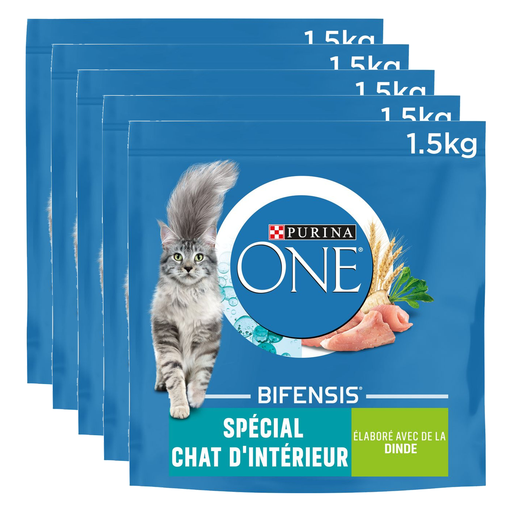
Why this choice suits this profile: This large pack is ideal for households with an adult indoor cat that regularly eats dry food.
The recipe is explicitly designed for cats that mainly live indoors and provides recommendations to adjust according to their activity level.
The composition shows 17% turkey, 36% protein, 13% fat and 5.5% crude fibre.
We’ve put together a complete, real-time updated selection of products that meet these demanding criteria and European food safety regulations.
The ration depends on weight, age, neutering, activity level and the energy density of the food. Start by following the table on the packaging, then regularly monitor your cat’s shape and weight. Treats should be deducted from the total daily ration.
Yes, you can combine dry cat food and wet food in gravy, as long as you reduce the quantities of each to avoid excess calories. Treat them as two parts of the same daily ration and always leave fresh water available.
Make a gradual transition over about a week. Start by mixing a small amount of the new recipe with the old one, then gradually increase its proportion each day. If your cat has an unusual reaction or if digestive problems persist, stop the transition and ask your vet for advice.