
Livraison le jour même ou le lendemain

Qualité garantie

Débloquez vos offres de bienvenue: Livraison GRATUITE | Jusqu'à -80 % | 30 jours d'essai gratuits à JoyPlus
Téléchargez l'application
Choosing a cat food isn’t just about picking your pet’s favourite flavour. Between wet food, kibble, fresh pouches and cat treats, packaging often highlights taste, texture or a “premium” image, while the most useful information is hidden in the small print.
To avoid disappointing purchases, three common pitfalls keep cropping up:
To feed an adult cat, look for the phrase “complete food” if the product is meant to form the basis of its meals. The Sheba Délices du Jour, Gourmet Perle, GOURMET Gold, Purina One and Felix recipes shown below are listed as complete foods for adult cats, according to the product sheets.
On the other hand, cat treats and some fillets in sauce are complementary foods. Catisfactions Chicken, for example, are designed as a reward, not a meal. The product sheet recommends up to 12 pieces per day for an adult cat, reducing the main meal to avoid excessive calorie intake.
For a kitten, don’t automatically choose a product intended for adults. Several of the wet food products featured here aren’t suitable for kittens. Check the age range on the packaging and look for the “complete food” label that’s appropriate for growth.
Wet cat food in sauce usually contains a lot of water. The products mentioned often have a moisture content between 79% and 82%. This texture can appeal to cats that love sauce, but the amount served must always be adjusted to the animal’s weight, age, activity level and body condition.
Also look at:
Individual portions cut down on waste and make serving easier. Fresh cat food pouches of 50 g, like Sheba Délices du Jour, can suit households that prefer to serve smaller amounts. 85 g tins or larger packs will be more suitable if you already know your cat’s preferences.
Bulk packs of cat food can reduce the price per portion, but you still need a cool, dry storage space. A multi-pack of 24 or 48 portions can be worthwhile if your cat enjoys several recipes and eats wet food regularly.
Once opened, keep the remainder in the fridge and follow the manufacturer’s recommended time frame. According to the product sheets, some wet foods should be eaten within 24 to 48 hours, while certain complementary foods need to be used within two days. Serve the food at room temperature and always leave fresh water available.
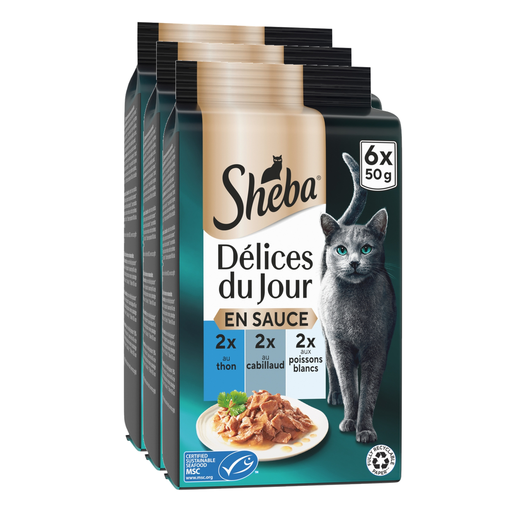
Why this choice suits this profile: The 50 g portions let you try several flavours and limit leftovers, without starting with a very large pack.
The product sheet lists it as a complete food for adult cats, not just a topping or a treat.
18 pouches of 50 g, three poultry-based recipes and a feeding guide based on the cat’s weight.
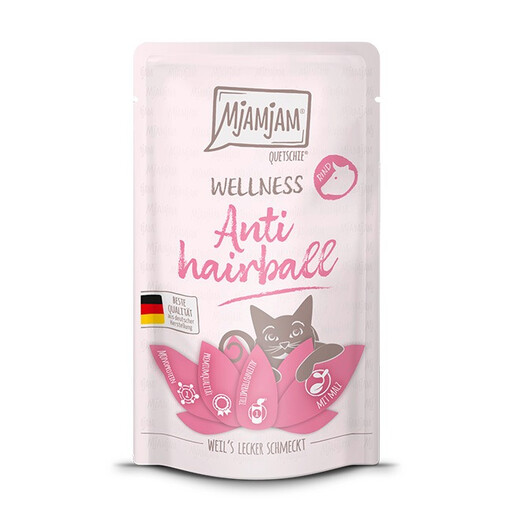
Why this choice suits this profile: This 125 g portion offers a beef recipe with an ingredients list showing 67% beef meat.
The detailed ingredients list lets you verify the claimed ingredients, rather than relying solely on the product’s appearance.
Complete food for adult cats, described as a single-protein recipe with beef, broth, malt and salmon oil.
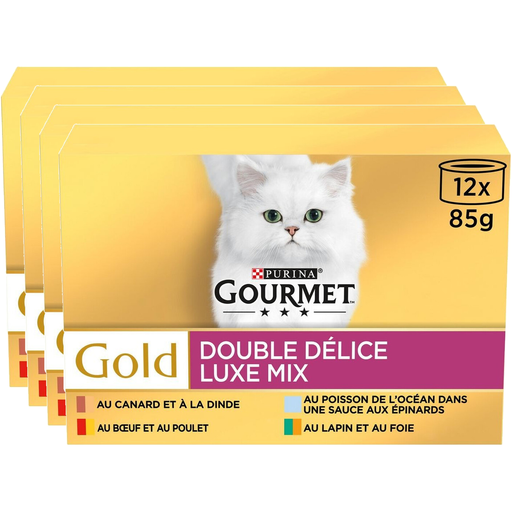
Why this choice suits this profile: The 48-portion format suits households that serve wet food every day and want to build up a stock.
The complete food status for adult cats is clearly stated, while the age indication excludes kittens.
48 portions of 85 g, four flavour combinations and a texture that mixes chunks and fine strips in sauce.
We’ve put together a comprehensive, real-time list of products that fully meet these strict selection criteria and European safety regulations.
Kibble can complement or replace wet food, depending on the product sheet instructions. If you combine the two, you’ll need to recalculate the quantities. Treats like Catisfactions or salmon bites should remain occasional and complementary. They can accompany a play session or serve as a reward, but shouldn’t become the basis of the diet.
For variety, Sheba, Gourmet, Felix and Purina One offer flavour assortments. However, compare the nutritional status, target age and total quantity, rather than just looking at the brand name.
It depends on the cat’s weight, activity level, age and the recipe’s composition. As a guide, the product sheets for some items recommend around 2 to 3 portions of 85 g per day for a 4 kg cat, while others suggest 5 to 6 pouches of 50 g. The recommendation printed on the packaging is the one to follow.
Yes, as long as both products are suitable for the cat’s age and the total meal is adjusted. Some product sheets explicitly allow a combination of pouches and dry food. Avoid simply adding two full portions without reducing them, as the daily intake could then increase unnecessarily.
Place it in the fridge and generally use it within 24 to 48 hours, according to the manufacturer’s instructions. To preserve its texture and smell, serve it at room temperature and check the condition of the packaging before giving it to your cat.