
Livraison le jour même ou le lendemain

Qualité garantie

Débloquez vos offres de bienvenue: Livraison GRATUITE | Jusqu'à -80 % | 30 jours d'essai gratuits à JoyPlus
Téléchargez l'application
Choosing the right cat food can quickly become overwhelming. Between marketing promises and tempting packaging, the pet food aisle can leave anyone feeling perplexed. As a product expert at Joybuy, my mission is to help you decode the labels and make the best choice for your companion, avoiding the pitfalls that are tough on both your wallet and their health.
Navigating the jungle of feline nutrition can sometimes feel like an uphill battle. Here are the most common mistakes and our advice on how to avoid falling for them.
Colourful packaging with beautiful photos of meat chunks is designed to appeal to you, the owner. Your cat, however, doesn't read the label. Behind these "gourmet" products, you'll often find a vague composition where "meats and animal by-products" top the list, without any specifics on their nature or quality. As for the actual percentage of the star meat (chicken, salmon, etc.), it can be minuscule.
A grain-free cat food is often presented as the gold standard. While it can be a good option for cats with sensitive digestion, it's not an absolute guarantee of quality. Some manufacturers simply replace grains with a heavy dose of starch (from potatoes, peas, etc.), which offers little nutritional value. What truly matters is the quality and quantity of animal proteins.
It's a classic mistake: serving your cat treats or a p?té labelled "complementary food" as if it were their main meal. However, a complementary food, such as a liquid cat snack, is not formulated to cover all their nutritional needs. In the long run, this diet can lead to significant deficiencies.
To stop making mistakes, let's get back to basics: the facts, and nothing but the facts, printed on the label.
The golden rule is simple: ingredients are always listed in descending order by weight. A quality food must therefore list a clear and specific source of animal protein at the top.
The choice between wet food and kibble depends on your cat's preferences, as well as your daily routine.
Whether crunchy or liquid, treats are complementary foods, not meals. They are perfect for training, play, or simply strengthening your bond. Brands like Whiskas or Vitakraft offer many options, but these should remain an occasional pleasure so as not to unbalance their diet.
Here are a few options that meet different profiles and needs, based on the criteria we've just discussed.
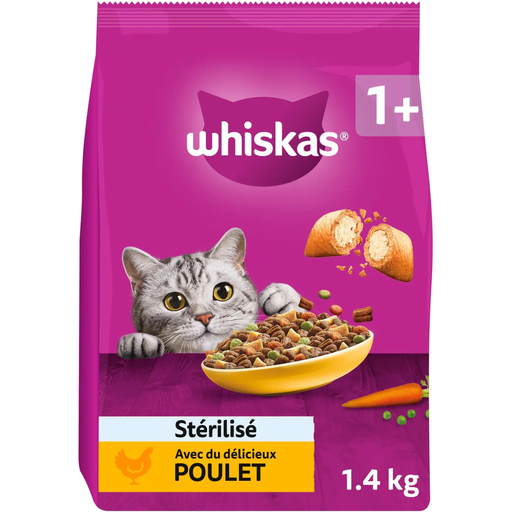
Why it's a match: This 1.4 kg bag offers excellent value for money for daily feeding. The recipe is specifically designed for sterilised adult cats—a very common profile—by helping with weight management and maintaining a healthy urinary system.
It is clearly labelled as a complete food, which removes any ambiguity. The formula for sterilised cats meets a specific need with controlled calorie intake, without getting lost in vague marketing promises.
A dual texture (kibbles with a soft filling and a crunchy exterior) that stimulates appetite, and a composition enriched with minerals for urinary health.
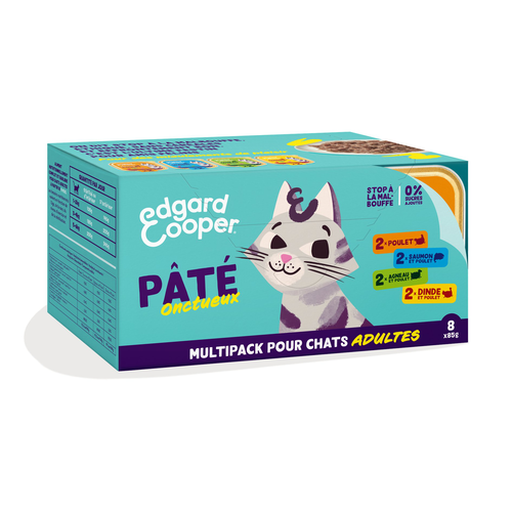
Why it's a match: The perfect choice for owners who scrutinise labels. This variety pack offers recipes rich in fresh meat, grain-free, with a short and understandable ingredient list.
It avoids the superficial "grain-free" trap by focusing on a high fresh meat content (up to 59% in the chicken recipe) rather than cheap vegetable substitutes. The composition is completely transparent.
A recipe rich in high-quality proteins, with no meat meal, and slow-cooked to preserve nutrients. The variety pack is ideal for adding diversity and satisfying the most discerning palates.
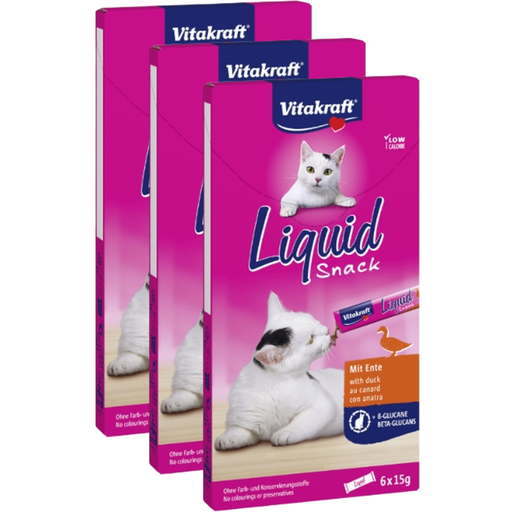
Why it's a match: This liquid cat snack is the perfect bonding treat. You can give it directly from the sachet, on your finger, or as a topper on kibble to entice a picky eater.
Its status as a complementary food is clearly indicated. Its low-calorie formula allows you to treat your cat without the risk of weight gain, provided it's given sparingly.
A liquid texture that cats love and an individual sachet format for maximum freshness. The recipe is enriched with beta-glucans to help support the immune system.
For the pickiest cats or simply to vary the menu, discover our complete selection of products that meet our quality criteria.
The amount depends on many factors: their weight, age, activity level (indoor or outdoor cat), and whether they are sterilised. Follow the recommendations on the packaging as a good starting point. Then, adjust the portion if you notice any weight gain or loss. If in doubt, always ask your veterinarian for advice.
To avoid digestive issues, a food transition should always be done gradually. Over a period of 7 to 10 days, mix a growing portion of the new food with the old one.
Yes, and it's even highly recommended. Cats are descendants of desert animals and have a naturally low thirst drive. Wet cat food contains about 80% water, which is a major contributor to their daily hydration and helps maintain the health of their kidneys and urinary system.