
Livraison le jour même ou le lendemain

Qualité garantie

Débloquez vos offres de bienvenue: Livraison GRATUITE | Jusqu'à -80 % | 30 jours d'essai gratuits à JoyPlus
Téléchargez l'application
Between the promises of “high-meat” recipes, colourful packaging and bulk-buy deals, choosing cat and kitten food can quickly become a minefield. Your cat’s age, whether they’ve been neutered, their activity level and the product’s purpose — everyday meal or simple treat — should carry far more weight in your decision than any marketing claims.
A treat may be tempting and handy for rewarding your cat, but it’s no substitute for a balanced meal. Cat treats are generally complementary foods, so they should be given in moderation and, if necessary, slightly deducted from the daily portion.
For example, the Catisfactions chicken treats recommend up to 12 treats per day for an adult cat. The salmon version suggests up to 20 units for an adult and up to 6 for a kitten aged at least 2 months. However, these amounts should be adjusted according to your cat’s weight, activity level and metabolism.
A growing kitten has very different needs to a neutered adult. Kitten food must clearly be labelled as a complete kitten food and state the recommended feeding period. Conversely, a recipe designed for neutered cats is not suitable for kittens or for pregnant or nursing queens.
Products such as Purina One kitten, Farmina N&D kitten or other kitten kibbles should therefore be compared based on the target age, their ingredients and their feeding guide.
A “with chicken” or “with salmon” claim doesn’t necessarily mean that ingredient makes up the bulk of the recipe. Always check the ingredients list and the quantitative declaration, where the percentage is stated. In the products featured here, chicken is listed at 4% in certain Whiskas and Catisfactions references, compared with 17% in the Purina One kitten recipe.
For Whiskas kibble intended for neutered cats, a gradual transition over 7 to 10 days is recommended. Slowly mix the old food with the new to avoid a sudden change.
The ingredients list is presented in descending order by weight. Pay particular attention to:
Kibble is convenient to portion and store, but it should always be accompanied by fresh, clean water. The amount of water your cat drinks can vary from one animal to another.
A large bag may bring the price per kilogram down, but it’s only worthwhile if your cat will happily eat the recipe long-term. After opening, seal the bag carefully and store it in a cool, dry place. For some treats, it’s recommended to use them within four weeks of opening.
Also compare the daily feeding guide. For Whiskas intended for neutered cats, recommendations range from 30 to 45 g per day for a cat weighing 2 to 3 kg, up to 65 to 75 g for an animal weighing between 5 and 6 kg. The actual portion should be adjusted based on your cat’s body condition and activity level.
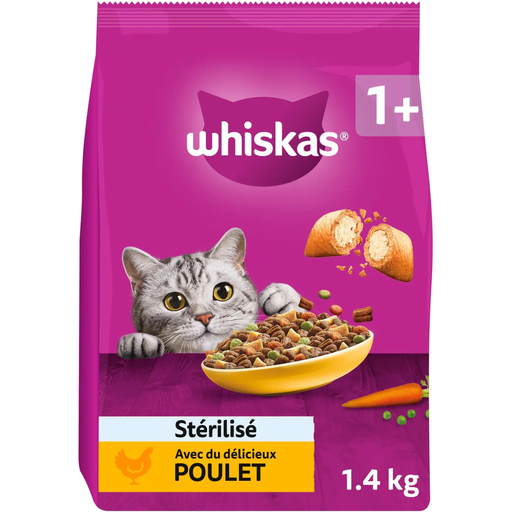
Why this suits this profile: This 1.4 kg size is ideal for a first order and lets you check that your neutered adult cat likes a chicken recipe.
The target age and neutering status are clearly stated. The feeding guide helps you avoid overfilling the bowl.
A complete dry food with 30% crude protein and 11.5% fat, in an easy-to-store format.
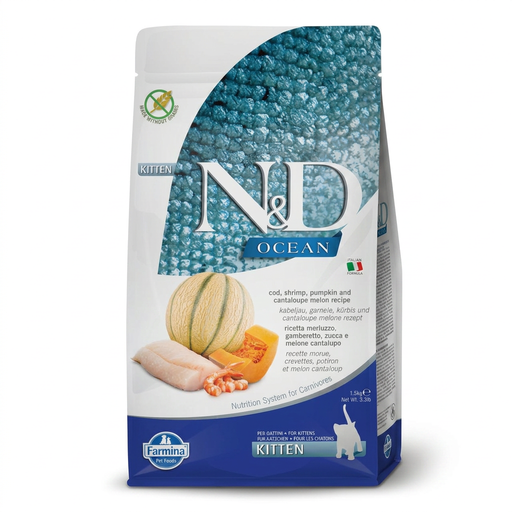
Why this suits this profile: The 1.5 kg size lets you choose a cod-based kitten recipe without committing to a particularly bulky bag.
The “Kitten” label draws attention to the target age. Still, check the full label and feeding guide before buying.
A cod-based recipe, a mid-size format and other variations also available in 300 g and 5 kg depending on the reference.
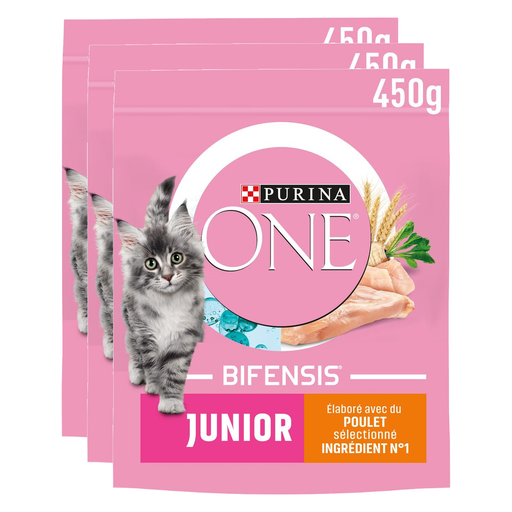
Why this suits this profile: This recipe is designed for kittens from weaning up to 12 months, as well as pregnant or nursing queens, with detailed portions for different growth stages.
The food is labelled as complete for kittens and its ingredients list mentions 17% chicken, rather than relying solely on the packaging image.
41% crude protein, 20% fat and declared presence of DHA, taurine and omega fatty acids.
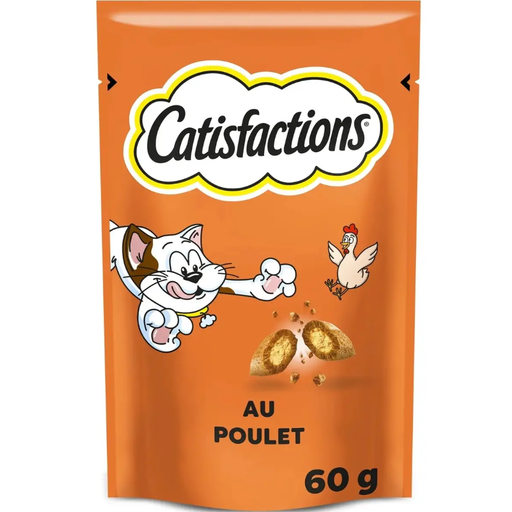
Why this suits this profile: This small pouch lets you try chicken cat treats during playtime or for rewards, without committing to a larger pack straight away.
The product page clearly states it is a complementary food, not a complete meal, with a daily limit for adults.
A crunchy texture with a soft centre, 28% crude protein and no added artificial colourings or preservatives.
We’ve put together a comprehensive, real-time updated list of products that fully meet these strict selection criteria as well as European safety regulations.
It’s best to choose a recipe specifically formulated for growth. Kitten kibble usually states a target age range and a suitable feeding guide. A reference for neutered adults, such as Whiskas neutered cat, is not intended for kittens.
The shelf life depends on the label and storage conditions. Seal the bag after every use, keep it in a cool, dry place, and monitor the product’s smell, appearance and palatability. For the treats featured here, it’s recommended to use them within four weeks of opening.
No. Treats are complementary foods. They should remain a small part of the daily ration and cannot replace a complete kitten or adult cat food. Calculate their quantity alongside the main meals to avoid overfeeding.