
Livraison le jour même ou le lendemain

Qualité garantie

Débloquez vos offres de bienvenue: Livraison GRATUITE | Jusqu'à -80 % | 30 jours d'essai gratuits à JoyPlus
Téléchargez l'application
An interactive cat toy can help an indoor cat burn off energy, stimulate its hunting instincts and enjoy quality time with you. But some purchases can quickly turn out to be disappointing: the toy becomes annoying, a small part comes loose or your cat loses interest after just a few days.
To avoid any nasty surprises, look beyond the colour, marketing claims and slickly edited videos. The right choice depends above all on your cat’s personality, the space you have available and how much time you can spend supervising play.
An automatic cat toy that rolls or wriggles non-stop will often catch your cat’s attention at first. But the same movement soon becomes predictable. Models that can change direction, respond to touch or offer several play modes are generally better at keeping your cat curious.
That said, not all cats react in the same way. An inquisitive kitten will often enjoy moving toys, while a more laid-back cat may prefer a cat ball, a catnip toy or an activity they can paw at.
Ribbons, strings, feathers, bells and detachable parts should be checked regularly. A cat chew toy is not necessarily designed to be swallowed, so it’s important to distinguish between chewing and eating.
If the fabric tears, a seam comes loose or a battery becomes accessible, stop using the toy immediately. Extra care is needed with kittens and in homes with more than one pet.
A noisy toy can quickly become a nuisance in a flat, especially at night. A cat tree or exercise wheel also needs plenty of space and a completely stable set-up. Before you order, measure the available space and check the recommended weight or maximum size for your pet.
If you’re looking at an electronic toy, compare the different options:
Sleep mode can also make a difference. Some models stop after a few minutes, then start again when they detect interaction. This reduces noise and stops the toy from constantly demanding your cat’s attention.
Look for product descriptions that clearly state the materials used, such as felt, corduroy, plush, PP plastic, sisal or corrugated cardboard. The material alone won’t guarantee how long the toy will last, but it can help you plan for its care and use.
A catnip toy or chew toy should be kept clean and dry. For toys containing catnip or silver vine, follow the manufacturer’s storage instructions. Some accessories can be cleaned with a slightly damp cloth, while others must never be submerged.
For a cat tree, scratching post or exercise wheel, check:
A cat tunnel should stay open enough and be well ventilated. In a small home, a foldable model is often easier to put away than a rigid structure.
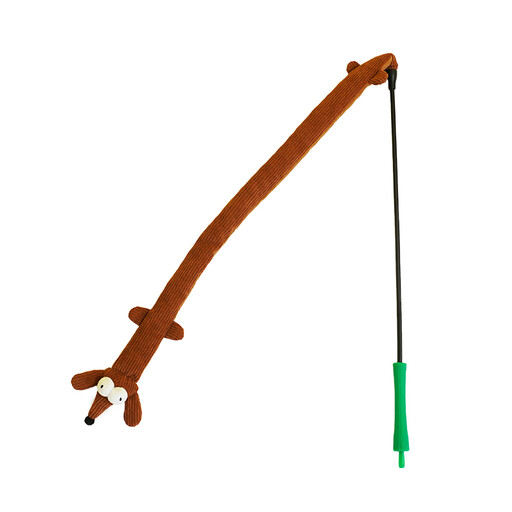
Why this is a good fit: This teaser wand makes it easy to start playing together, with no motor or charging required. It’s suitable for short play sessions in a flat, and lets you control the pace and direction.
Play doesn’t rely on repetitive automatic movement. The flexible wand lets you vary the direction and speed, while the crinkle paper adds an auditory stimulus.
An accessory measuring around 40 cm, with a felt and corduroy attachment. Put it away out of reach after play and check it before each use.
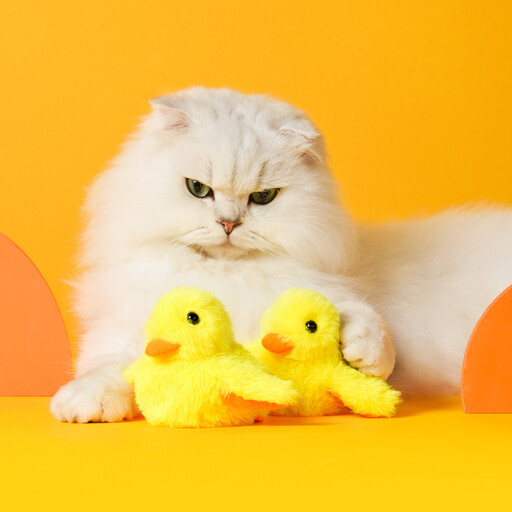
Why this is a good fit: This USB-C rechargeable model is for anyone looking for an animated, sound-making electronic toy without disposable batteries.
Moving wings and duck sounds provide a variety of stimuli. However, it should only be used indoors, and the charging cable must be kept out of reach.
Built-in battery rechargeable via USB-C, a movement motor and a catnip compartment. Your cat must be supervised during play.
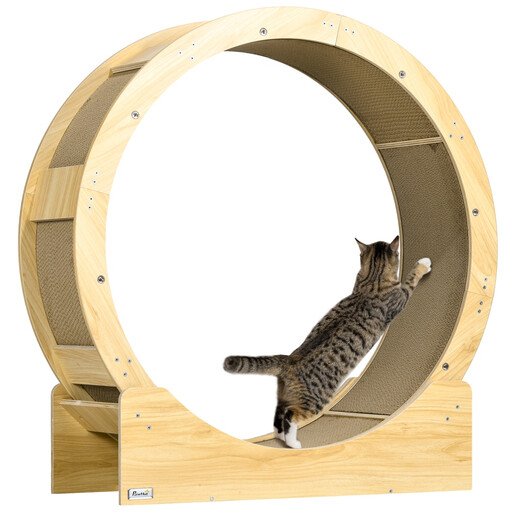
Why this is a good fit: This wheel is designed for particularly active cats and households with a room spacious enough for a 91 × 94 × 33,5 cm structure.
The product details specify that the wheel is suitable for cats weighing less than 5 kg. This is useful guidance to help you avoid buying a wheel that isn’t right for your cat’s build.
Advertised as having silent rotation, a safety brake and a removable scratching mat. Allow time for assembly and check the stability of the whole structure carefully.
We’ve put together a comprehensive selection, updated in real time, of products that meet these demanding criteria and European safety standards.
Rotate your cat’s toys rather than leaving them all out all the time. A ball, catnip toy or activity toy with a treat dispenser can be left out for a limited time, then put away to keep it interesting.
Clean accessories according to their instructions and regularly check seams, cords, motors and compartments. For a cat tree, tighten the fixings and replace the sisal parts or hanging balls as soon as they show signs of wear.
Start by observing what your cat likes: do they enjoy chasing, chewing, climbing, making noise or searching for food? A teaser wand is great for playing together, while an automatic toy or tunnel can keep your cat occupied for a short time while you’re out. However, no accessory can replace supervision or daily interaction.
Follow the instructions provided. With a motorised model, opt for short play sessions and take the toy away if your cat keeps chewing it. Sleep functions are useful, but they don’t remove the need to check the toy regularly.
No. Cats react differently, and some pay very little attention to it. Introduce a catnip or silver vine toy gradually, watch your cat’s behaviour and remove the accessory if they try to tear off the fabric or stuffing.