
Livraison le jour même ou le lendemain

Qualité garantie

Débloquez vos offres de bienvenue: Livraison GRATUITE | Jusqu'à -80 % | 30 jours d'essai gratuits à JoyPlus
Téléchargez l'application
A casserole with a lid can be just as useful for slow-cooking a beef bourguignon as it is for making soup, roasting poultry, or going straight from the oven to the table. But some purchases quickly turn into disappointments: a utensil that's too heavy, a poorly chosen capacity, or induction compatibility claimed without enough detail.
Before comparing models, here are the most common pitfalls and the criteria to examine.
Two round casseroles of 24 cm can hold very different volumes depending on their height and shape. A 20 cm model will generally suit two or three portions, whereas a 4.2 L casserole will be more comfortable with soups, pasta and family meals.
The stated capacity most often corresponds to the maximum volume. To limit spillovers, it's best to leave a little space, especially with liquid preparations that rise when boiling.
To work on an induction hob, a casserole must have a magnetic base or be used with a suitable accessory. Some borosilicate glass casseroles can only be placed on induction with a specific adapter disc.
Also check the difference between a casserole that's oven-safe and a model intended only for hob cooking. The handles, the lid knob and the maximum temperature supported are all points to verify.
Enamelled cast iron excels at long, slow cooking, but it remains heavy and can be vulnerable to thermal shock. Borosilicate glass lets you monitor the food without lifting the lid, but it requires more care and must not be subjected to sudden temperature changes.
The "PFAS-free" mention can be of interest if you wish to avoid certain substances in coatings. However, it does not replace checking the overall composition, maximum temperatures and the manufacturer's recommendations.
To choose a family-sized casserole or saucepan of the right size, match the volume to the number of diners:
The round shape is practical on a standard-sized hob. An oval casserole will more easily accommodate a whole bird or a long cut of meat.
Before placing your order, look for the following information:
With an enamelled cast iron casserole, gradual preheating and the use of wooden, silicone or heat-resistant plastic utensils will help preserve the enamel.
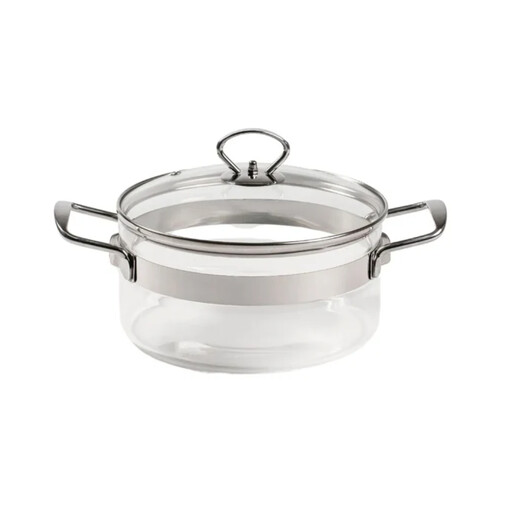
Why this choice suits this profile: its compact size is ideal for first slow-cooked dishes, while its transparency lets you monitor the cooking without removing the lid.
Induction compatibility is specified with the MC60090 disc, while the maximum oven temperature is set at 180 °C.
A non-porous borosilicate glass, stated as PTFE and PFAS-free on the product page, plus an integrated pouring spout.
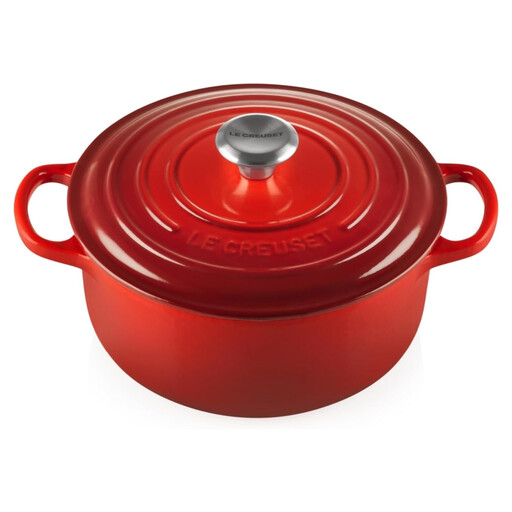
Why this choice suits this profile: with its 2.4 L and enamelled cast iron, this casserole is aimed at those who want a utensil capable of slow-cooking, roasting, going in the oven and coming straight to the table.
The product page details the compatible heat sources, including induction, as well as oven use and recommendations for gradual preheating.
An enamelled cast iron, a matching lid, wide handles and a 2.4 L capacity.
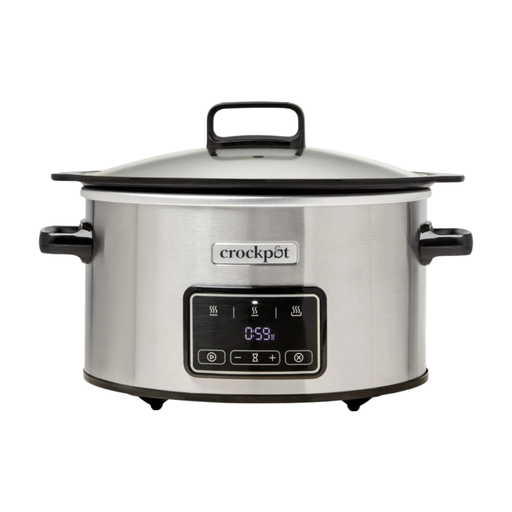
Why this choice suits this profile: its three settings and removable pot suit households that regularly prepare slow-cooked meals without tying up a hob for hours.
The removable pot can be cleaned separately and the different settings are clearly indicated. However, the electric base must not be immersed.
A 3.5 L capacity, a removable ceramic pot and a stated power of 220 W on the high setting.
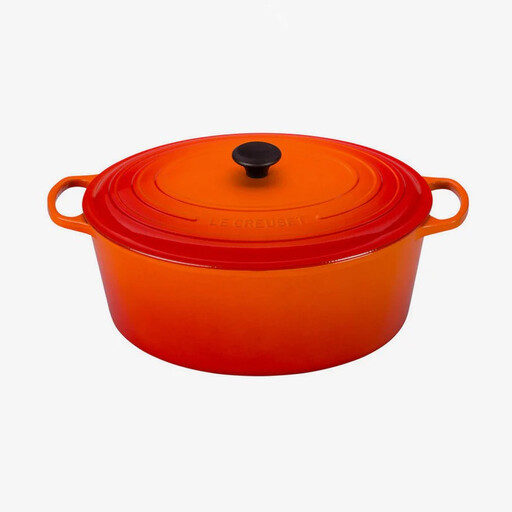
Why this choice suits this profile: its stated volume of around 14 L and its oval shape make it easy to prepare whole poultry, roasts and gratins for several guests.
The format is clearly indicated and the product page mentions compatibility with induction, the oven and the grill.
An enamelled cast iron, side handles and stated suitability for all heat sources.
A volume of around 3 to 4.5 L is generally suitable for soups, saucy dishes and family meals. A 24 cm casserole can be a good compromise, but always check the actual capacity as well as the space available on your hob.
Not necessarily. The model must be explicitly declared compatible with induction or be used with the recommended adapter disc. For the Belissam borosilicate glass, the product page specifies use with the MC60090 disc. Also respect the 180 °C oven limit and avoid any thermal shock.
Preheat it gradually, avoid heating it empty on a high power and let it cool down before washing it. Opt for non-metal utensils and regularly inspect the condition of the enamel. If there is significant chipping or cracking, stop using the casserole in line with the manufacturer's recommendations.