What should you look for first?
For a packed lunch at work, start with your main priority. Then compare the nutritional information on the same 100 g basis and work out what it means for the portion you plan to eat.
| What matters to you |
What to check |
Who is it for? |
| Measurable protein |
The “protein” value per 100 g, then the amount in your portion. Auchan’s product information lists 4.5 g per 25 g. |
If I’m adding cashews to my lunch, I want to know how much protein I’ll get from the amount I eat, not just from the whole pack. Around 36% of consumers put measurable protein content first. |
| Salt and added ingredients |
The exact product name, ingredients list and salt per 100 g. At E.Leclerc, TOKAPI Unsalted Cashews contain 0.0 g of salt per 100 g, compared with 0.8 g for TOKAPI Roasted Salted Cashews. |
For a break at work, I prefer an unsalted recipe to a strongly savoury snack. This is the main priority for around 29% of consumers. |
| Portion size and storage |
The pack size, how much you can portion out and the storage instructions after opening. |
If I’m keeping the pack at work for several days, I need to be able to plan my portion and store it as directed on the label. Around 21% of consumers prioritise this convenience above all else. |
| Sweet or seasoned recipes |
The proportion of cashews and sugars per 100 g. E.Leclerc’s product information for TOKAPI Honey-Salt Cashews lists 56.8% cashews and 38.1 g of sugars per 100 g. |
I might enjoy a sweet-and-savoury flavour, but I want to know how its ingredients differ from plain cashews before adding it to lunch. Around 14% of consumers prioritise these differences between recipes. |
Cashews to consider on Joybuy
This selection includes unsalted cashews, a large pack, and two spicy or roasted recipes. To choose one to round off your packed lunch, compare the recipe and the portion you want with the information on each pack.
 Image unavailable
BENENUTS Unsalted Cashews 130 g
Worth considering if you want to add unsalted cashews to your lunch. The pack contains 130 g, so check the protein in the portion you plan to eat and the storage instructions after opening.
View on Joybuy
 Image unavailable
GOLDEN TURTLE Cashews 500 g
This large pack could suit you if you regularly portion out cashews to take to work. It contains 500 g, so plan how you’ll divide it up and follow the storage instructions on the packaging.
View on Joybuy
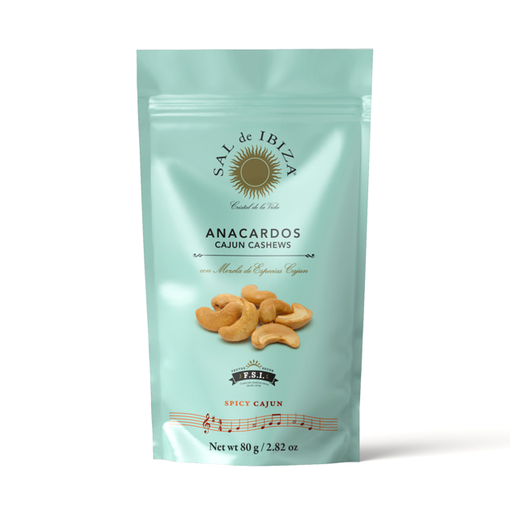 Image unavailable
SAL DE IBIZA Creole Spiced Cashews 80 g
This spicy recipe is more suited to when you fancy a seasoned flavour than when you’re looking for plain cashews. The pack contains 80 g. Check the label to compare salt, protein and ingredients with an unsalted recipe.
View on Joybuy
 Image unavailable
BENENUTS Dry Roasted Cashews 165 g
Worth a look if you prefer roasted cashews for your lunch break. The pack contains 165 g. Don’t assume how much salt it contains from the word “roasted” alone; check the ingredients before choosing your portion.
View on Joybuy
Frequently asked questions
How do I compare the protein in two packs of cashews?
First compare the values per 100 g, then work out how much protein you’ll get from the amount you plan to eat. Auchan’s product information for its plain cashews lists 18 g of protein per 100 g, or 4.5 g in a 25 g portion.
Do salted cashews contain more protein?
Salting doesn’t tell you how much protein a product contains. In the E.Leclerc product information, TOKAPI Unsalted Cashews provide 20.3 g of protein and 0.0 g of salt per 100 g, compared with 19 g of protein and 0.8 g of salt for TOKAPI Roasted Salted Cashews. Compare both values for each product.
Are honey cashews suitable if I’m comparing protein content?
Yes, as long as you compare their actual ingredients with those of other recipes, rather than judging by the name alone. E.Leclerc’s product information for TOKAPI Honey-Salt Cashews lists 12.8 g of protein and 38.1 g of sugars per 100 g, with cashews making up 56.8% of the ingredients.
What should I check on the label if allergens are a concern?
Read the ingredients and any may-contain warnings on the specific pack. The Directorate-General for Competition, Consumer Affairs and Fraud Control says allergens must be highlighted on food labels. Don’t assume the warnings for one recipe also apply to another.
How should I store a large pack at work after opening?
Follow the storage instructions on the packaging. For the 500 g Seeberger product sold at Auchan, the product information says to keep it away from heat and moisture after opening.


