Travellers keeping an eye on protein
If you’re taking a meal on the train and want to know how much protein it contains, compare the grams per portion you’ll eat. The presence of cashews or the words ‘high protein’ aren’t a substitute for checking.


If protein content is your top priority for your journey, compare what you’ll actually eat: the plain cashews listed by E.Leclerc and Auchan contain 19 to 20.3 g of protein per 100 g, while a cashew bar listed by Carrefour provides 10 g per bar. Unsalted cashews are easy to portion out before you leave; an individual bar saves you the effort, but its ingredients and nutritional values deserve just as much attention as its protein content.
If you’re taking a meal on the train and want to know how much protein it contains, compare the grams per portion you’ll eat. The presence of cashews or the words ‘high protein’ aren’t a substitute for checking.
You can portion out plain cashews before you leave if you’d rather decide how much to take and avoid a salty recipe. Manger Bouger, the Public Health France website, recommends a small handful of unsalted nuts.
An individually wrapped bar takes less preparation than portioning out a bag of cashews. Even so, check the protein per bar, its ingredients and any allergens before choosing it for your journey.
For a meal on the train, start with the portion you plan to take, then compare recipes according to what matters most to you: protein, no added salt, ease of transport or flavour.
| Criteria | What to check | Who is it for? |
|---|---|---|
| Protein per portion | Grams of protein per 100 g, then for the amount you’ll actually eat; the ingredients in a cashew bar. | If you’re adding to a meal you’ve brought with you, you’ll want to know how much protein your snack provides rather than relying on its name. Around 36% of consumers prioritise this measurable contribution. |
| Recipe and salt | The ingredients list and the amount of salt per 100 g; ‘plain’ and ‘no added salt’ describe the recipe, not the portion size. | If you’re preparing a small handful to take on your journey, you may prefer a recipe with no added salt to a salty seasoning. This is the main priority for around 29% of consumers. |
| Portable format | The weight of the individual serving or bag and, if it’s an opened pack, how to reseal and store it. | On the train, you may want to take out your snack without having to portion it out there and then. A practical format comes first for around 21% of consumers. |
| Flavour | Added ingredients, as well as sugars and salt per 100 g in a flavoured version. | You may be looking mainly for a honey-and-salt flavour or a seasoned recipe, even though it won’t meet the same needs as plain cashews. Around 14% of consumers put this flavour first. |
E.Leclerc and Auchan state that the plain varieties listed contain 19 to 20.3 g of protein per 100 g, but a small portion isn’t a whole packet. The cashew bar listed by Carrefour, meanwhile, provides 10 g of protein per bar.
Compare the weight you’ll eat with the protein it provides. For a bar, check the ingredients too, rather than assuming all its protein comes from the cashews.
The Tokapi honey-and-salt variety listed by E.Leclerc contains 38.1 g of sugars per 100 g. The Auchan roasted and salted version contains 0.8 g of salt per 100 g: neither has the same profile as a plain recipe.
If you’re looking for a simple or unsalted recipe, check the ingredients list and the sugar and salt values for the specific product.
The product details for Carrefour Original and Auchan cashews warn that they may contain traces of peanuts and other nuts. So the word ‘plain’ doesn’t mean you can skip the warnings.
If these allergens affect you, check the information on the packet you’ll be using.
The weight of the pack won’t necessarily match how much you want to eat on your journey. The Auchan cashew product details also advise protecting the product from heat and moisture and resealing the bag after opening.
Prepare the amount you plan to take and follow the storage instructions for your chosen product.
Carrefour lists a 200 g bag of cashews with no added salt.
E.Leclerc lists unsalted cashews and a honey-and-salt variety under the Tokapi brand, both in 125 g bags.
Auchan lists, among other products, 200 g bags of plain cashews and 125 g bags of roasted and salted cashews.
Auchan lists a 200 g bag of Seeberger plain cashews.
Monoprix lists 200 g bags of raw cashews and a 120 g bag of Monoprix Bio roasted and salted cashews.
These bags of cashews suit two different ways of snacking on the train: portioning them out yourself or choosing a seasoned recipe for its flavour. To assess how much protein they provide for your journey, always start with the amount you plan to eat.
 Image unavailable
If you’re taking unsalted cashews with you, decide on your portion before you leave. The bag contains 130 g; check the allergen warnings if needed.
 Image unavailable
The 500 g pack is a good choice if you want to portion out the amount to take with you. Check the ingredients list and warnings on the packaging to make sure it meets your requirements.
 Image unavailable
You can take this dry-roasted recipe with you by portioning out some of the 165 g bag. If an unsalted option is your main priority, check the salt content and ingredients for this product.
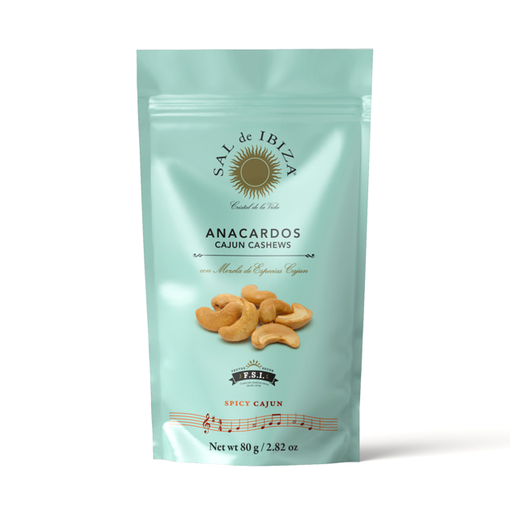 Image unavailable
The 80 g bag is for those who prefer spicy cashews during their journey. If these factors matter to you, compare the recipe and salt content with a plain version.
 Image unavailable
This 120 g bag is suited to anyone who prefers salted cashews with their skins on. Decide how much you’ll eat on the train, and compare its salt content with an unsalted recipe if you’re choosing between the two.
No: compare the protein in the portion you’ll eat, and don’t assume that cashews alone will help with sports recovery. The plain varieties listed by E.Leclerc and Auchan contain 19 to 20.3 g of protein per 100 g; the cashew bar listed by Carrefour provides 10 g per bar, and its recipe should be assessed separately.
First, check the nutrition information per 100 g, then work out the protein, sugars and salt for the amount you plan to eat. The DGCCRF says that information per 100 g or 100 ml makes it easier to compare foods; the size of your portion still matters when you’re taking a meal with you.
Not if your priority is an unsalted recipe or a specific amount of protein. The Auchan roasted and salted version contains 0.8 g of salt per 100 g; the Tokapi honey-and-salt version listed by E.Leclerc contains 38.1 g of sugars and 12.8 g of protein per 100 g. Compare these values with those for the plain product you’re considering.
Read the ingredients list and any trace warnings on the packet you’ll be using, even if the cashews are plain. The Carrefour Original and Auchan product details specifically warn that they may contain traces of peanuts and other nuts.
Prepare the portion you want before you leave and follow the storage instructions for the product you’ve chosen. For its plain cashews, Auchan recommends protecting the product from heat and moisture and sealing the bag tightly after opening.