If you want to limit salty or sweet varieties
If you like to snack in front of the TV without a particular seasoning, start by comparing plain and unsalted cashews. Check the packet’s ingredients: ‘roasted’ doesn’t necessarily mean ‘no added salt’.


For a TV night, start by choosing cashews that suit what you fancy: go for plain or unsalted if you want to avoid added ingredients, or salted and seasoned varieties if you’re after an appetiser-style flavour. Cashews can contribute protein to a snack, but that alone doesn’t make them ‘high in protein’: a product listing 18.2 g of protein per 100 g still falls below the threshold set by EU regulations for this claim. Serve yourself a small handful and compare the nutritional information on the packet you choose, especially for sweet or salted varieties.
If you like to snack in front of the TV without a particular seasoning, start by comparing plain and unsalted cashews. Check the packet’s ingredients: ‘roasted’ doesn’t necessarily mean ‘no added salt’.
Cashews provide protein, but the amount varies by product. Compare the figures per 100 g with the portion you plan to eat. Don’t confuse this contribution with a promise of recovery or the regulated ‘high in protein’ claim.
A salted, spicy or honey-flavoured variety offers something different from plain cashews. Check the ingredients as well as the ‘salt’ and ‘sugars’ figures: having cashews in the name doesn’t make these varieties equivalent.
When choosing a packet to open for a TV night, start with what matters most to you, then compare varieties using their ingredients and nutritional values per 100 g.
| Priority | What to check | Who is it for? |
|---|---|---|
| Limit added salt and sugar | The ingredients and ‘salt’ and ‘sugars’ figures; check whether the specific product says ‘no added salt’. | I want to snack without automatically choosing a salty or honey-flavoured appetiser variety. Around 37% of consumers put limiting these additions first. |
| Add protein to a snack | Protein and energy per 100 g, then the amount you’ll actually serve. | If cashews are part of my snack around exercise, I want to know how much protein they provide without expecting them to aid recovery. Protein content is the top priority for around 27% of consumers. |
| Choose an appetiser-style flavour | The type of seasoning and the ingredients list, particularly for honey-flavoured varieties. | When sharing a snack before a film, I care most about a roasted, salty or sweet flavour. Around 18% of consumers put flavour first. |
| Choose the right pack size | The net weight and storage instructions after opening. | I’m opening the packet for one evening, so I’d rather choose an amount that suits the occasion than pick a size without thinking. Pack size is the top consideration for around 18% of consumers. |
To put the protein content into context, Carrefour’s product listing for one VracBio variety gives 18.2 g of protein and 584 kcal per 100 g. That works out at around 12.5% of the energy coming from protein; the EU regulation set out by EUR-Lex puts the threshold for a ‘high in protein’ claim at 20% or more. This applies to that particular product, not all cashews.
The recipe matters just as much as the type of nut. E.Leclerc’s product listing for Tokapi honey and salt cashews gives sugar as 39.7% of the ingredients. By contrast, Manger Bouger, the website of Santé publique France, recommends a small handful of unsalted, unsweetened nuts with no chocolate.
These phrases don’t mean the same thing. In the EU, the ‘high in protein’ claim requires at least 20% of a product’s energy to come from protein, according to the regulation set out by EUR-Lex. Given its stated energy content, the VracBio product cited by Carrefour, which lists 18.2 g of protein per 100 g, doesn’t meet this threshold.
If protein content is guiding your purchase, check the protein and energy figures for the specific product. Don’t infer a claim just because it contains cashews.
E.Leclerc’s product listing for Tokapi honey and salt cashews gives sugar as 39.7% of the ingredients. You may enjoy the flavour, but this isn’t the same as a simple handful of plain cashews.
Compare the ingredients list and the ‘sugars’ figure per 100 g before choosing between a sweetened variety and a plain one.
‘Roasted’ describes how a product is prepared, not whether it contains salt. A Monoprix product listing gives its roasted and salted cashews as containing 1 g of salt per 100 g, while other products are labelled ‘no added salt’.
Check the full product name and the ‘salt’ figure on the packet you’re about to open, rather than relying on its roasted appearance alone.
These retailers offer different cashew varieties. Their ranges can help you spot the differences between plain, unsalted and seasoned options; then compare the details of the specific product.
Carrefour offers, among other options, Carrefour Original roasted cashews with no added salt and Carrefour Classic’ roasted and salted cashews.
The Bio Village and Tokapi products illustrate two distinct recipes: roasted and salted cashews on the one hand, and a honey and salt variety on the other.
Auchan offers its own roasted cashews with no added salt, as well as Seeberger and Daco Bello products.
Lidl presents Alesto as a nut brand and includes plain cashews in its range.
Aldi France offers dry-roasted cashews under the Trader Joe's brand, as well as a roasted variety with no added salt.
Monoprix offers its own roasted and salted cashews, as well as unsalted Seeberger and Daco Bello products.
These cashews available on Joybuy include an unsalted option and several appetiser-style varieties, from salted to seasoned. To choose based on salt, sugars or protein, check the information for the specific product.
 Image unavailable
Worth considering if you want to avoid a salted variety while snacking in front of the TV.
The packet contains 130 g. If you’re comparing this product for its protein or ingredients, check the nutritional values and ingredients list on the packet; ‘unsalted’ alone doesn’t tell you everything about its composition.
 Image unavailable
This variety is for when you fancy salted cashews, rather than prioritising a lower-salt option.
The 120 g packet contains cashews with their skin on. Check the ‘salt’ figure per 100 g if you’re comparing it with an unsalted option.
 Image unavailable
Worth considering if dry roasting is one of your priorities for a TV-night snack.
The packet contains 165 g. The roasting method alone doesn’t tell you the salt content or what other ingredients are included, so compare these details on the label.
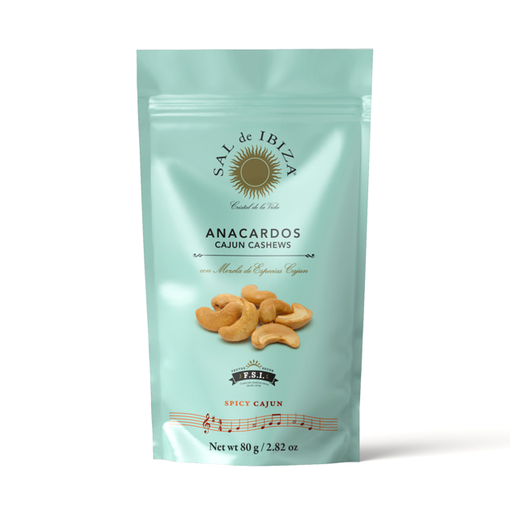 Image unavailable
This variety is for when you fancy something spicy during your evening.
The packet contains 80 g. If you’re choosing between these and plain cashews, compare the ingredients list and the product’s salt and sugars values.
No. Providing protein isn’t enough to justify the ‘high in protein’ claim. The EU regulation set out by EUR-Lex requires at least 20% of a product’s energy to come from protein. For example, the figures published by Carrefour for a VracBio product—18.2 g of protein and 584 kcal per 100 g—work out at around 12.5%. Check the figures for the product you’re buying.
If you want to avoid salty or sweet additions, start with a plain or unsalted variety and check its ingredients. Manger Bouger recommends a small handful of unsalted, unsweetened nuts with no chocolate. A salted or honey-flavoured variety may suit a different craving; if so, compare its ingredients and nutritional values.
Read the ‘sugars’ and ‘salt’ figures per 100 g, then check the ingredients list to understand the recipe. The DGCCRF notes that this information appears on the labels of pre-packed foods. For example, E.Leclerc lists sugar as 39.7% of the ingredients in its Tokapi honey and salt variety, so don’t compare it with plain cashews based only on the packet weight.
Check the ingredients and allergen and ‘may contain’ information on the specific packet. Don’t rely on the variety name alone. E.Leclerc’s product listing for Bio Village roasted and salted cashews mentions possible traces of other nuts, peanuts and gluten; this information applies to that product and doesn’t automatically describe the others.
Don’t assume that whole cashews are suitable for a young child. Auchan’s product listing for a variety of roasted cashews with no added salt states that, because of their size, they should not be eaten by children under 3. Follow the warning on the product you choose.