What should you check before adding a bag to your basket?
For a snack to enjoy around a workout, first check the nutritional information per 100 g, then look at the recipe and pack size. The amount in the portion you actually eat may differ from the figures given per 100 g.
| What matters to you |
What to check |
Who is it for? |
| Protein content |
Compare the protein and energy figures per 100 g; don’t assume a product qualifies as ‘high protein’ based on its protein content in grams alone. |
If I’m putting together a snack to enjoy around a workout, I want to know what my portion provides without confusing protein content with a regulated claim. Around 45% of consumers are said to put this distinction at the top of their list. |
| Salt and ingredients |
Check the salt content and ingredients list, especially to tell a plain recipe apart from a salted one or one containing added oil. |
If I want a snack without a salty taste, I’d rather choose the recipe with all the facts than rely on the picture on the bag. This is said to be the priority for around 33% of consumers. |
| Pack size and availability |
Check the weight of the bag and whether it’s available from your chosen collection point. |
If I also use cashews in cooking, I want a pack size I can use and store properly. Around 22% of consumers are said to choose first based on pack size and local availability. |
Cashew nuts to compare on Joybuy
This Joybuy selection includes bags of unsalted, plain and seasoned cashews in different pack sizes. For a snack to enjoy around a workout, compare the recipe and nutritional information for each product; being listed here doesn’t mean it carries a ‘high protein’ claim.
 Image unavailable
BENENUTS Unsalted Cashew Nuts, 130 g
A small bag to consider if you’re looking for a snack without a salty taste. The description gives a weight of 130 g and says the cashews are unsalted. Check the ingredients list if you also want to avoid added oil.
View on Joybuy
 Image unavailable
GOLDEN TURTLE Cashew Nuts, 500 g
The 500 g pack may suit people who also use cashews in cooking. To decide whether it works for you, check the recipe on the packaging and the storage instructions after opening.
View on Joybuy
 Image unavailable
BENENUTS Dry-Roasted Cashew Nuts, 165 g
This 165 g pack is more suited to a craving for roasted and seasoned cashews. ‘Dry-roasted’ describes how they’re cooked, not whether they contain salt. Check the salt content if that matters to you.
View on Joybuy
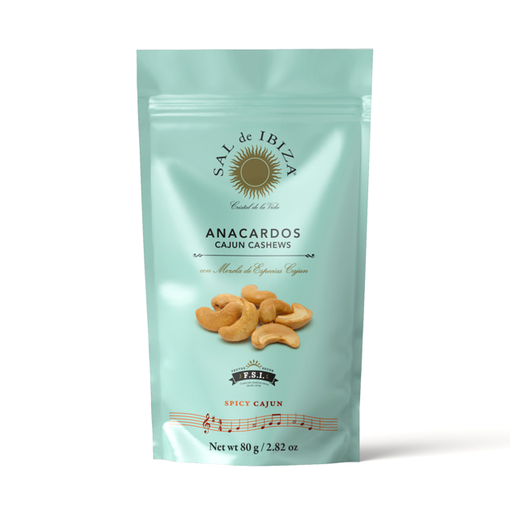 Image unavailable
SAL DE IBIZA Creole-Spiced Cashew Nuts, 80 g
The 80 g bag is a small-pack option with a spicy flavour. If you’re comparing this recipe with a plain version, check the ingredients and salt content on the packaging.
View on Joybuy
 Image unavailable
Xue Ji Chaohuo Salted Skin-on Cashew Nuts, 120 g
This 120 g bag is a salted, skin-on option. It suits a different taste preference from an unsalted version. Check the salt content and allergen information on the packaging before choosing it.
View on Joybuy
Frequently asked questions
Can cashew nuts be described as ‘high protein’?
Not based solely on the grams of protein listed per 100 g. Under the European regulation set out by EUR-Lex, a ‘high protein’ claim requires at least 20% of a food’s energy to come from protein. The figures published by E.Leclerc for its Bio Village product—20.3 g of protein and 621 kcal per 100 g—work out at around 13% of the energy. Based on these figures, this product doesn’t meet the threshold.
Which type should I choose to limit my salt intake?
Look for plain cashews or a product explicitly labelled as having no added salt, then check its salt content. For comparison between specific products, E.Leclerc lists 0.8 g of salt per 100 g for its roasted and salted TOKAPI cashews, while an Auchan listing for roasted and salted cashews gives 1 g per 100 g.
Are cashew nuts enough to make a post-workout snack?
They can be part of a snack, but the protein content per 100 g doesn’t tell you how much you’ll get from the portion you eat or the make-up of the whole meal. If protein content is guiding your purchase, compare the portion you plan to eat with the other foods you’ll have, without assuming cashews alone will aid recovery.
Should I check the allergen information on plain cashews?
Yes. Cashews are a tree nut allergen, even when they’re not seasoned. Other warnings can vary by product; for example, Carrefour lists several possible traces on its ETHIQUABLE cashew product page. If you have a relevant allergy, check the labelling on the product you receive.
Will a product listed online be available for click and collect?
A product appearing in a catalogue doesn’t confirm that it’s available from your collection point. Select your store or collection point, then check the pack size on offer before placing your order.


