The cashews featured here are not ‘low energy’ foods: product information from Auchan, Carrefour and Ethiquable gives figures of 593 to 617 kcal per 100 g, depending on the product, while Regulation (EC) No 1924/2006 sets a maximum of 40 kcal per 100 g for this claim on solid foods. For a break at work, decide how much to take with you. Choose a plain or dry-roasted recipe with no added salt if you also want to limit salt or added ingredients, but don’t assume it will be low in calories.
Who is this choice for?
People who portion out their snacks
If you take cashews to work for lunch, the amount you set aside matters more to your energy intake than the ‘no added salt’ claim alone. Product information from Auchan and Ethiquable shows that their unsalted recipes are still high in calories per 100 g.
People who are limiting added salt
An unsalted recipe or one with no added salt may suit this priority. Check the ingredients list too: Auchan’s unsalted product lists cashews as its only ingredient, while Carrefour Classic’s no-added-salt product contains sunflower oil, according to their product information.
People who keep a snack at work
If you’re choosing a pack to keep at work, check the nutritional information, allergens and storage instructions for the product you buy. The DGCCRF says that per-100 g values make it easier to compare pre-packed foods.
What should you check?
When choosing cashews to take to work, consider the amount you’ll eat, the recipe and the information on the pack separately.
| What to consider |
What to check |
Who is it for? |
| Amount eaten |
Compare the energy per 100 g, then set aside the amount you want to take with you rather than eating from the pack. |
If I snack while working, I prefer to decide how much I’ll have before opening the pack; around 50% of consumers would put portion size at the top of their list of concerns. |
| Salt and added ingredients |
Read the ingredients list and the salt value per 100 g. ‘No added salt’ doesn’t necessarily mean ‘no added oil’. |
I’m looking for a no-added-salt recipe to go with my lunch, but I wouldn’t assume it’s low in calories; limiting salt and other additions would be the priority for around 30% of consumers. |
| Labelling and storage |
Check the allergens on the packaging and follow the storage instructions for the product you buy. |
If I’m keeping a snack at work, I need to be able to identify allergens and know how to store the pack; around 20% of consumers would give these details the greatest importance. |
Common pitfalls to avoid
-
Assuming ‘no added salt’ means ‘low in calories’
Product information from Carrefour Classic’, Ethiquable and Seeberger gives figures of 614, 593 and 617 kcal per 100 g respectively for the no-added-salt or unsalted products featured here. The preparation method and salt content alone aren’t enough to judge the energy content.
Use the salt claim to compare recipes, then check the energy per 100 g and the amount you plan to eat.
-
Choosing a salted recipe as if it met the same need
According to Auchan, its roasted and salted product contains sunflower oil and has 0.8 g of salt per 100 g. The product information for Vico’s Guérande salt variety also lists oil and salt.
If limiting salt is a priority when you shop, compare these recipes with the unsalted versions by checking the ingredients and nutrition table.
-
Overlooking allergens and ‘may contain’ warnings
Cashews themselves must be labelled as allergens, and some products also warn that they may contain traces of other allergens. The DGCCRF states that allergenic ingredients must be clearly highlighted in the ingredients list of pre-packed foods.
If you have an allergy or dietary restriction, read the information on the specific pack you’re going to eat, including any ‘may contain’ warnings.
Brands to compare
Auchan
Auchan’s product information lets you compare an unsalted recipe with a roasted and salted one.
- The unsalted product lists cashews as its only ingredient and contains 595 kcal and 0.03 g of salt per 100 g.
- The roasted and salted product contains 607 kcal and 0.8 g of salt per 100 g; the two recipes are quite different.
Carrefour Classic’
The roasted, no-added-salt variety comes in a 125 g pack.
- According to Carrefour, its ingredients list shows 95.5% cashews and 4.5% sunflower oil.
- This recipe contains 614 kcal per 100 g: ‘no added salt’ means neither ‘no oil’ nor ‘low in calories’.
Ethiquable
Carrefour describes the organic 250 g pack as dry-roasted, with no added fat or salt.
- This recipe may suit you if you’re specifically looking for cashews with no added salt or fat.
- The product information still gives a figure of 593 kcal per 100 g, so decide separately how much to take with you.
Seeberger
The roasted cashews with no added salt featured by Auchan come in a 400 g pack.
- The product information lists roasted cashews as the only ingredient and gives a salt value of 0.05 g per 100 g.
- It contains 617 kcal per 100 g; the pack size doesn’t determine how much to serve.
Vico
The Guérande salt variety is an example of a seasoned recipe rather than a no-added-salt option.
- The product information featured by Carrefour gives the ingredients as 96% cashews, sunflower oil and Guérande salt.
- At 610 kcal per 100 g according to this information, it isn’t suitable if you’re looking for low-calorie cashews.
Cashews available on Joybuy
These bagged cashews include both unsalted and seasoned recipes for a break at work. Your choice will depend on how much you serve and, depending on your priorities, the information about salt and ingredients.
 Image unavailable
Xue Ji Chaohuo, salted cashews with skins, 120 g
If you’re looking for a salted snack for a break at work, decide how much you’ll eat before opening this 120 g pack. If salt is important to you, check its value on the label.
View on Joybuy
 Image unavailable
BENENUTS, unsalted cashews, 130 g
If you prefer an unsalted recipe to go with your lunch, this 130 g pack fits the bill. Check the ingredients and energy per 100 g too: no added salt doesn’t determine how much you should eat.
View on Joybuy
 Image unavailable
BENENUTS, dry-roasted cashews, 165 g
If the roasting method matters to you, compare this dry-roasted recipe with other packs without assuming from the name that it’s unsalted. Check the salt on the label and take the amount you want from the 165 g pack.
View on Joybuy
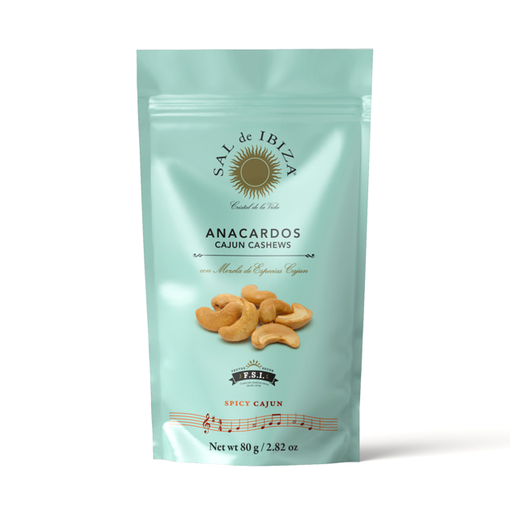 Image unavailable
SAL DE IBIZA, cashews with Creole spices, 80 g
This seasoned 80 g recipe is for anyone who’s mainly looking for this flavour in a snack. If you’re choosing based on energy or salt, compare the per-100 g values on the label, and don’t confuse the pack weight with a portion to eat.
View on Joybuy
Frequently asked questions
Are cashews with ‘no added salt’ low in calories?
No. This claim refers to added salt, not energy. The no-added-salt or unsalted products featured by Carrefour, Auchan and Ethiquable contain between 593 and 614 kcal per 100 g. Compare the value for each pack with the amount you plan to serve.
Can these cashews be described as ‘low energy’?
Not the products mentioned here. Regulation (EC) No 1924/2006 reserves this claim for solid foods containing no more than 40 kcal per 100 g, whereas the product information considered here gives much higher values.
What should you compare on the pack for a break at work?
Start with the energy per 100 g, then check the ingredients, salt and allergens for the exact product. The DGCCRF says that presenting nutritional information per 100 g makes it easier to compare pre-packed foods. Then choose how much to take with you.
How should you store an opened pack of cashews at work?
Follow the instructions on the pack you buy. The Auchan and Seeberger product information consulted says to keep these products away from heat and moisture; Auchan also advises sealing the pack tightly after opening.


