People looking to limit added salt
If you’re picking up a snack in a hurry, the ‘no added salt’ claim can help guide your choice. However, it doesn’t tell you how many calories the product contains, so check the nutrition information too.


When picking something up in a hurry, don’t choose cashews labelled ‘no added salt’ thinking you’re buying a low-energy food. Under European Union Regulation (EC) No 1924/2006, this claim is reserved for solid foods containing no more than 40 kcal per 100 g. The products compared here contain between 559 and 625 kcal per 100 g, according to the Carrefour, Auchan and E.Leclerc product pages. First compare the energy per 100 g, then choose a recipe and pack size to suit your needs.
If you’re picking up a snack in a hurry, the ‘no added salt’ claim can help guide your choice. However, it doesn’t tell you how many calories the product contains, so check the nutrition information too.
If energy content is your top priority, compare the kcal per 100 g across different cashews. ‘Plain’ and ‘unsalted’ describe something other than their energy content.
Even when you’re shopping in a hurry, it’s worth checking the exact recipe, allergen information and pack size. If you plan to keep the packet after opening, check the storage instructions too.
Start by comparing the energy per 100 g, then choose between recipes and pack sizes according to what matters most for your quick shop.
| What matters to you | What to check | Who this is for |
|---|---|---|
| Energy | Compare the kcal per 100 g, then check the stated serving size if you want to work out how much you’ll serve. | I’m looking for a snack in a hurry and don’t want to mistake ‘no added salt’ for an indication of calorie content. Around 50% of consumers put comparing energy content at the top of their list. |
| Salt and added ingredients | Read the ingredients list and check the salt content per 100 g; look for any oil or sweetening ingredients. | If I prefer a simple recipe, salted or honey-and-salt varieties may not be what I’m looking for. For around 33% of consumers, limiting salt or other additions is the priority. |
| Pack size and usage guidance | Choose a pack size that suits your needs and read the allergen information and instructions on the packet. | Having a pack that’s easy to use now and store afterwards matters more to me, without overlooking the precautions on the label. This is a priority for around 17% of consumers. |
Carrefour Original, Auchan and Seeberger product pages list between 559 and 619 kcal per 100 g for the no-added-salt products compared here. The salt claim doesn’t change what their energy values mean.
Compare the ‘energy’ value per 100 g, then choose how much you want to serve.
Not all recipes contain just cashews. The E.Leclerc product page for Tokapi honey-and-salt cashews lists sugar among the ingredients and 38.1 g of sugars per 100 g.
If you want to avoid added ingredients, check the list for the specific product before choosing.
Depending on the product, Carrefour, Auchan and Joybuy pages mention that traces of peanuts or other tree nuts may be present. Other recipes and pack sizes may carry different information.
Check the ingredients and allergen information on the packet you’re thinking of buying.
Storage instructions after opening vary by product. Seeberger also warns that tree nuts can pose a choking risk to young children, particularly those under 4.
Follow the storage instructions and child safety warning on the relevant packet.
A 200 g pack of cashews with no added salt.
A 175 g pack, described by Auchan as roasted with no added salt or oil.
A 125 g pack of roasted cashews with no added salt.
A 150 g pack of unsalted roasted cashews, sold by Auchan and Monoprix.
A range of snacks sold by E.Leclerc, including roasted-and-salted and honey-and-salt varieties.
These packets include both unsalted cashews and seasoned varieties. If you’re picking something up in a hurry, compare the pack sizes and check the energy, ingredients and salt content for each product. A small packet doesn’t mean its contents are low in calories.
 Image unavailable
This 500 g pack could suit you if you plan to use it for more than one quick snack. Check that the quantity suits your needs, then check the energy and allergen information on the packet.
 Image unavailable
This 130 g pack is for anyone who prefers an unsalted recipe. However, it contains sunflower oil, so if you’re also looking to avoid added oil, check the ingredients list before buying.
 Image unavailable
This 165 g pack may suit you if you’re looking for roasted, seasoned cashews rather than prioritising salt content. The Joybuy product page lists cashews and warns that traces of peanuts may be present; check the label if you have an allergy.
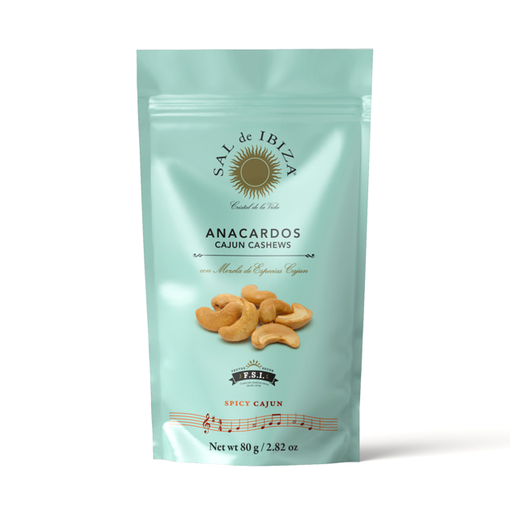 Image unavailable
The 80 g pack could suit you if you’re after a small packet of spicy cashews. This is a seasoned recipe, so compare its salt content and ingredients if you prefer something simple or low in salt.
 Image unavailable
This 120 g pack is a convenient choice if you’re looking for salted cashews ready to eat. If you’re trying to limit salt, compare the amount listed on the packet with that of an unsalted variety.
Not the products compared here. Under European Union Regulation (EC) No 1924/2006, the ‘low energy’ claim for a solid food requires it to contain no more than 40 kcal per 100 g. The Carrefour, Auchan and E.Leclerc product pages used for this comparison list between 559 and 625 kcal per 100 g.
No. ‘No added salt’ doesn’t describe a product’s energy content. The no-added-salt products compared on the Carrefour and Auchan pages contain between 559 and 619 kcal per 100 g. Compare the ‘energy’ value to assess products on an equal-weight basis.
Check the ingredients and allergen information for the exact product. According to the Carrefour, Auchan and Joybuy product pages, some cashews may also carry a warning that traces of peanuts or other tree nuts may be present. ‘Plain’ doesn’t replace this check.
Follow the instructions on the product you buy. The Auchan product page for the 125 g pack says to reseal the packet tightly and consume it within 14 days of opening. This product-specific advice shouldn’t automatically be applied to other products.
Read the warning on the packet and keep whole nuts out of their reach. Seeberger warns of a choking risk, particularly for children under 4, while the Auchan product page for its 125 g pack says it should not be eaten by children under 3 because of its size. These instructions are specific to each product.