People keeping an eye on the protein in their snacks
If you’re planning to eat cashews around a workout, check the protein per 100 g, but also consider how much you plan to eat and what else is in your snack.


When choosing cashews to serve on National Day, compare the protein and salt per 100 g, then decide how much to put out. Plain or roasted cashews with no added salt are a good choice if keeping salt in check is your priority. Seasoned cashews are suitable if flavour comes first for your aperitif. Protein content alone is not enough to judge whether a portion is a good choice around exercise.
If you’re planning to eat cashews around a workout, check the protein per 100 g, but also consider how much you plan to eat and what else is in your snack.
For a National Day aperitif, plain cashews and roasted cashews with no added salt offer two options to compare. Check the ‘salt’ value on the packet you choose.
If a roasted or spicy flavour and something to share are your priorities, compare the ingredients, salt content, pack size and allergen information before buying.
Start with the need that will determine your choice: the amount you’ll serve and its protein content, the salt or how you plan to serve your aperitif. You can then use the nutritional values per 100 g to compare packets of different sizes.
| What matters to you | What to check | Who this is for |
|---|---|---|
| Protein and portion size | Compare the protein and energy per 100 g, then consider how much you plan to serve. | If I choose these cashews for a snack around a workout, I want to know what I’ll get from the amount I actually eat, not just read a figure on the packet. Around 50% of consumers put protein and portion size at the heart of their choice. |
| Salt | Look for the words ‘no added salt’ and compare the ‘salt’ value per 100 g. | For my aperitif, I want to serve crunchy cashews without making a salty taste my main priority. Limiting salt is the main concern for around 30% of consumers. |
| Flavour and serving | Check the seasoning, pack size and storage instructions after opening. | When I’m preparing something to share, I look for an aperitif-friendly option in a quantity that suits my guests. Flavour and serving come before other criteria for around 20% of consumers. |
The Auchan and Monoprix product pages list 18 g and 20 g of protein per 100 g respectively for the products in question, as well as 595 kcal and 616 kcal per 100 g. These figures alone don’t tell you how much you’ll actually eat.
Compare the values per 100 g, then decide separately how much to serve. Don’t present cashews as a complete post-workout recovery solution.
Auchan’s plain cashews contain 0.03 g of salt per 100 g, compared with 0.8 g for the TOKAPI product listed by E.Leclerc and 1 g for Monoprix’s roasted and salted cashews.
If salt is a factor in your choice, check the nutritional information for the exact product rather than judging by its roasted appearance alone.
Cashews may not be suitable for some guests. Monoprix’s product page, for example, warns that the product may contain traces of peanuts, other nuts, gluten and soya. The DGCCRF says that allergenic ingredients must be highlighted on the labels of prepacked foods.
Keep the packaging handy and check the ingredients and any warnings about traces on the packet you’re serving.
A sharing-size pack is only practical if the quantity suits the number of guests and how you plan to use it after the celebrations. For its 200 g plain cashews, Auchan recommends sealing the packet tightly and eating them within 5 days of opening.
Choose a pack size to suit how you plan to serve it, then follow the storage instructions for the product you buy.
Carrefour’s search results include plain cashews, roasted cashews with no added salt, and roasted and salted cashews.
Auchan’s product page for its 200 g plain cashews lists cashews as the ingredient, with 18 g of protein and 0.03 g of salt per 100 g.
Monoprix’s product page for its 125 g roasted and salted cashews lists 20 g of protein and 1 g of salt per 100 g.
E.Leclerc lists TOKAPI Marque Repère roasted and salted cashews in a 400 g pack, with 19 g of protein per 100 g.
ALDI lists TRADER JOE'S® roasted unsalted cashews in a 200 g pack.
This selection brings together plain, unsalted, roasted and seasoned cashews to consider for a National Day aperitif. The pack size and product details can help you choose between them. For protein, salt and allergen information, check the label on the product you choose.
 Image unavailable
Worth considering if you want to serve cashews without a pronounced salty taste. Check the protein, salt and ingredients on the 130 g packet before deciding how much to put out.
 Image unavailable
The 500 g pack may suit you if you’re planning to serve cashews to a group or use them after the aperitif. Check the style, ingredients and storage instructions before choosing this large packet.
 Image unavailable
A roasted option to compare if you’re looking for cashews to serve with an aperitif. The packet contains 165 g; check the seasoning and ‘salt’ value before serving to guests who want to limit their salt intake.
 Image unavailable
If you’d like to serve salted cashews with their skins on, this 120 g packet offers that style. Compare its ‘salt’ value and allergen information with those of the other cashews you plan to serve.
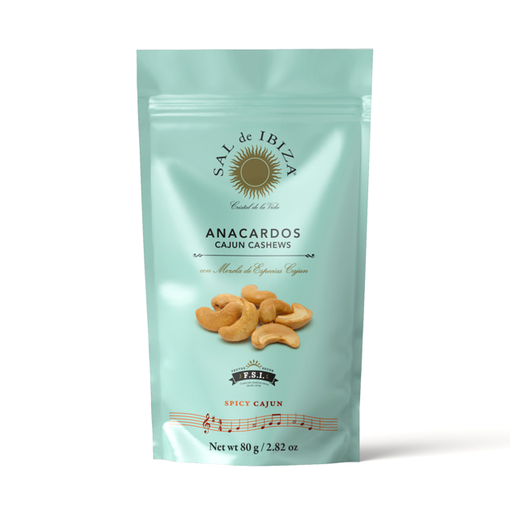 Image unavailable
This 80 g spicy option is ideal if you fancy a seasoned snack for your aperitif. Check the ingredients, salt per 100 g and allergen information if you’re serving it alongside other foods.
Their protein content alone isn’t enough to judge a whole snack or its suitability for post-workout recovery. The Auchan, TOKAPI at E.Leclerc and Monoprix products mentioned here list 18 g, 19 g and 20 g of protein per 100 g respectively. Also consider how much you’ll eat and what else you’re planning to have.
Start with plain cashews or a product labelled ‘no added salt’, then check the ‘salt’ value for the specific product. For comparison, Auchan lists 0.03 g of salt per 100 g for its plain cashews, compared with 0.8 g for TOKAPI at E.Leclerc and 1 g for Monoprix’s roasted and salted cashews.
Keep the packaging handy so you can check the ingredients and allergen warnings for the product you’re serving. For its roasted and salted cashews, Monoprix’s product page mentions possible traces of peanuts, other nuts, gluten and soya. Don’t assume these warnings apply to other packets.
Follow the instructions on the packet you’ve opened, as these apply to the product you bought. For its 200 g plain cashews, Auchan recommends sealing the packet tightly and eating them within 5 days of opening. Don’t apply this time limit to other products without checking their labels.