What should you compare before buying?
For match night, start with what matters most to you — protein, ingredients or flavour — then compare labels using the same 100 g serving size.
| What to consider |
What to check |
Who is it for? |
| Protein |
Protein and energy per 100 g; whether the packaging makes a specific claim. Regulation (EC) No 1924/2006 requires at least 20% of a product’s energy to come from protein for the “high in protein” claim. |
If protein matters more to me than the flavour of a snack, I want to know what the amount I’ll serve provides, rather than relying on the number of grams per 100 g alone. Around 46% of consumers make this check a priority. |
| Salt and ingredients |
Salt per 100 g, ingredients list and allergen information. Auchan’s product listings show 0,01 g of salt per 100 g for its no-added-salt variety, compared with 1,25 g per 100 g for Carrefour’s chilli variety. |
When there are already several salty foods on the table, I prefer to be able to offer low-salt cashews and know what else has been added. For around 36% of consumers, keeping salt and ingredients in check comes before other considerations. |
| Flavour and sharing |
Seasoning, pack size and storage instructions after opening; compare the salt content of the varieties you choose, too. |
For a group snack, I’m mainly looking for a seasoned flavour and a pack size that suits the number of guests. Flavour and sharing are the priority for around 18% of consumers. |
Which brands and retailers should you consider?
These retailers offer products worth comparing; the details below apply to the products named, not their entire ranges.
Carrefour
Its Original variety with no added salt and a chilli-seasoned option give you two different recipes to compare for snacking.
- Carrefour Original comes in a 200 g packet.
- Its product listing warns that it may contain traces of peanuts and other tree nuts; Carrefour.fr lists 1,25 g of salt per 100 g for the chilli variety.
E.Leclerc
Its TOKAPI roasted and salted variety comes in a 400 g packet, a size worth considering in light of the number of guests.
- E.Leclerc states that this variety contains 94,7% cashews, 4,5% sunflower oil and 0,8% salt.
- Its product listing shows 0,8 g of salt per 100 g; check availability at your chosen shop or Drive service.
Auchan
Auchan’s no-added-salt variety and Papapero’s roasted, unsalted cashews offer two ingredient lists to compare.
- Auchan.fr lists 20 g of protein and 0,01 g of salt per 100 g for the Auchan variety, compared with 23 g of protein and 0,05 g of salt per 100 g for Papapero.
- The Auchan recipe contains sunflower oil and may contain traces of peanuts and other tree nuts.
Aldi
Aldi France offers a 150 g packet of TRADER JOE'S® dry-roasted, unsalted cashews.
- The product listing specifies how these cashews are prepared and confirms they contain no salt.
- To compare their protein content or ingredients with other packets, check the nutritional information and label of the product you choose.
Monoprix
Nutritional information and storage instructions are available for its Seeberger roasted, unsalted cashews.
- Monoprix Courses lists around 20 g of protein and 0,05 g of salt per 100 g.
- The storage instructions say to keep the product away from heat and moisture.
Which cashews should you choose on Joybuy?
This selection includes unsalted or plain cashews, as well as salted and spicy varieties for snacking. Choose according to the seasoning you want, the pack size and the information on the packaging; don’t assume this selection is a “high in protein” range.
 Image unavailable
BENENUTS unsalted cashews, 130 g
Worth considering if you’d like to offer an unsalted option during the match. The Joybuy listing says this product contains cashews and may contain peanuts and other tree nuts; check the packaging if you have an allergy.
View on Joybuy
 Image unavailable
Xue Ji Chaohuo salted cashews with skin, 120 g
A salted variety to consider if that’s the kind of seasoning you prefer for snacking. Compare the salt listed on the packet with the salt content of the other foods you’re planning to serve.
View on Joybuy
 Image unavailable
GOLDEN TURTLE cashews, 500 g
This size may suit you if you’re planning to serve cashews to a group or use them in recipes. Before choosing them for a snack, check the preparation method, salt content and storage instructions on the packaging.
View on Joybuy
 Image unavailable
BENENUTS dry-roasted cashews, 165 g
Worth a look if you’re after roasted cashews to serve as a snack. “Dry-roasted” describes how they’re cooked, not their salt content, so check the ingredients and nutritional information on the packet.
View on Joybuy
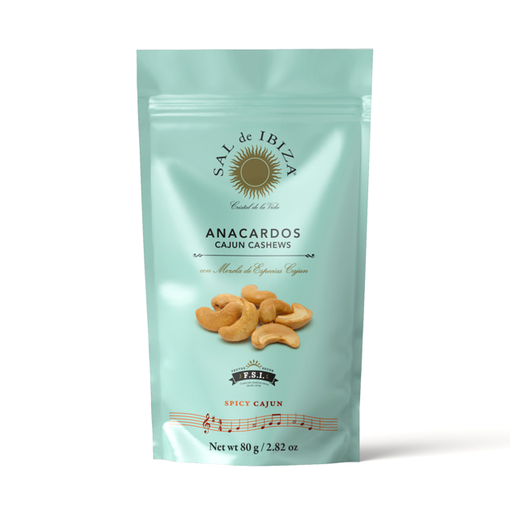 Image unavailable
SAL DE IBIZA Creole Spiced Cashews & Sdi, 80 g
This spicy variety is for anyone looking for a seasoned snack. Check the ingredients list, salt content and allergen information before serving it to your guests.
View on Joybuy
Frequently asked questions
Can cashews carry the “high in protein” claim?
Not on the basis of grams of protein per 100 g alone. In the EU, Regulation (EC) No 1924/2006 requires at least 20% of a product’s energy to come from protein; the published figures for Papapero and Seeberger work out at around 14,6% and 13,0% respectively. Check the exact claim and nutritional information for the product you’re buying.
What should I choose if I’m serving other salty foods during the match?
Unsalted cashews or a variety with no added salt can help limit the salt from your cashews. Still, compare the labels: Auchan.fr lists 0,01 g of salt per 100 g for its no-added-salt variety, while E.Leclerc lists 0,8 g per 100 g for TOKAPI roasted and salted cashews.
How much should I serve?
Adjust the amount to the number of guests and the other food on offer, rather than leaving the whole packet on the table. Manger Bouger, the Santé publique France website, recommends a small handful of unsalted nuts each day. When comparing products, also check the per-portion figures if they’re shown on the packaging.
Can I serve whole cashews to a child under 6?
No. Manger Bouger advises against giving whole nuts to children under 6 because of the risk of choking; it recommends adding them to food in powder form instead.
What should I check if someone has a tree nut or peanut allergy?
Read the ingredients and allergen information on the specific packet you’re thinking of buying. Carrefour warns that its Original variety may contain traces of peanuts and other tree nuts; the Joybuy listing for BENENUTS unsalted cashews, 130 g, says they contain cashews and may contain traces of peanuts and other tree nuts.


