Shoppers comparing fat content
You want a figure to compare, rather than relying on a simple ‘no added oil’ claim. The Auchan and Carrefour listings cited here show different fat levels depending on the recipe, so compare them per 100 g.


To choose cashews based on their fat content, compare the nutritional values per 100 g. ‘No added oil’, ‘dry-roasted’ and ‘unsalted’ do not mean ‘lower in fat’. Auchan and Carrefour product listings show 44 g of fat per 100 g for plain AUCHAN cashews and 48 g per 100 g for the dry-roasted ETHIQUABLE variety, respectively. The ingredients, salt content and storage instructions also matter when choosing a mid-morning snack.
You want a figure to compare, rather than relying on a simple ‘no added oil’ claim. The Auchan and Carrefour listings cited here show different fat levels depending on the recipe, so compare them per 100 g.
For a small mid-morning snack, you prefer a simple ingredients list, with no added salt or sweet coating. Manger Bouger, the Santé publique France website, recommends a small handful of unsalted, unsweetened nuts.
If you leave the packet open at work, you’ll need to be able to follow its storage instructions. Check the allergens and any precautionary ‘may contain’ warnings for the product you choose, too. Carrefour and Monoprix listings, for example, mention possible traces of peanuts or other nuts, depending on the product.
For this snack, start with the nutritional values per 100 g, then check the ingredients and the packet’s storage instructions.
| What to check | Check for | Who is it for? |
|---|---|---|
| Fat | Compare the ‘fat’ value per 100 g for cashews made using similar recipes. Auchan lists 44 g per 100 g for its plain variety, compared with 48 g per 100 g for ETHIQUABLE dry-roasted cashews sold at Carrefour. | If I’m genuinely looking for a lower fat content, I want to check the nutritional values rather than assume the roasting method makes a difference; around 43% of consumers put this comparison first. |
| Salt and added ingredients | Read the ingredients list and distinguish between ‘no added salt’ and ‘no added oil’. Carrefour’s ETHIQUABLE listing describes dry-roasting with no added oil, while the grilled and salted AUCHAN variety contains sunflower oil and salt. | For my morning break, I prefer a recipe with no added salt or oil to a seasoned one; this is the main priority for around 29% of consumers. |
| Portion and packet | Check the stated portion, allergens and instructions for after opening. For its plain cashews, Auchan gives a portion size of 25 g and advises sealing the packet tightly. | When I keep an open packet at work, I want to prepare a portion and check the allergen information; portion control, storage and allergens come first for around 28% of consumers. |
No added oil doesn’t remove the fat naturally present in cashews. Auchan lists 50 g of fat per 100 g for PAPAPERO cashews, made with cashews only; Carrefour lists 48 g per 100 g for its ETHIQUABLE dry-roasted recipe.
Compare the values per 100 g first, then use the roasting method and ingredients list to choose between recipes.
The listing for AUCHAN grilled and salted cashews states that they contain sunflower oil and 0.8 g of salt per 100 g. This option suits a taste preference, which is different from looking for an unsalted recipe.
If no added salt matters for your snack, check the ingredients list and the ‘salt’ value in the nutritional information.
Depending on the variety, Carrefour and Monoprix listings warn that the product may contain traces of peanuts or other nuts. The ingredients in another recipe won’t tell you what’s in the packet you’re buying.
If you have a relevant allergy, check the product label and any ‘may contain’ warnings before eating it.
A packet intended for several snacks needs to be stored according to its label. For its 200 g plain variety, Auchan advises sealing the packet tightly and eating the product within five days of opening.
Choose a pack size that suits how quickly you’ll eat it, and follow the instructions for the specific product you buy.
Two recipes make it easy to compare plain cashews with grilled and salted cashews.
The retailer sells Carrefour Le Marché cashews with no added salt, as well as a dry-roasted ETHIQUABLE variety.
The variety reviewed comes in a 125 g packet of unsalted cashews.
The listings reviewed are for unsalted roasted Seeberger cashews and unsalted unroasted Vico Natur’ & bon cashews.
Aldi’s listing features a 200 g packet of unsalted roasted cashews.
Lidl’s Alesto range includes plain cashews.
These three Joybuy varieties of cashews are salted or seasoned. They may suit you if you’re looking for a ready-to-go snack, but check each recipe separately if you want to avoid added ingredients.
 Image unavailable
This 120 g packet is a handy option if you prefer salted cashews on the go. The recipe contains salt, so if you’re looking for a snack with no added salt, compare it with an unsalted variety. Check the allergens listed on the packaging, too.
 Image unavailable
This 165 g variety is a good option if you’re looking for dry-roasted cashews for several breaks. The seasoning includes salt and caramelised sugar, so don’t confuse the roasting method with a plain recipe. The product may contain traces of peanuts and other nuts.
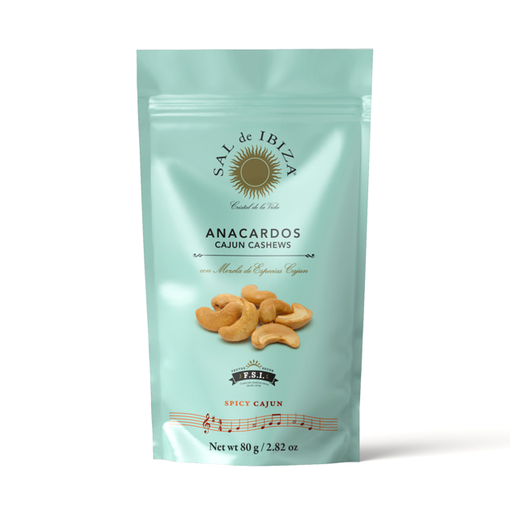 Image unavailable
This 80 g packet is for shoppers who prefer a spicy snack. It contains salt and sunflower oil, so it’s less suited to anyone looking for plain cashews with no added ingredients. Check the allergen warnings for this specific variety, too.
No. This claim describes the added ingredients, not necessarily the total fat content. Auchan lists 50 g of fat per 100 g for PAPAPERO cashews, whose recipe lists cashews as the only ingredient; compare the nutritional values per 100 g.
No. Dry-roasting means no cooking oil has been added to that recipe, but it doesn’t mean the total fat content is lower. Carrefour lists 48 g of fat per 100 g for its ETHIQUABLE dry-roasted cashews.
Manger Bouger, the Santé publique France website, recommends a small handful of unsalted, unsweetened nuts each day. You could prepare your portion before your break rather than eating straight from the packet. The portion printed on a product is there to help you read its nutritional information, not to define what you personally need.
Check the ingredients and any ‘may contain’ warnings on the packaging of the variety you choose. Depending on the product, Carrefour and Monoprix listings warn that it may contain traces of peanuts or other nuts; checking the list for a different variety isn’t enough.
Follow the instructions on the packet and keep it away from heat and moisture. For its 200 g plain cashews, Auchan advises sealing the pack tightly and eating the product within five days of opening. Don’t automatically apply this storage time to other varieties.