Parents comparing energy content
For holiday snacks and days out, you’re looking for a comparatively lower-energy cashew option. Compare the figures per 100 g, but don’t assume that cashews are a low-calorie snack.


For a holiday snack when you want to keep your energy intake in check, compare the kcal per 100 g on cashew labels and prepare a portion to take with you. ‘No added salt’ alone isn’t enough to guide your choice. The recipe also matters if you’d rather avoid added sugar, salt or oil. For children, check the allergen information and any warnings about whole nuts.
For holiday snacks and days out, you’re looking for a comparatively lower-energy cashew option. Compare the figures per 100 g, but don’t assume that cashews are a low-calorie snack.
If you want to avoid certain additions, check the ingredients to distinguish plain cashews from recipes that contain ingredients such as salt, oil, sugar or honey.
Before putting a packet in a bag, check the allergens, any ‘may contain’ warnings and age guidance. Precautions about whole nuts are especially important for young children.
To compare cashews for the holidays, start with the nutritional information per 100 g, then check the recipe and any precautions relevant to the people who will be sharing the snack.
| Criterion | What to check | Who is it for? |
|---|---|---|
| Energy content | Compare the kcal per 100 g on the packets, then decide how much to serve. | For a snack to take on a day out, I want to make an informed choice and avoid serving it straight from a large packet. Around 42% of consumers rank managing energy intake as their top priority. |
| Ingredients | Check the ingredients and the ‘sugars’ and ‘salt’ lines in the nutritional information. | If I prefer a short ingredients list for a holiday snack, I want to distinguish plain cashews from seasoned varieties. A simple recipe is the main priority for around 33% of consumers. |
| Precautions for children | Check the allergens, any possible traces and age-related warnings. | When several children are sharing a snack, I need to take account of their allergies and the shape of the nuts before preparing portions. These precautions come first for around 25% of consumers. |
Salt content and energy content are two different things. The Carrefour Original, Carrefour Bio, Ethiquable and Auchan product listings reviewed show 559 to 619 kcal per 100 g for recipes with no added salt.
Compare the energy per 100 g on the packet you choose and prepare a separate portion to take with you.
The Tokapi honey-and-salt listing gives 536 kcal and 38.1 g of sugars per 100 g. So a lower energy figure than another product doesn’t mean the recipes meet the same needs.
If you’re looking for a simple recipe, compare the ingredients, sugars and salt as well.
Auchan advises against giving its cashews to children under 3 because of their size. You should also carefully check the allergens and ‘may contain’ warnings for each product.
For a young child, or if someone has a relevant allergy, don’t choose a packet without checking its labelling and making sure it’s suitable for the person who will eat it.
If you’re sharing a packet over several days out, store it according to the instructions for that product.
Prepare portions to take with you, reseal the main packet and follow the on-pack storage instructions for after opening.
These products show how recipes can differ. Their inclusion here is not a brand ranking or an indication of availability on Joybuy.
Its no-added-salt cashews provide a useful comparison for the stated energy content.
The product reviewed contains organic, unroasted cashews with no added salt.
The product reviewed is dry-roasted, with no added fat or salt according to its listing.
The products reviewed at E.Leclerc include a salted roasted variety and a honey-and-salt variety, both of which differ from plain cashews.
The product featured by Aldi France consists of roasted cashews with no added salt.
This selection includes plain and seasoned cashews in a range of packet sizes. For a holiday snack, first choose a recipe that suits your preferences, then compare the energy per 100 g and prepare a portion to take with you.
 Image unavailable
A roasted recipe to consider if you’re looking for a packet to share on a day out. It’s seasoned with salt and caramelised sugar, so check the ingredients and nutritional information if you prefer plain cashews.
 Image unavailable
Worth considering if you’d like to portion out cashews yourself for several snacks. The listed ingredients are 100% cashews, but the 500 g packet isn’t an individual portion. Check the labelling before offering it to children.
 Image unavailable
The 120 g packet is handy for a snack break, as long as you plan how much to serve. This recipe contains added salt, so it won’t suit anyone who prefers unsalted nuts.
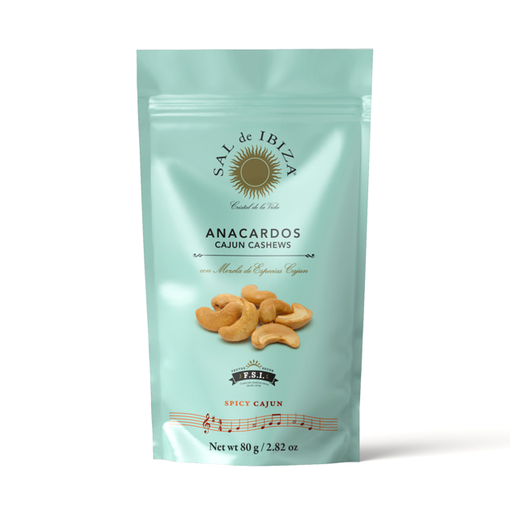 Image unavailable
The 80 g packet contains a spicy recipe rather than plain cashews. The seasoning includes salt and sunflower oil; check the allergen information before sharing this snack, too.
 Image unavailable
This 130 g product is for anyone who prefers an unsalted recipe. However, the ingredients list includes sunflower oil, so check the energy per 100 g on the packaging if that’s your main priority.
Don’t assume they are: the no-added-salt products reviewed at Carrefour and Auchan provide 559 to 619 kcal per 100 g. To choose between two packets, compare their energy per 100 g and the amount you plan to serve.
Start with the nutritional information per 100 g, then check the ingredients and, depending on your priorities, the ‘sugars’ and ‘salt’ lines. The Directorate-General for Competition, Consumer Affairs and Fraud Control states that nutritional declarations are given per 100 g or 100 ml, making it easier to compare two packets.
Check the product warning before offering them. Auchan advises against giving its product to children under 3 because of the size of the nuts, while Monoprix warns of a choking risk from tree nuts for young children, particularly those under 4. These precautions relate to the whole shape of the nuts, not just the recipe.
Check the ingredients for allergens and any ‘may contain’ warnings on the exact product. The Directorate-General for Competition, Consumer Affairs and Fraud Control says that allergenic ingredients must be clearly highlighted on the label. Carrefour Bio’s listing also mentions that other allergens may be present.
Follow the instructions on the packet you buy, particularly those on closing it and storing it after opening. If you’re preparing a snack to take with you, set aside the portion you need and reseal the rest according to the manufacturer’s instructions.