Anyone comparing calories
You want to compare the nutritional information on packets without confusing ‘relatively lower in energy’ with ‘low energy value’.


For a snack during the October half-term, compare cashews by their kcal per 100 g, then choose according to your other priorities, such as salt, sugars and how much you want to take with you. The products reviewed cannot be described as having a ‘low energy value’: Regulation (EC) No 1924/2006 sets a limit of 40 kcal per 100 g for this claim on solid foods, far below the figures shown for these products.
You want to compare the nutritional information on packets without confusing ‘relatively lower in energy’ with ‘low energy value’.
For a snack to enjoy at an aperitif or take with you, you want to distinguish between salted, unsalted and no-added-salt options, then check their energy content separately.
You’re planning a journey or a family trip and want to portion out a packet, store it properly and take precautions for children and allergies.
When shopping for the October half-term, start with the figures per 100 g so you can compare packets on an equal basis. Then check the ingredients and how much you plan to serve.
| Your priority | What to check | Who this matters to |
|---|---|---|
| Energy | The kcal per 100 g and, if shown on the packet, the amount per serving. | If I want to compare snacks in equal quantities, the figure on the label matters more than a phrase such as ‘light’. Around 42% of consumers would put this energy comparison first. |
| Salt and seasoning | The ‘salt’ figure per 100 g and the ingredients list. | For an aperitif, I might look for an unsalted option without assuming it contains fewer calories. Reducing salt would be the top priority for around 33% of consumers. |
| Portion size and transport | The packet weight and storage instructions after opening. | For a journey or sharing, I’d rather prepare the amount to serve than treat the whole packet as one portion. Around 25% of consumers would prioritise this convenience. |
A difference between two packets is not enough to justify a low energy value claim. Regulation (EC) No 1924/2006 sets a maximum of 40 kcal per 100 g for solid foods covered by this claim.
Compare cashews with one another on the same 100 g basis, then decide how much you want to serve.
E.Leclerc’s product information for TOKAPI honey & salt cashews lists 536 kcal, as well as 38.1 g of sugars and 0.9 g of salt per 100 g. So a lower energy figure won’t necessarily meet your needs if you also want to limit sugars or salt.
Check the energy, sugars, salt and ingredients together, especially when the product name mentions a coating.
Carrefour Classic’ no-added-salt cashews are listed at 614 kcal per 100 g. This wording tells you about added salt, not energy value.
Use the salt claim for that specific consideration, and compare the kcal per 100 g separately.
Cashews need particular care when a snack is intended for someone with an allergy or a young child. An opened packet should also be stored according to its instructions.
Check the allergen declaration every time you buy, bear in mind the choking risk posed by whole nuts for young children, and follow the instructions on the packaging.
The Carrefour Classic’ range includes roasted cashews with no added salt in a 125 g packet.
Auchan’s product information distinguishes between roasted, unsalted and roasted salted cashews.
The options shown include organic roasted Bio Village cashews and TOKAPI honey & salt cashews.
ALDI offers TRADER JOE’S® dry-roasted cashews and a roasted, unsalted option.
These cashew packets come in different sizes and seasonings, making them suitable for taking with you or sharing. Compare their labels on an equal-quantity basis; don’t choose any of them solely on the promise of a ‘low-calorie’ snack.
 Image unavailable
The 165 g packet could be a good option if you want to portion out a snack before a journey. Joybuy’s product information for this item lists 586 kcal per 100 g. This lets you compare packets, but it doesn’t support a low energy value claim.
The seasoning includes salt and sugary ingredients. If these matter to you, check the ingredients list and nutritional information before choosing.
 Image unavailable
This 120 g packet is for anyone looking for salted cashews to take with them. However, the packet size doesn’t determine how much to serve: portion it according to the snack you have in mind.
If you want to limit salt, compare the ‘salt’ figure on its label with that of an unsalted option.
 Image unavailable
This 130 g option may suit you if you prefer unsalted cashews. That alone doesn’t tell you how many calories they contain, so compare the energy per 100 g too.
The product information lists sunflower oil among the ingredients. If the preparation method matters to you, check the ingredients on the packaging.
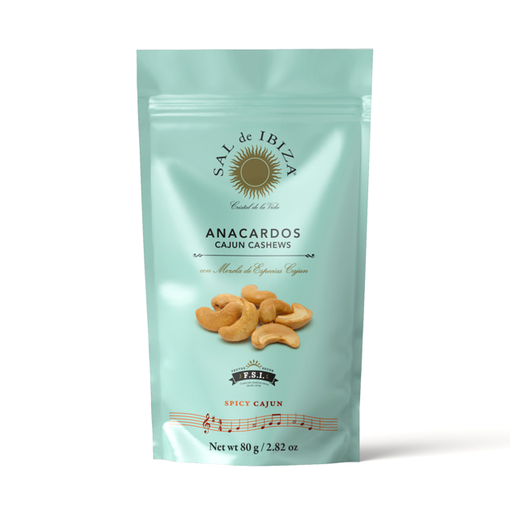 Image unavailable
The 80 g packet is worth considering if you want to take a smaller amount with you. These cashews are seasoned, so check the salt figure on the label if you’re comparing seasonings.
The product information warns that traces of several allergens may be present. If you have an allergy, check the declaration on the packet.
No, not the products reviewed here. For solid foods, Regulation (EC) No 1924/2006 limits the low energy value claim to a maximum of 40 kcal per 100 g; the figures shown for these cashews are much higher. You can compare them with one another without applying this claim to the product you choose.
Start by comparing the nutritional information per 100 g. France’s Directorate-General for Competition Policy, Consumer Affairs and Fraud Control explains that this format makes comparisons easier. Then consider how much you plan to serve and, depending on your priorities, check the sugars and salt.
Not necessarily. Carrefour and Auchan’s product information lists 614 kcal per 100 g for Carrefour Classic’ no-added-salt cashews and 595 kcal per 100 g for Auchan unsalted cashews, respectively. Compare energy and salt as two separate considerations.
Bear in mind the choking risk associated with whole nuts for young children and read the product’s age warnings. Also check the allergen declaration on the packet, especially if the snack is going to be shared.
Follow the instructions for the packet you’ve chosen, particularly for sealing and storage after opening. Before you set off, portion out what you’re taking separately from the rest if that makes serving easier and helps keep the main packet closed.