Those who plan their portions
If you want to serve cashews without filling the bowl by guesswork, compare the nutritional values per 100 g and, where given, per portion. The Auchan product information lists both values for its plain cashews.


For Friday drinks, choosing plain cashews or cashews with no added salt, and deciding how much to serve, helps you keep control of both the recipe and the portion without describing the product as “low in calories”. As product-specific points of reference, Carrefour lists 559 kcal per 100 g for its Original cashews with no added salt, while Auchan lists 149 kcal per 25 g portion of its plain cashews. Seasoned varieties are also worth comparing for their salt and ingredients.
If you want to serve cashews without filling the bowl by guesswork, compare the nutritional values per 100 g and, where given, per portion. The Auchan product information lists both values for its plain cashews.
For a less salty snack, distinguish a recipe with no added salt from a roasted and salted variety. The claim on the front of the pack is no substitute for checking the “salt” line in the nutritional information.
Recipes may include oil, sugar or seasonings. If allergens are a factor in your choice, also check the precautionary statements on the pack you buy: the Carrefour Original and Auchan product information both mention possible traces of peanuts and other nuts, among other things.
For cashews to serve with Friday drinks, start by deciding how much you plan to put in the bowl, then compare recipes on the same per-100 g basis.
| What matters | What to check | Who is it for? |
|---|---|---|
| Amount served | Compare the kcal per 100 g and, if shown on the pack, the value per portion. Auchan lists 149 kcal per 25 g for its plain cashews. | If I’m preparing a bowl to share, I want to know how much I’m pouring in rather than relying on the “no added salt” claim alone. Around 40% of consumers would put portion control first. |
| Salt | Look for “no added salt”, then check the salt value per 100 g for the specific product. | I’d like to keep cashews on the menu, but choose a less salty recipe. Around 30% of consumers would prioritise finding a lower-salt option. |
| Ingredients | Read the ingredients list to distinguish plain cashews from varieties with oil or sweet or savoury seasonings. | For a plain flavour, I’d rather know what’s been added before choosing a honey or spiced variety. Around 20% of consumers would make a simple recipe their top priority. |
| Allergens and traces | Check the listed allergens and precautionary statements on the pack you actually buy. | If I need to take an allergen into account, the word “plain” isn’t enough to help me choose. Around 10% of consumers would put checking allergens ahead of other criteria. |
Salt and energy value describe two different things. Carrefour lists 559 kcal per 100 g for its Original cashews with no added salt, and 602 kcal per 100 g for its SIMPL roasted cashews with no salt.
If you’re looking to limit salt, keep that in mind as a separate criterion, and decide separately how much cashews to serve.
E.Leclerc’s product information for Tokapi honey & salt cashews lists 536 kcal per 100 g, but also 39.7% sugar in the recipe and 0.9 g of salt per 100 g. This is a different recipe from plain cashews.
Compare the nutritional values and ingredients list before choosing between two recipes.
The Carrefour Original and Auchan product information mentions possible traces of peanuts and other nuts. For pre-packed food sold in France, the DGCCRF reminds retailers that allergenic ingredients must be highlighted in the ingredients list.
If you have an allergy, check the information on the pack you receive rather than relying solely on the online product description.
A large pack can tempt you to pour out more than intended or leave some of the contents exposed. Auchan’s product information says to reseal its pack airtight and consume the cashews within 5 days of opening.
Pour the amount you want into the bowl, then reseal the pack according to the instructions for the product you’ve bought.
Two options with no added salt or no salt let you compare different recipes and pack sizes.
Bio Village product information lets you distinguish a roasted recipe with no salt from a roasted and salted variety.
The 200 g plain variety gives nutritional values per 100 g and per 25 g portion.
Monoprix Courses product information features a Monoprix roasted and salted variety and a Daco Bello plain roasted variety with no salt.
ALDI offers a 200 g bag of Trader Joe’s roasted cashews with no added salt.
This selection includes two seasoned recipes and one with no added salt. To choose according to what matters most to you, compare the seasonings, then check the nutritional values and how much you plan to serve.
 Image unavailable
This is a good option for drinks if you’re looking for a seasoned recipe rather than plain cashews. Check the salt and seasoning ingredients on the pack, then use its nutritional values to decide how much to serve.
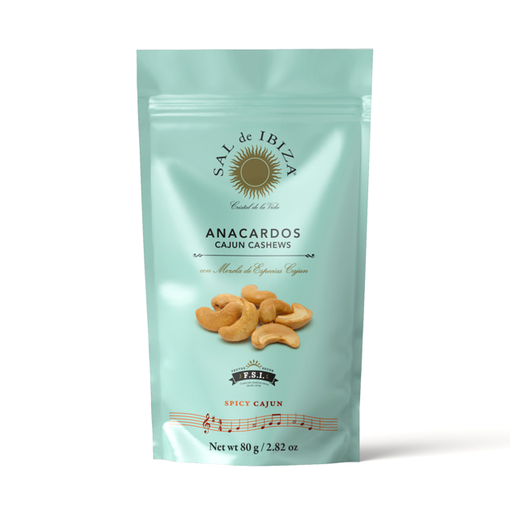 Image unavailable
The 80 g pack and spiced recipe are a good fit when seasoning is an important part of your choice. If you’re looking to limit salt or choose a simple recipe, check the nutritional information and ingredients on the pack before serving.
 Image unavailable
This is a good option if you’re looking for cashews with no added salt to serve with drinks. The recipe also contains sunflower oil, so check the ingredients and allergen information on the pack. Don’t assume that no added salt means a lower energy value.
The figures for the plain or no-added-salt varieties mentioned here don’t support that general description: depending on the product, Carrefour, Auchan and Daco Bello list between 559 and 602 kcal per 100 g. To find out how much you’re actually serving, use the per-portion value where available; Auchan lists 149 kcal per 25 g for its plain cashews.
No: this claim refers to added salt, not energy value. Carrefour lists 559 kcal per 100 g for its Original cashews with no added salt and 602 kcal per 100 g for its SIMPL roasted cashews with no salt. Check both figures separately.
Check the ingredients, energy value per 100 g, salt and any allergen or trace information that may be relevant to your guests. For pre-packed food sold in France, the DGCCRF reminds retailers that allergenic ingredients must be highlighted in the ingredients list.
No, because the recipe is different. E.Leclerc’s product information for Tokapi honey & salt cashews lists 56.8% cashews, 39.7% sugar and 0.9 g of salt per 100 g. Compare it as a sweet-and-salty recipe, even if its energy value per 100 g is lower than that of some plain varieties mentioned here.
Follow the instructions for the product you’ve bought. Auchan says to reseal its plain cashews airtight and consume them within 5 days of opening; Daco Bello recommends consuming its plain roasted cashews soon after opening.