Sports enthusiasts looking for a snack with their coffee
You enjoy cashews before or after a workout, but want to distinguish their protein content from the regulated ‘high in protein’ claim.


Cashews can go well with coffee before or after exercise, but the products with nutritional figures listed here do not meet the EU threshold for the claim ‘high in protein’. So don’t choose them on their own if that’s your goal. If you prefer a simple or low-salt recipe, compare plain, dry-roasted and no-added-salt options. For a seasoned version, check the salt, ingredients and allergen information on the specific pack.
You enjoy cashews before or after a workout, but want to distinguish their protein content from the regulated ‘high in protein’ claim.
For a regular coffee break, you want to compare a salted recipe with a plain, dry-roasted or no-added-salt option.
You need to read the ingredients list and check for any warnings about traces of peanuts or other nuts on the pack you buy.
For a coffee break that fits around exercise, start with what matters most to you: protein content, the recipe, or checking allergens and portion size.
| Criteria | What to check | Who it’s for |
|---|---|---|
| Protein content | Compare the protein per 100 g and per portion you plan to eat. The number of grams of protein alone isn’t enough to support a ‘high in protein’ claim. | After exercise, I want to know what cashews actually add to my snack, without treating them as a complete protein option. Around 40% of consumers put this first. |
| Salt and recipe | Read the ingredients and check the salt per 100 g. ‘Dry-roasted’ and ‘no added salt’ are two separate characteristics to look out for. | With my daily coffee, I prefer to make an informed choice between a plain and a seasoned recipe. Ingredients and salt are the priority for around 30% of consumers. |
| Allergens and portion size | Check the ingredients, any trace warnings, and the energy and fat content for the amount you plan to eat. | If I need to check allergens or portion size, taste alone won’t help me choose between two packs. This is the main consideration for around 30% of consumers. |
Regulation (EC) No 1924/2006 sets a threshold of at least 20% of the energy value coming from protein for a product to claim it is ‘high in protein’. The figures declared by Carrefour, E.Leclerc and Monoprix for the products mentioned here do not meet this threshold.
Compare the nutritional information on the specific pack rather than relying on the number of grams of protein alone.
The Carrefour Bio, Tokapi and Monoprix Bio recipes mentioned in this article don’t have the same salt content or ingredients. ‘Roasted’ on its own doesn’t tell you what other ingredients have been added.
If salt is important to you, compare the amount per 100 g and read the ingredients list.
Cashews are one of the allergenic ingredients. Some products also warn that they may contain traces of peanuts and other nuts.
Check the label on the exact product, even if you’ve bought another recipe from the same brand before.
The 400 g pack of Tokapi cashews doesn’t tell you how long it will last once opened.
Check the storage instructions and best-before date before choosing this size.
Carrefour offers, among other options, 100 g packs of organic roasted and salted cashews.
The roasted and salted cashews listed by E.Leclerc come in a 400 g pack.
Monoprix offers 120 g packs of organic roasted and salted cashews.
Aldi offers dry-roasted cashews under this brand, as well as a roasted version with no added salt.
Lidl offers plain cashews as part of its Alesto range.
These packs offer options for coffee breaks, from no-added-salt and plain cashews to seasoned varieties. Choose based on the recipe and the product information first, rather than assuming these are ‘high in protein’ snacks.
 Image unavailable
Worth considering if salt is your priority: this dry-roasted version contains 0.02 g of salt per 100 g. The recipe also includes sunflower oil, so check the trace warnings if they’re relevant to you.
 Image unavailable
Consider this if you’re looking for a recipe made solely from cashews, as stated in the ingredients for this pack. At 500 g, it’s worth checking the storage instructions for once opened, as well as the allergen information.
 Image unavailable
If you’re looking for a seasoned snack, take a close look at this resealable pack: it contains several seasoning ingredients and has 0.92 g of salt per 100 g. So ‘dry-roasted’ doesn’t mean ‘no added salt’.
 Image unavailable
For a savoury break, compare this recipe with unsalted options before choosing: it contains 0.9 g of salt per 100 g. If you have an allergy, read all the pack information, including any warnings about possible traces.
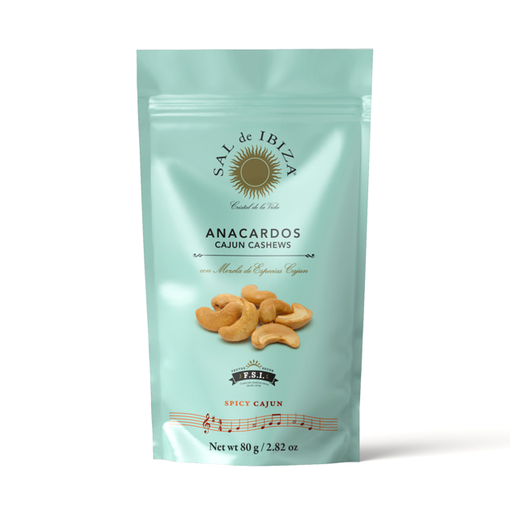 Image unavailable
If you’re after a spicy option to enjoy with your coffee, check whether its salt content suits your priorities: it’s listed at 1.2 g per 100 g. The label also warns of several possible allergen traces.
Not based on their protein content per 100 g alone. Regulation (EC) No 1924/2006 requires at least 20% of the energy value to come from protein for a product to use this claim. The figures declared by Carrefour, E.Leclerc and Monoprix for the products reviewed correspond to around 12.4% to 13.2%. Check the figures on the specific pack before describing it this way.
Their presence alone isn’t enough to qualify a snack as suitable for sports recovery. Anses classifies oilseeds as sources of plant protein. If protein is your main priority, compare the amounts per portion with those in the other foods you’re considering for your break.
If you want to limit salt and added ingredients, start by comparing plain, dry-roasted and no-added-salt options, without assuming these descriptions mean the same thing. For a seasoned recipe, read the ingredients and check the salt per 100 g.
Read the ingredients on the exact pack and check for any warnings about traces of other allergens. The DGCCRF states that allergenic ingredients must be highlighted in the ingredients list on prepacked foods. Some of the cashews mentioned here warn that they may contain traces of peanuts or other nuts.