What should you check before buying?
When comparing bags for breakfast, start with the nutritional information per 100 g, then check the recipe and how much you’ll actually use.
| What matters to you |
What to check |
Who it matters to |
| Calories per portion |
Compare the kcal per 100 g, then the amount you’ll serve. A value per portion is only useful if it matches your portion. |
If I’m having cashews with a quick breakfast, I want to know the energy content of the amount I serve, rather than treating the whole bag as one portion. Around 36% of consumers put this need first. |
| Added salt |
Read the ingredients list and check the salt per 100 g, especially when the packaging says “roasted and salted”. |
If I prefer unsalted cashews in the morning, a seasoned variety isn’t my first choice. This would be the top priority for around 29% of consumers. |
| Sweet recipes |
Look for sugar or honey in the ingredients and compare the “of which sugars” figure per 100 g. |
I might enjoy a honey recipe, but I want to know whether it’s really a substitute for the plain cashews I had in mind. Around 21% of consumers prioritise avoiding sweet recipes. |
| Pack size and storage |
Consider the bag size in relation to how often you eat cashews, and check the storage instructions for after opening. |
When mornings are busy, I want a pack that’s easy to use without leaving it open for too long. Convenience comes before other criteria for around 14% of consumers. |
Auchan’s product information shows why it helps to consider these criteria separately: its plain variety contains 595 kcal and 0.03 g of salt per 100 g, while one roasted variety contains 559 kcal and 0.01 g of salt per 100 g. The information for Auchan’s roasted and salted version lists sunflower oil and salt. These figures apply to specific recipes, not to all plain or roasted cashews.
Which brands can you compare?
These brands offer examples of different recipes to compare; the figures below apply only to the specific products named.
Auchan
Auchan’s product information lets you compare plain, roasted, and roasted and salted cashews.
- The plain variety contains 595 kcal per 100 g and 149 kcal per 25 g; the roasted variety contains 559 kcal per 100 g.
- The roasted and salted version contains sunflower oil and 0.8 g of salt per 100 g, so don’t assume other recipes have the same ingredients.
Bio Village
E.Leclerc’s published information for this organic roasted cashew variety gives an example of a roasted recipe containing oil.
- The ingredients list states 96.9% cashews and 3.1% sunflower oil.
- According to E.Leclerc, it contains 621 kcal per 100 g. “Roasted” and “organic” don’t mean it has a lower energy value.
Tokapi
E.Leclerc’s published information for the honey and salt recipe offers a point of comparison with plain cashews, but it’s a different product.
- The ingredients list specifies the proportions of cashews, sugar and honey, so you can see what makes this recipe different.
- The list states 56.8% cashews and 39.7% sugar. Check the ingredients if you’re looking for cashews without a sweet recipe.
Seeberger
Carrefour’s product information for this variety describes a 200 g bag of plain cashews.
- The ingredients list says plain cashews, and the stated energy value is 603 kcal per 100 g.
- This value applies to the product described by Carrefour, not to all Seeberger products.
TRADER JOE'S
Aldi France lists, among other products, a 150 g bag of dry-roasted cashews and a 200 g bag of roasted unsalted cashews.
- These product descriptions help distinguish between looking for dry-roasted cashews and looking for a product without salt.
- To compare their calories or salt content with another bag, check the nutritional information for the product you choose.
Cashews to consider on Joybuy
This selection includes plain, unsalted roasted and seasoned cashews. For a quick breakfast, first choose a recipe that suits your priorities, then compare the label and the amount you plan to serve.
 Image unavailable
GOLDEN TURTLE Cashews 500 g
Worth considering if you’re looking for cashews so you can prepare your own morning portion. The bag contains 500 g; check the energy value and storage instructions for after opening on the packaging before choosing this size.
View on Joybuy
 Image unavailable
BENENUTS Dry-Roasted Cashews 165 g
A good option if you prefer dry-roasted cashews, rather than choosing based on the word “plain” alone. The bag contains 165 g; check the ingredients, salt and sugars if seasoning is important to you.
View on Joybuy
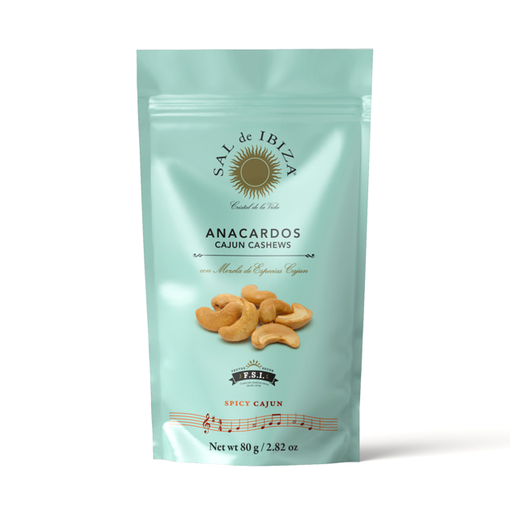 Image unavailable
SAL DE IBIZA Cashews with Creole Spices & Sdi 80 g
Worth considering if you’re looking for a ready-to-serve spicy recipe rather than plain cashews. The bag contains 80 g; compare the salt and energy per 100 g before choosing your portion.
View on Joybuy
 Image unavailable
Xue Ji Chaohuo Salted Cashews with Skin 120 g
This variety is for anyone who prefers salted cashews with the skin on, rather than an unsalted recipe. The bag contains 120 g; check the salt per 100 g and decide how much to serve.
View on Joybuy
 Image unavailable
BENENUTS Unsalted Cashews 130 g
Worth a look if “unsalted” is your first filter. The bag contains 130 g; also check the ingredients list and energy per 100 g, as “unsalted” doesn’t tell you how many calories it contains.
View on Joybuy
Frequently asked questions
Are cashews a “low-calorie” option for breakfast?
Don’t assume they are based on their name or the fact that they’re roasted: the Auchan, Bio Village and Seeberger products with published nutritional information contain between 559 and 621 kcal per 100 g. Consider how much you want to eat before deciding how they fit into your breakfast.
How do I compare two different-sized bags?
Start by checking the values per 100 g, then work out how they compare with the amount you’ll serve. The DGCCRF states that food nutrition declarations show values per 100 g or 100 ml. If the bag also gives values per portion, these can help if the stated portion matches yours.
Can a honey recipe replace plain cashews?
It may suit you if you’re in the mood for something sweet, but compare its ingredients separately. According to E.Leclerc, Tokapi’s honey and salt recipe contains 56.8% cashews and 39.7% sugar. So check the ingredients and sugars, not just the kcal.
What should I check if allergen information matters to me?
Read the information on the packaging of the product you buy, including any mention of possible traces. Auchan’s product information for one plain variety warns that it may contain traces of peanuts and other tree nuts. This shouldn’t be assumed to apply to every bag.
How long can I keep a bag after opening?
Follow the instructions for the bag you choose. Auchan’s product information for one plain variety says to seal it tightly and eat the contents within five days of opening. This timeframe doesn’t automatically apply to other products.


