Students preparing a snack to take with them
If you pop some cashew nuts in your bag for a quick snack, compare the values per 100 g, then check what they mean for the amount you’ll actually take with you.


For a quick snack between lectures, plain cashew nuts let you avoid seasoning, but that doesn’t make them a low-calorie option: the plain varieties listed by Carrefour and Monoprix contain 559 to 620 kcal per 100 g. If your priority is keeping the amount you take with you in check, prepare a portion before you leave. To compare recipes, look at the ingredients, sugar and salt as well as the energy content.
If you pop some cashew nuts in your bag for a quick snack, compare the values per 100 g, then check what they mean for the amount you’ll actually take with you.
If you’re looking for a simple recipe, distinguish between nuts with no added salt and seasoned or sweet-coated varieties. Manger Bouger recommends choosing unsalted nuts.
A salted or honey-and-salt variety may suit a different craving. The TOKAPI product listings published by E.Leclerc show why you should check the ingredients rather than treating these recipes as plain cashew nuts.
When choosing a snack to take to uni, start with how much you plan to have, then check the recipe and the pack size.
| What to consider | What to check | Who is it for? |
|---|---|---|
| Quantity and energy | Energy per 100 g and the amount you plan to take with you. | Between lectures, I want to know what’s in the amount I’ve prepared, rather than using the whole pack as my guide. Around 44% of consumers prioritise keeping portions in check. |
| Ingredients, salt and sugars | Ingredients list and salt and sugar content per 100 g. | If you want a snack without salty seasoning or a sweet coating, the recipe matters just as much as its energy content. Avoiding these additions is the main priority for around 33% of consumers. |
| Pack size for carrying | Net weight and whether you can portion out a separate amount. | When I’m heading to uni, I mainly want a pack I can pop in my bag and use for the amount I’ve planned. Portability comes first for around 23% of consumers. |
The plain or no-added-salt varieties listed by Carrefour and Monoprix contain 559 to 620 kcal per 100 g. So, the fact that no salt has been added doesn’t tell you how much energy they contain.
Compare the energy per 100 g of similar products, and prepare the amount you plan to take with you rather than eating straight from a large pack.
The TOKAPI honey-and-salt product listing published by E.Leclerc states 536 kcal per 100 g, but also lists 39.7% sugar among the ingredients. The energy figure alone doesn’t tell you what’s in the recipe.
Check the ingredients list, as well as the sugars and salt per 100 g. If you’re looking for a sweet variety, compare it with other sweet recipes.
Cashew nuts are themselves a tree nut allergen. The Carrefour Original variety also warns that it may contain traces of peanuts and other tree nuts.
If you have an allergy, check the full label and any ‘may contain’ warnings every time you buy, even if it’s a product you know well.
A 200 g pack of Carrefour Original cashews with no added salt offers a useful point of comparison for an unseasoned recipe.
The TOKAPI varieties listed by E.Leclerc show two different recipes: roasted and salted, and honey and salt.
The Vico, Daco Bello and Seeberger product listings published by Monoprix provide examples of plain or unsalted cashew nuts in several pack sizes.
This Joybuy selection includes a large pack of cashew nuts, an unsalted variety and seasoned recipes. For a quick snack at uni, first choose the recipe and the amount you want to take with you: the pack weight isn’t the same as a portion.
 Image unavailable
This large pack is a good option if you prefer to portion out what you’ll take to lectures. It contains 500 g of cashew nuts; this isn’t the same as an individual portion.
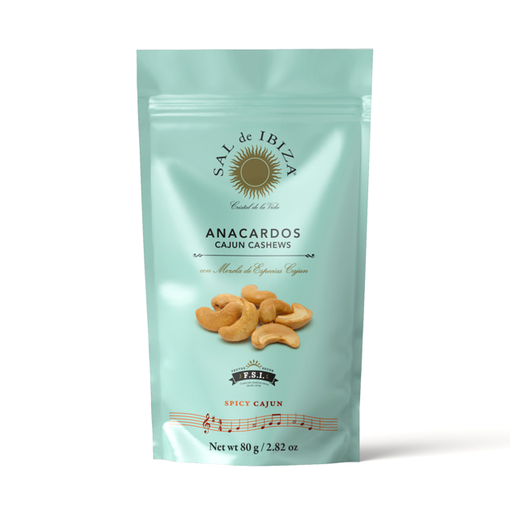 Image unavailable
This 80 g pack is for anyone who’d rather take a spiced variety than plain cashew nuts. If you’re avoiding salt or certain ingredients, check the product’s ingredients and label before choosing.
 Image unavailable
This 130 g pack may suit anyone looking for unsalted cashew nuts. ‘Unsalted’ doesn’t tell you how much energy they contain, so compare the nutritional information and ingredients if these are important to you.
 Image unavailable
This 165 g pack is another option to take with you if you’re looking for roasted cashew nuts. The roasting method alone doesn’t tell you whether the recipe is plain, so check the ingredients, salt and sugars on the label.
The plain Carrefour Original and Vico varieties listed by Carrefour and Monoprix contain 559 and 620 kcal per 100 g respectively, so simply calling them ‘low in calories’ would be misleading. For a quick snack at uni, think about how much you’re taking with you too.
This makes it easier to compare packs of different weights. The DGCCRF states that the nutritional information for prepacked foods is given per 100 g or 100 ml. You can then use these values to work out the amount for the quantity you plan to eat.
Check the ingredients list and look for a variety with no added salt if that’s your priority. Don’t assume this means there’s no sugar, oil or other added ingredients: check the full recipe.
Bear in mind that cashew nuts themselves are an allergen, as well as checking for other allergens and ‘may contain’ warnings on the label. The Carrefour Original variety, for example, warns that it may contain traces of peanuts and other tree nuts. Check the packaging of your chosen product every time you buy it.