Active people who want to track their protein intake
For a snack before or after a workout, the amount of protein per portion matters more than simply knowing that a product contains protein.


Cashews can make a useful post-workout snack, but the three plain or unsalted products compared here don’t meet the criteria for a ‘high protein’ claim. Their protein provides around 12% to 14% of their energy, below the 20% threshold set by EU regulations. To choose, compare the protein per portion, as well as the ingredients and salt per 100 g. If protein is your priority, don’t judge your snack on cashews alone.
For a snack before or after a workout, the amount of protein per portion matters more than simply knowing that a product contains protein.
The ingredients list and salt content can help you tell plain cashews apart from salted or seasoned varieties.
A small bag is easy to pop in your bag; a larger pack needs to be resealable and easy to store once opened.
Start with the portion you plan to eat, then compare the nutritional information per 100 g and the ingredients in each product.
| What matters to you | What to check | Who is it for? |
|---|---|---|
| Protein per portion | Protein and energy per 100 g, then the amount for the portion you’ll eat. | After a workout, I want to know how much protein my snack actually provides. Around 50% of consumers are said to put this verifiable protein content at the top of their list. |
| Ingredients and salt | The ingredients list and salt content per 100 g, including for roasted varieties. | For a regular snack, I prefer to know whether the cashews are plain or if the recipe includes added ingredients. This simple composition is said to be a priority for around 30% of consumers. |
| Pack size and storage | Pack weight and instructions for resealing and storing after opening. | If I’m keeping the pack for several snacks, I need to be able to store it as instructed. Around 20% of consumers are said to make this practical consideration their priority. |
A figure given per 100 g isn’t enough to justify this claim. Under Regulation (EC) No 1924/2006, published by the European Union, protein must provide at least 20% of a product’s energy for it to be described as ‘high in protein’. The three Auchan, Vico and Seeberger products compared here all fall below this threshold.
Also check the amount in your portion: the Auchan product information lists 4.5 g of protein per 25 g of cashews.
The cooking method doesn’t tell you everything about a recipe. For example, a roasted and salted product sold by E.Leclerc lists sunflower oil and salt among its ingredients.
Check the ingredients list and compare the salt per 100 g before choosing a roasted variety.
Storage instructions matter when you’re saving the contents for several snacks. Auchan and Seeberger recommend keeping cashews away from heat and moisture.
Choose a pack you can store according to the instructions, and reseal it after use.
Cashews are tree nuts, so check the ingredients and any precautionary ‘may contain’ statements on the product in question. The DGCCRF reminds consumers that allergenic ingredients must be highlighted in the ingredients list on prepacked foods.
Check the label on the bag you receive, even if you’re already familiar with the brand.
The 200 g plain variety gives you a useful benchmark for nutritional values and snack portions.
The 180 g product reviewed at Auchan contains cashews that are neither roasted nor salted.
The 400 g product reviewed at Auchan contains roasted cashews with no added salt.
Lidl’s range includes plain cashews for people looking for a simple recipe.
Aldi describes this product as a 150 g bag of dry-roasted cashews.
The 200 g product listed by Monoprix Courses gives raw cashews as its ingredient.
These options include a large bag, roasted cashews and a spicy variety. For a snack, first choose based on the ingredients and pack size you’re looking for, then check the nutritional values for your portion.
 Image unavailable
This large bag is ideal if you’re planning to have several snacks. Reseal it after opening and check the nutritional information to work out what the values per 100 g mean for your portion.
 Image unavailable
This bag is a good choice if you’re after roasted cashews for an afternoon snack. Dry-roasting alone doesn’t tell you whether they’re seasoned, so check the ingredients and salt content on the pack.
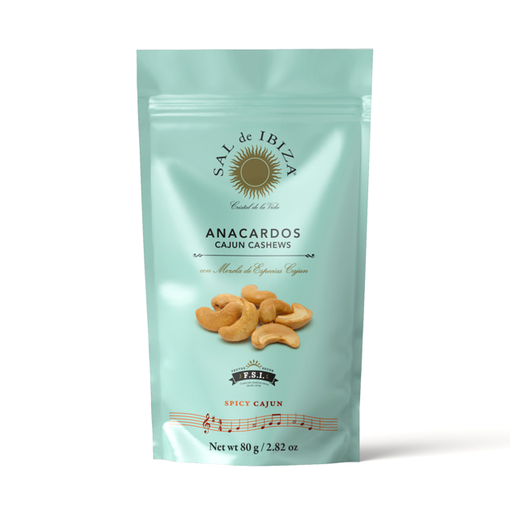 Image unavailable
This small pack is for anyone looking for spicy rather than plain cashews. If you’re comparing options for a snack, check the ingredients list and salt content of this seasoned variety.
Not according to the three Auchan, Vico and Seeberger products compared here: protein provides around 12.1%, 14.2% and 13.0% of their energy, respectively. Regulation (EC) No 1924/2006, published by the European Union, sets the minimum for a ‘high protein’ claim at 20% of a product’s energy. For your snack, also check how many grams of protein you’ll get in the portion you eat.
Values per 100 g let you compare products on the same basis, while the portion tells you what you’ll actually consume. For example, Auchan’s product information lists 18 g of protein per 100 g and 4.5 g in a 25 g portion.
No. Roasting and seasoning are two separate things. The Seeberger product reviewed at Auchan is roasted with no added salt, while a roasted and salted product sold by E.Leclerc also contains sunflower oil. Check the ingredients for the variety you choose.
Read the ingredients list and check for any precautionary ‘may contain’ statements on the pack you’re going to eat. For prepacked foods, the DGCCRF states that allergenic ingredients must be highlighted in the ingredients list.