What should you check before buying?
First check whether cashew nuts are suitable for this lunchbox. Protein content and ingredients only become deciding factors after that.
| What to consider |
What to check |
Who it matters to |
| School and allergens |
Ask about the school’s rules; read the ingredients, allergen information and any warnings about possible traces. |
I need to know whether nuts are allowed and suitable for anyone with relevant allergies before packing the lunchbox. Around 36% of consumers would put this compatibility first. |
| Protein |
Compare protein and energy per 100 g, then consider the portion you’ll pack; don’t infer a nutrition claim from the protein content alone. |
After sport, I’m looking for a convenient plant-based component, not a complete meal. For around 29% of consumers, protein intake would be the main priority. |
| Ingredients and salt |
Read the ingredients list and salt content per 100 g; distinguish a no-added-salt recipe from a seasoned one. |
If the lunchbox already contains other salty foods, I’d rather check the cashews’ ingredients than rely on the product name alone. This would be the main consideration for around 21% of consumers. |
| Texture and portion |
Do not give whole nuts to children under 6; adapt how they are served and the amount packed to suit the child. |
For a young child, I first want to choose a form they can eat safely. Around 14% of consumers would prioritise age and texture. |
Cashew nuts available on Joybuy
This selection includes a no-added-salt variety and roasted or seasoned cashews. For a school lunchbox, choosing any of them still depends on the school’s rules, allergies and your child’s age.
 Image unavailable
BENENUTS Cashew Nuts with No Added Salt 130 g
Worth considering if you’d prefer a no-added-salt recipe to a seasoned variety. Check the ingredients and allergen information on the pack before adding it to a lunchbox.
View on Joybuy
 Image unavailable
BENENUTS Dry-Roasted Cashews 165 g
This roasted variety is worth comparing with cashews that have no added salt. It is seasoned, so check the salt content and allergen information before choosing how much to pack.
View on Joybuy
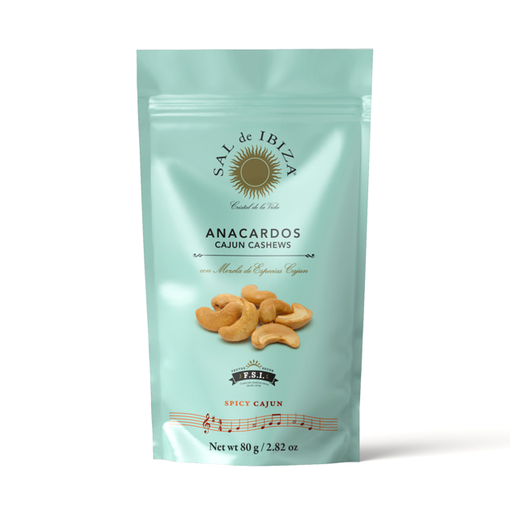 Image unavailable
SAL DE IBIZA Creole Spiced Cashews 80 g
Only consider this if a spicy, salted variety suits the lunchbox you’re planning. Check the salt content and any warnings about possible allergen traces on the packaging.
View on Joybuy
 Image unavailable
Xue Ji Chaohuo Salted Cashews with Skins 120 g
This skin-on variety is for anyone looking for a salted recipe, rather than an option with no added salt. Check the allergens, then adapt how you serve it to suit your child’s age.
View on Joybuy
Frequently asked questions
Are cashew nuts “high in protein”?
The protein content per 100 g is not enough on its own to justify this claim. Under EU nutrition claim rules, at least 20% of a food’s energy must come from protein. For the PAPAPERO product sold by Auchan, the 23 g of protein and 631 kcal listed per 100 g work out at around 14.6%.
Can you put cashew nuts in any school lunchbox?
First check the school or classroom rules and consider any relevant allergies. The French Ministry of National Education explains that a PAI can arrange dietary adjustments for a pupil, but this does not mean that nuts are generally allowed at school.
Can you give whole cashew nuts to a young child?
Not before the age of 6: Manger Bouger advises against giving whole nuts because of the risk of choking. If nuts are suitable for the child’s allergies and allowed by the school, they can be ground and mixed into a dish.
What should you compare between two packs of cashew nuts?
Compare the ingredients, allergens, salt and protein per 100 g, then consider the portion you plan to pack. The DGCCRF reminds consumers that allergenic ingredients must be highlighted on the labels of prepacked foods.
Can cashew nuts replace a meal after sport?
Don’t treat them as a substitute for a balanced meal. They can be one part of a lunchbox after exercise, provided they are allowed at school and are suitable for your child.


