Hikers keeping an eye on protein
You compare protein content and ingredients before adding cashew nuts to a snack, without relying on them alone for recovery.


If you’re choosing a hiking snack partly for its protein, compare the figures per 100 g, then check the salt content and ingredients list. Plain or unsalted roasted cashews are a good option if you’re looking for a simple recipe; salted cashews may suit you if you prefer the taste, but check the ingredients first. The protein content of a bag alone doesn’t prove that it will help with recovery.
You compare protein content and ingredients before adding cashew nuts to a snack, without relying on them alone for recovery.
You’re looking for plain cashews or a version with no added salt, and check the amount shown on the packet, including for roasted cashews.
You choose an amount that’s easy to take with you and consider the storage instructions and how to reseal the packet after opening.
Compare the nutritional information on the same per-100 g basis, then consider how much you plan to take with you.
| What to compare | What to check | Who is it for? |
|---|---|---|
| Protein | Protein and energy per 100 g, then the amount you plan to take. | If I’m choosing this snack for its protein, I want to compare the labels rather than rely on a claim on the packet; around 36% of consumers would put protein first. |
| Salt and ingredients | The ‘salt’ line and ingredients list for the exact product. | To avoid choosing a recipe that’s saltier than I’d like when I’m looking for protein, I also check the ingredients; salt and ingredients would be the priority for around 29% of consumers. |
| Taking it with you and storage | The packet weight and storage instructions after opening. | For my bag, I want an amount that’s easy to carry and a way to protect what’s left in the packet; around 21% of consumers would prioritise portability and storage. |
| Availability | Whether the product is available at the shop or collection point you have in mind. | Before planning my supplies, I want to be able to find my chosen product near where I’m setting off; local availability would be the main criterion for around 14% of consumers. |
The Auchan and Joybuy product listings mentioned here show different protein levels. A claim on the front of the packet is no substitute for checking the exact product.
Check protein, energy and salt per 100 g, as well as the ingredients list. Nutrition claims are regulated in the European Union by Regulation (EC) No 1924/2006.
A roasted recipe may be salted and contain oil. The E.Leclerc Tokapi and Monoprix Bio product listings describe recipes that differ from plain cashew nuts.
If you want to limit salt or added ingredients, check both on the packaging, even if the preparation method sounds right for you.
The amount you buy and the storage instructions matter if you’re only eating part of the packet while you’re out.
Pack the amount you expect to eat in a dry, resealable container, then follow the packaging instructions for the rest.
E.Leclerc’s Tokapi listing advises checking availability with the relevant store. A particular product may not be available when you’re getting ready to set off.
Check your chosen store or collection point, and compare the label again if you switch to a different product.
Plain and roasted unsalted options let you compare products with different ingredients.
A roasted and salted option in a 3 × 80 g pack, worth considering if you prefer individually portioned bags.
Two roasted and salted options with labels that let you compare salt and ingredients.
Lidl’s Alesto range includes plain cashew nuts.
An Aldi listing describes a 400 g bag of roasted and salted cashew nuts.
A seasoned option sold by a partner on Carrefour may appeal if you’re looking for a spicy flavour.
These options include an unsalted version, a roasted and salted version, and a spicy version. Compare the ingredients with your priorities before choosing a bag for your hike.
 Image unavailable
Worth considering if you’re looking for an unsalted option for your snack. The bag contains 130 g; the recipe includes sunflower oil, so it isn’t made from cashew nuts alone. Check the label if possible traces of peanuts or other nuts are a concern.
 Image unavailable
This seasoned version may suit you if you like the flavour and are happy to check the salt content. The bag contains 165 g and should be resealed after opening. Check the label if possible traces of peanuts or other nuts are a concern.
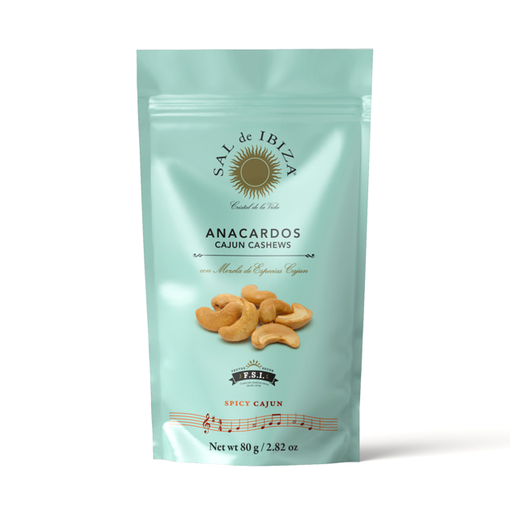 Image unavailable
This 80 g bag is for those who prefer a spicy recipe to a minimal-ingredient option. The recipe includes spices, sunflower oil and salt. Check the label if possible traces of other allergens are a concern.
No. Their protein content alone doesn’t prove that they help with recovery. To compare cashew nuts for hiking, check the protein and energy per 100 g, then consider how much you’ll take and what else is in your snack.
Start with plain versions or those with no added salt, then check the ‘salt’ line for the exact product. Auchan’s listings give 0.03 g of salt per 100 g for its plain option and 0.05 g per 100 g for the unsalted Papapéro product; other roasted recipes are salted.
Follow the instructions on the packaging and keep the contents away from heat and moisture. For its 200 g plain product, Auchan’s listing says to seal the bag tightly after opening and eat the contents within five days.
Check the ingredients list and any ‘may contain’ warnings on the specific packet: some products may contain traces of peanuts or other nuts. Manger Bouger recommends not giving whole nuts to children under 6 because of the risk of choking.
No. For the Tokapi product, E.Leclerc advises checking availability with the relevant store. Confirm the stock at your chosen shop or collection point before planning your supplies.