What should you look for first?
When choosing cashews to snack on while revising, start with what matters most to you: keeping portions in check, avoiding certain added ingredients or checking the information on the pack.
| What to check |
Look for |
Who is it for? |
| Energy per portion |
Compare the kcal per 100 g, then work out the amount for the portion you plan to serve. |
When the pack stays open while I’m revising, I prefer to decide in advance how much I’m going to eat. Around 42% of consumers would prioritise portion control. |
| Added ingredients |
Read the ingredients list to see whether it contains just cashews, or also oil, salt, sugar or a coating. |
I want to enjoy the flavour of cashews without accidentally choosing a salty or sweet recipe. Around 33% of consumers would prioritise avoiding these additions. |
| Label and packaging |
Check relevant allergen and ‘may contain’ information, the net weight and storage instructions after opening. |
If I need to avoid an allergen or keep the pack for several days, this information matters more to me than comparing recipes. It would be the top priority for around 25% of consumers. |
Which brands are worth a look?
These examples are useful for comparing specific recipes; a retailer or brand name doesn’t tell you everything about all the cashews it sells.
Carrefour / Carrefour Le Marché
Carrefour offers a product that is roasted with no added salt, among other options. If you’re looking for a recipe with no added oil, check that the specific product listing confirms this.
- Carrefour’s listing for the Ethiquable product describes it as dry roasted, with no added oil.
- This ingredient profile doesn’t automatically apply to other cashews sold by Carrefour.
Auchan
The 200 g Auchan product gives you the chance to check a recipe whose ingredients list contains only cashews.
- According to Auchan, its listing shows 595 kcal per 100 g and 0.03 g of salt per 100 g.
- Always check each product for ‘may contain’ warnings and storage instructions.
Tokapi / Marque Repère
The Tokapi products listed by E.Leclerc show why it’s worth comparing recipes and pack sizes individually.
- The listing for the 400 g pack of roasted and salted cashews details a recipe containing 94.7% cashews, 4.5% sunflower oil and 0.8% salt.
- E.Leclerc lists 611 kcal per 100 g for this recipe and 625 kcal per 100 g for a 3 × 80 g product. These figures don’t describe the whole range.
Ethiquable
The product featured by Carrefour is a dry-roasted, unsalted option for anyone looking for this type of recipe.
- According to its Carrefour listing, it contains no added oil and provides 593 kcal per 100 g.
- Dry-roasting doesn’t mean these cashews are low in calories.
TRADER JOE'S® chez ALDI
The products featured by ALDI let you compare a 150 g dry-roasted pack with a 200 g roasted, unsalted pack.
- The names of both products specify the preparation method advertised by ALDI.
- Don’t assume from the product names that the two packs have the same ingredients or nutritional values.
Cashews available on Joybuy
These cashews include plain, roasted, spiced and salted options for a revision break. Whichever pack you choose, serve a measured portion; if you want to avoid a particular ingredient, check the ingredients list for that product.
 Image unavailable
GOLDEN TURTLE Cashew Nuts 500 g
This 500 g pack is a good choice if you prefer to prepare several smaller portions from one pack. The pack size doesn’t determine how much to eat during a break; also check the label if you need to avoid certain ingredients or allergens.
View on Joybuy
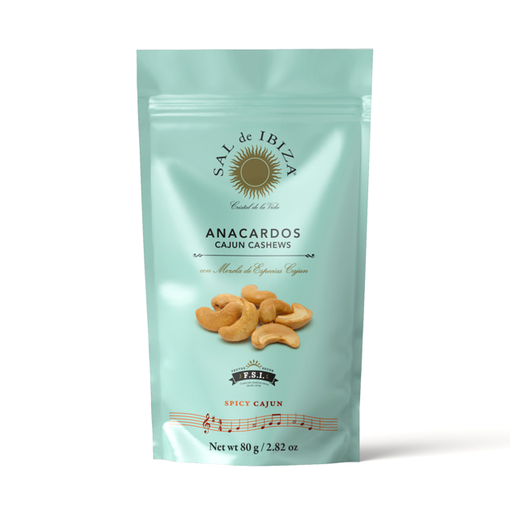 Image unavailable
SAL DE IBIZA Creole Spiced Cashews & Sdi 80 g
This 80 g pack is for anyone looking for spiced cashews to enjoy during a break. ‘Spiced’ doesn’t tell you everything that’s been added, so read the ingredients and nutritional information before deciding how much to serve.
View on Joybuy
 Image unavailable
Xue Ji Chaohuo Salted Cashews with Skin 120 g
This 120 g pack of salted cashews with skin is suited to anyone who prefers salted cashews to plain ones. If you’re looking to avoid added salt, choose a different recipe. Either way, the pack weight isn’t a single portion.
View on Joybuy
 Image unavailable
BENENUTS Dry Roasted Cashews 165 g
This 165 g pack may appeal if you prefer roasted cashews. The name indicates that they’re dry roasted, but doesn’t tell you whether they’re seasoned, so check the ingredients if you’re looking for a recipe with no added ingredients.
View on Joybuy
 Image unavailable
BENENUTS Unsalted Cashew Nuts 130 g
This 130 g pack is a good option if you prefer unsalted cashews. However, this label alone doesn’t mean the recipe contains only cashews or is low in calories, so check the ingredients and decide how much you’ll serve.
View on Joybuy
Frequently asked questions
Are cashews low in calories?
The products listed by Carrefour, Auchan and E.Leclerc contain around 593 to 625 kcal per 100 g, so ‘low in calories’ isn’t an accurate description. Based on these figures, a 25 g portion would provide around 148 to 156 kcal. Measure out the amount you want to serve.
Are unsalted cashews also lower in calories?
Not necessarily: ‘unsalted’ refers to the salt content, not the energy content. Compare the kcal per 100 g and the ingredients, then take your portion size into account. Manger Bouger recommends choosing unsalted and unsweetened nuts.
What should you check on dry-roasted cashews?
Check the exact product description and ingredients list, especially if you want to avoid oil or added salt. Carrefour describes its Ethiquable product as dry roasted, with no added oil; E.Leclerc’s Tokapi roasted and salted recipe, on the other hand, contains sunflower oil.
How can you compare food labels in France?
Compare the nutritional values on the same per 100 g basis, then check the ingredients and any relevant allergen information. France’s Directorate General for Competition Policy, Consumer Affairs and Fraud Control states that nutrition declarations are given per 100 g or 100 ml and that allergenic ingredients must be emphasised.
How should you store an opened pack of cashews?
Follow the instructions for the product you buy. For example, the Seeberger listing published by Auchan says to store the cashews away from heat and moisture. Reseal the pack as directed on its packaging.


