
Livraison le jour même ou le lendemain

Qualité garantie

Débloquez vos offres de bienvenue: Livraison GRATUITE | Jusqu'à -80 % | 30 jours d'essai gratuits à JoyPlus
Téléchargez l'application
A coffee stain on the carpet, marks left by a pet, or a sofa that dulls over time won't always disappear with a simple vacuum. A carpet and rug washer vacuum injects water or a cleaning solution into the fibres, then vacuums up some of the moisture and dirt. But you still need to choose an appliance that suits your intended use.
Before you place an order, pay particular attention to suction power, tank capacity, drying time and ease of maintenance. Here are the most common pitfalls and the criteria that really deserve your attention.
Measured in watts, electrical power mainly tells you about the motor's energy consumption. On its own, it doesn't let you judge how effective the appliance will be on a carpet. Pressure or suction power, given in kPa or Pa when it's stated, is a more relevant benchmark. However, these values should still be compared with caution: measurement methods aren't always the same from one manufacturer to another.
For tackling the occasional stain on a rug or a seat, a compact model can be more than enough. If you need to clean thick carpets, several rooms, or a heavily used car interior, go for a model with clearly documented suction, a suitable nozzle, and properly controlled water flow.
A carpet cleaner doesn't dry a textile surface instantly. It recovers dirty water through suction, but the result also depends on the number of passes, the room's ventilation, and the thickness of the fabric.
A dedicated extraction function can speed up this stage. After cleaning, always let the carpet, sofa or car seat dry completely before using it. Also avoid wetting materials that aren't designed for damp cleaning.
Product residue and standing water can clog the hoses and encourage bad odours. A large clean water tank doesn't make up for a complicated emptying process or filters that are hard to reach.
Check for a self-cleaning programme, how easy it is to rinse out, and the availability of accessories. An appliance that's simple to maintain is far more likely to stay performing well over the years.
A dual tank separates clean water from recovered water and stops them from mixing. A large capacity is handy for big areas or heavy use, while a more compact size will be easier to carry and store.
In a flat or for treating a few localised stains, a lightweight appliance with a few hundred millilitres can be enough. For several rugs, car seats and sofas, a capacity of 1 to 2 litres means fewer breaks. Models with 23 or 30 litres are aimed more at long sessions and large areas.
A cordless carpet washer makes moving around a car interior or up and down stairs much easier. However, its battery life is worth checking: some models last around 30 minutes but take several hours to recharge.
Corded appliances offer continuous power. Check the cable length, the hose length, and the stated operating range. A voltage of 220–240 V is generally suitable for UK household installations, but always consult the manual and safety instructions for the model you choose.
A narrow nozzle is particularly useful for cleaning a sofa, stairs, or the nooks and crannies of a car interior. A wider brush covers a rug or carpet more quickly. For a car seat cleaner, go for a hose that's long enough and a head that's easy to manoeuvre.
Make sure the appliance is designed for the surfaces you want to treat: rugs, carpets, upholstery, hard floors, or car interiors. If it's a wet and dry vacuum, also check which liquids can be vacuumed and whether the appliance can be used without water.
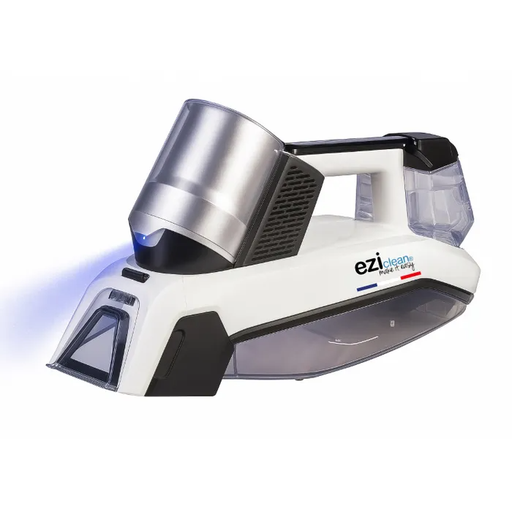
Why this choice suits this profile: Its compact, portable, rechargeable design is ideal for small stains on rugs, fabrics and car seats, without needing to store a bulky appliance.
Designed for spot cleaning, it stops you paying for a large capacity when your needs are limited to splashes or small areas.
Rechargeable power, injection-extraction function, and accessories stated for rugs, upholstery and car interiors.
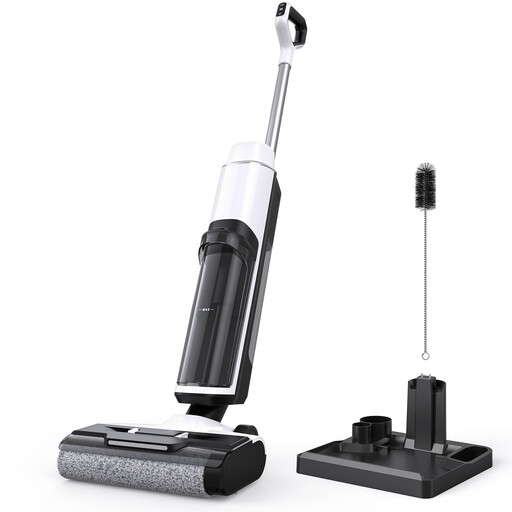
Why this choice suits this profile: Its cordless operation, self-cleaning and stated self-propulsion system are aimed at those who want extra convenience in their daily routine.
The spec sheet highlights features that reduce manual effort, but battery life and charging time should be checked before purchase.
Cordless design, wet cleaning, and stated self-cleaning and self-propulsion functions.
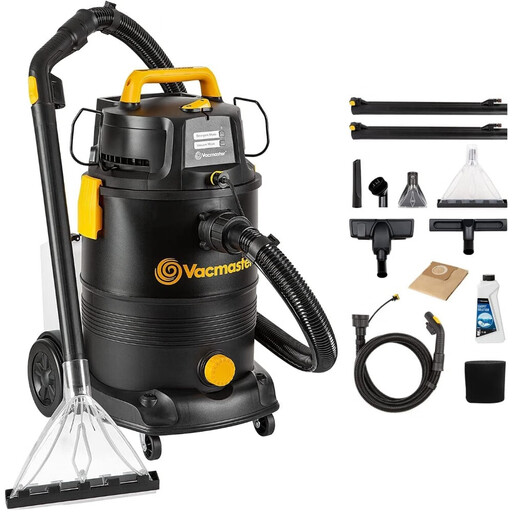
Why this choice suits this profile: Its 30-litre dual tank, 1,300 W motor and stated 10-metre operating range are built for large areas and extended cleaning sessions.
The large capacity reduces the number of emptying stops during cleaning, while the three-in-one design combines vacuuming, washing and moisture recovery.
1,300 W motor, 30-litre dual tank, stated maximum suction pressure of 18 kPa, and accessories for floors, rugs and fabrics.
We've put together a comprehensive, real-time updated selection of products that meet these selection criteria as well as European safety requirements.
Yes, provided the manual allows cleaning of upholstery. Use a suitable nozzle, apply little solution, and start by testing on a hidden area. The sofa will then need to dry completely in a well-ventilated room.
A floor washer vacuum is generally designed for hard surfaces and certain washable floor coverings. A carpet cleaner, or an injection-extraction vacuum, most often has a spray and recovery system suited to textile fibres. However, exact compatibility depends on the manufacturer's instructions.
The cost includes electricity, water and compatible cleaning solution. A 1,300 W appliance will use more power than a compact model while it's running, but the actual time you use it is the main factor. To keep costs under control, stick to the recommended dosage and clean the filters, hoses and tanks regularly.