
Livraison le jour même ou le lendemain

Qualité garantie

Débloquez vos offres de bienvenue: Livraison GRATUITE | Jusqu'à -80 % | 30 jours d'essai gratuits à JoyPlus
Téléchargez l'application
By Joybuy, Your Product Expert – Published July 10, 2026
A coffee stain on the new sofa, muddy paw prints on the carpet, or a "little accident" from your pet… We’ve all been there. When faced with these everyday little disasters, a carpet cleaner, also known as an injection-extraction cleaner, is the ultimate solution. The problem? The market is saturated with marketing promises that often lead to disappointment.
As a Product Expert at Joybuy, my role is to help you cut through the noise. Let's forget the technical jargon and focus on the essentials to make a truly informed choice and avoid the common pitfalls.
Before you rush to buy the first model on sale, beware of these three common mistakes that can turn a good investment into a bulky, unused appliance.
To ensure you don't make a mistake, focus on these three key points that define a good portable spot cleaner.
The heart of the machine is its ability to inject a solution of water and detergent deep into the fibres, scrub the stain, and then immediately suck up the soiled liquid. For the magic to happen, check these points:
An effective appliance is one you don't hesitate to use.
Prioritise quality and relevance over quantity. For families and pet owners, certain accessories quickly prove to be essential:
Let's get practical with our selection of models that meet specific needs, based on the criteria we've just defined.
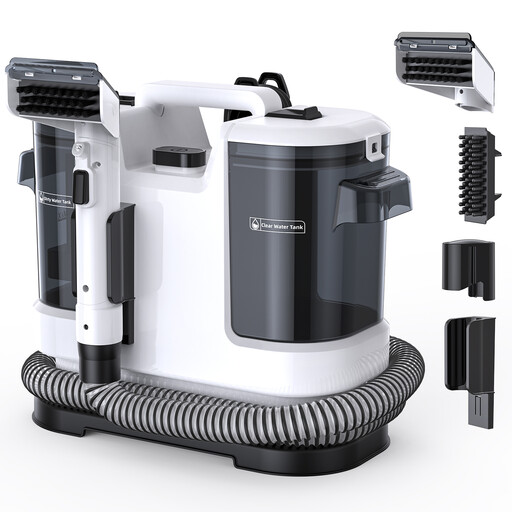
The verdict: Ideal as an effective and affordable spot-cleaning solution. Its compact design and feather-light weight make it the perfect ally for acting fast on a coffee stain or mud track, before storing it away just as quickly.
It gets straight to the point: effective, no-frills injection-extraction without useless accessories. The result is an ultra-competitive price.
The manufacturer claims a suction power of 13,500 Pa and a 450W motor, which are very respectable numbers for this price range.
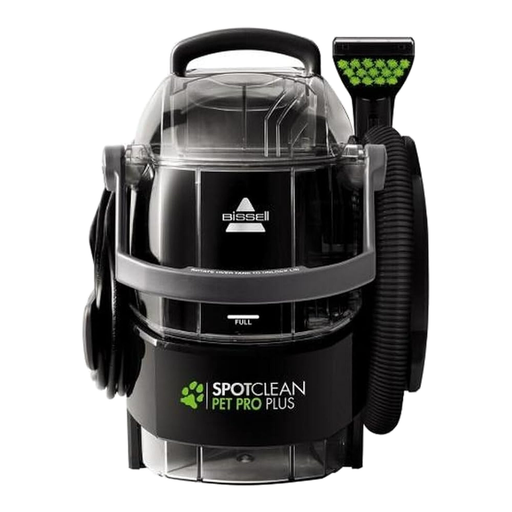
The verdict: The gold standard for pet owners. Power, accessories... everything is designed to eradicate the toughest organic stains (urine, vomit, etc.) and neutralize set-in odours in carpets and sofas.
It tackles the maintenance problem with the HydroRinse tool for easy hose cleaning and the Stain Trapper tool that isolates "major messes."
A powerful 750W motor and extra-large tanks (2.8 L clean water / 2.2 L dirty water) guarantee formidable autonomy and efficiency.
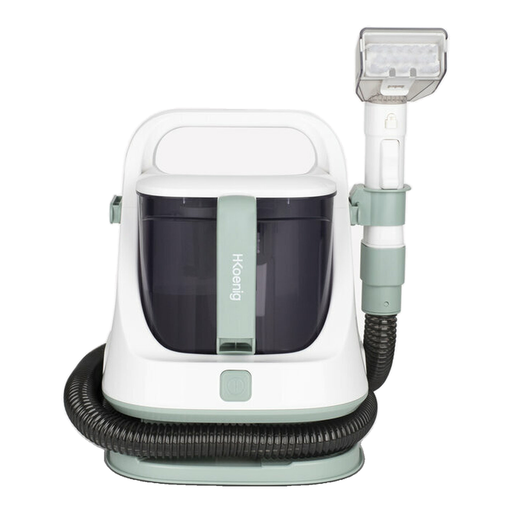
The verdict: The happy medium. This is the quintessential all-rounder for regular maintenance of carpets, mattresses, and sofas. It checks all the boxes: power, capacity, and maneuverability.
Its secret is balance. At 4 kg, it remains easy to handle while packing a 650W motor and generous tanks. It thus avoids the twin pitfalls of a weak model or an overly heavy machine.
Its large-capacity removable tanks (1.4 L clean water / 1.2 L dirty water) and its long 1.7 m hose give it excellent runtime for tackling larger areas without a break.
Discover our complete selection of products, all tested and approved according to our performance criteria and current safety standards.
The lifespan of a carpet cleaner primarily depends on its frequency of use and, most importantly, how rigorously it is maintained. When used occasionally and well-maintained, a device can last for many years. The ABCs of maintenance: always rinse the tanks and hose with clean water after each use. This is the best way to prevent limescale buildup, mould, and bad odours. The manufacturer's warranty, typically two years, gives a good indication of the minimum lifespan you can expect.
No, and this is a crucial point. It is imperative to use the cleaning solutions recommended by the manufacturer (for example, Bissell formulas for a Bissell machine). These products are specially formulated to be low-foaming and to protect the internal components of the device (pump, seals, etc.). Using a standard detergent is a bad idea: it will produce excessive foam that can overflow, choke the suction, and eventually burn out the motor. Not to mention, it will automatically void your device's warranty.
No, a good deep cleaner is designed to suck up almost all the water it sprays. The surface will remain damp to the touch, but never drenched. Drying time varies depending on the textile, the room's ventilation, and the ambient temperature, ranging from 2 to 8 hours on average. The pro tip to speed up drying: make a second, slow pass with suction only (without spraying water) to extract the maximum amount of residual moisture.