
Livraison le jour même ou le lendemain

Qualité garantie

Débloquez vos offres de bienvenue: Livraison GRATUITE | Jusqu'à -80 % | 30 jours d'essai gratuits à JoyPlus
Téléchargez l'application
A product presented as “universal” will not necessarily be suitable for every surface. Whether in your car or at home, an overly aggressive formula can dull plastic, mark paintwork or leave streaks. Conversely, a cleaner that is too gentle may not remove old grease and ingrained deposits.
To choose the right car and household cleaning products, it is best to start with the intended use, the surface concerned, the dosage and the usage precautions. Here are the most common mistakes to avoid, along with a selection suited to different types of users in France.
A multi-surface degreaser may be suitable for worktops, tiles or washable surfaces, without necessarily being appropriate for bodywork, a screen or leather. The term “multi-purpose” often refers to a category of surfaces, not every material found in a car or home.
Before buying, check which materials are compatible: interior plastic, automotive paint, glass, chrome, rubber, stainless steel or surfaces that come into contact with food. For delicate areas, always test the product on a small, inconspicuous section first.
Claims such as “fast action”, “no scrubbing” or “professional performance” are no substitute for a proper technical data sheet. Concentration, contact time and whether rinsing is required all have a direct impact on the result.
A professional car cleaner may be more concentrated, but it may also require gloves, dilution or suitable ventilation. Applying a product neat to a sensitive surface does not guarantee better cleaning; it may simply increase the risk of discolouration.
Kitchen grease, brake dust, tree sap residue and deposits found in an engine cannot all be treated with the same product. A car plastic cleaner is not a substitute for a detailing clay bar, just as an engine additive is not intended to clean an external component.
Start by identifying the deposit: surface dirt, grease, contamination ingrained in the paintwork or a product intended for the fuel system. This step helps you avoid duplicate purchases and unsuitable applications.
For household surfaces, look for wording such as “washable surfaces”, “tiles”, “enamel” or “laminate”. In the cabin, a formula intended for plastics can be used on the dashboard, door panels or trim, provided you follow the manufacturer’s instructions.
Acid-free formulas can be useful in a mechanical environment where several materials are present. FACOM Pro+ Puissance 6, for example, is described as a non-acid cleaner containing biodegradable surfactants. It can be used neat or diluted, depending on the level of dirt.
Compare the volume you can actually use, rather than looking only at the price of the bottle. A 500 to 750 ml spray is suitable for regular jobs on small surfaces. A one-litre container intended for engine treatment meets a very different need.
For an additive, always check the treatment capacity. FACOM preventive petrol engine treatment, sold in a 250 ml bottle, is stated to treat 40 to 70 litres of fuel, with a recommended usage interval of 4,000 to 5,000 km. The one-litre petrol curative product is also intended for 40 to 70 litres, but as a one-off treatment, recommended every 20,000 to 30,000 km or before an inspection.
Before use, read the label: hazard pictograms, required ventilation, risks in the event of contact with the eyes, flammability, storage conditions and disposal instructions. Biocidal products must be used in accordance with their labelling and the regulations in force. For surfaces that come into contact with food, rinsing with drinking water may be mandatory.
Never mix different products. When working on an engine, avoid applying anything to hot components and follow the manufacturer’s recommendations. An engine decarbonising additive cannot, on its own, guarantee that a vehicle will pass an inspection: it is a maintenance product, not a mechanical repair.
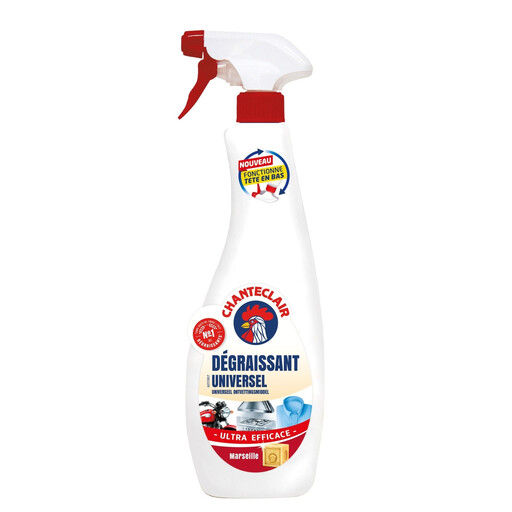
Why this choice suits this profile : This 600 ml spray is intended for washable kitchen surfaces, worktops and tiles. Apply it directly, then simply wipe clean.
Its use is clearly focused on washable surfaces, so it is less likely to be confused with a product for bodywork or the car cabin.
A 600 ml format, direct spray application and a Marseille soap fragrance, according to the product information.
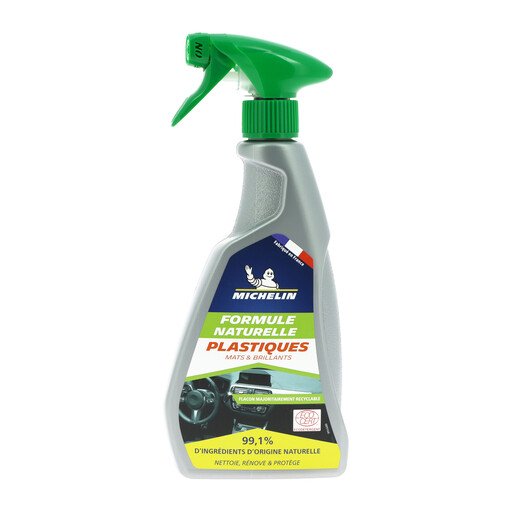
Why this choice suits this profile : This car interior cleaner is designed for interior and exterior plastics, whether glossy, matt or satin-finished.
Its stated compatibility with several finishes means you do not need to buy a product limited to just one type of plastic.
A 500 ml bottle, an ergonomic trigger, a level indicator and ECOCERT Greenlife ecological detergent certification, as mentioned in the product information.
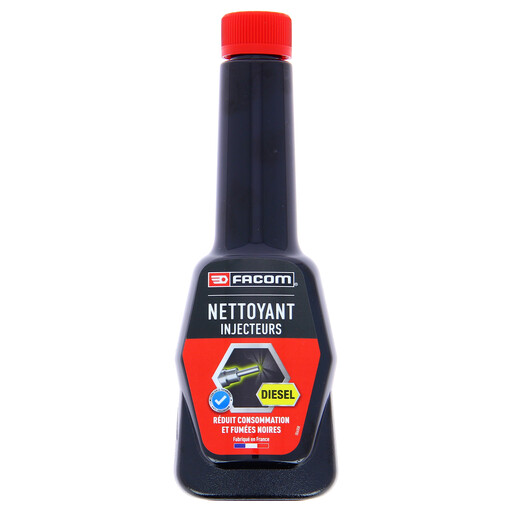
Why this choice suits this profile : Diesel drivers looking for targeted maintenance can consider this 300 ml diesel injector cleaner.
It is clearly identified as an additive for a diesel injection system, so it cannot be confused with a surface degreaser intended for fuel.
According to the product information, it is compatible with various generations of diesel engines, with or without a turbocharger, catalytic converter or particulate filter.
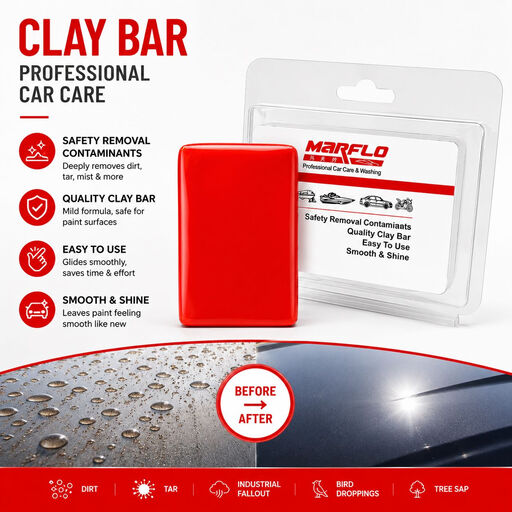
Why this choice suits this profile : This detailing clay bar is intended for anyone preparing bodywork before applying wax, polish or a protective coating.
It meets a specific need: removing ingrained contaminants that regular washing cannot dislodge, without confusing it with a shampoo.
A fine grade, flexible and reusable material depending on maintenance conditions; it can be used on paintwork, glass, chrome and lights, with sufficient lubrication.
We have put together a complete, real-time updated list of products that meet these demanding selection criteria and European safety requirements.
For your car, separate products according to their function:
For petrol engines, the FACOM curative decarbonising treatment, sold in a one-litre bottle, is indicated for treating 40 to 70 litres of petrol. For more regular maintenance, the 250 ml preventive version is stated to treat the same volume of fuel, but at a different interval. In both cases, read the instructions and check compatibility with your vehicle before use.
Not necessarily. A product designed for a mechanical environment may be too concentrated or unsuitable for food-contact, painted or delicate surfaces. Choose a formula whose label clearly states that it is suitable for domestic use, and test it first on an inconspicuous area.
It depends on the formula and the information shown on the packaging. Keep the bottle closed and away from heat, frost and sunlight. If the product has a use-by date or batch number, refer directly to the label.
Start by removing surface dirt with a suitable wash, then choose the product according to the remaining deposit. A degreaser can remove greasy residue, while a clay bar is suitable for contaminants ingrained in the paintwork. For the engine, an additive is no substitute for diagnosis or mechanical work when the vehicle has a fault.