Teams choosing a dairy dessert for residents
Catering managers and care staff need to consider the texture served, individual tolerances and each resident’s dietary plan.


If a dairy dessert is on the menu at a care home, fresh yoghurt is still an option, provided its texture and ingredients are suitable for the resident. UHT milk is easier to store unopened, but it is not an automatic substitute for yoghurt. Skyr and other higher-protein products also need to be checked against the resident’s individual dietary plan.
Catering managers and care staff need to consider the texture served, individual tolerances and each resident’s dietary plan.
When a nutritional need has been identified, compare a product’s protein content per portion served. On its own, this is not enough to determine whether the product is suitable for the resident. The French National Authority for Health highlights the importance of appropriate support for malnutrition in older people.
Purchases for drinks or recipes may need to meet different requirements from those for desserts. UHT milk differs from fresh yoghurt in this respect, particularly in how it can be stored before opening.
For meals or snacks in a care home, first establish whether the menu calls for a dairy dessert, a drink or milk for a recipe. You can then compare the options based on texture, the resident’s dietary plan and storage requirements.
Consider it: when the menu includes a fresh dairy dessert and the product’s texture is suitable for the resident.
Bear in mind: it needs to be kept chilled; yoghurt is not suitable when you need a cupboard-stored product.
Consider it: when a protein requirement has been set for the resident and the portion size and texture have been assessed.
Bear in mind: it is still a fresh product. Its protein content alone does not determine whether it is suitable for an individual dietary plan.
Consider it: for a drink or recipe when unopened storage is important and the menu allows milk to be used.
Bear in mind: milk is not the same as yoghurt; once opened, it must be stored according to the instructions for the product you choose.
| Criteria | What to check | Who it matters to |
|---|---|---|
| Texture and individual requirements | Check with the team supporting the resident which textures are permitted, as well as the product’s ingredients and allergens. | If I need to serve a product that meets a resident’s specified texture requirements, this comes before choosing a product category. Around 31% of consumers concerned would prioritise it. |
| Protein intake | Compare the protein in the portion actually served, and have the portion size and ingredients assessed as part of the dietary plan. | If a resident’s protein intake is being monitored, I want to know what the planned portion provides. Around 31% of consumers would prioritise this. |
| Storage | Read the storage instructions for before and after opening; choose a size that can be used within the time stated on the packaging. | When I organise supplies, I need to distinguish between desserts that must be kept chilled and milk that can be stored unopened. Around 23% of consumers would put this first. |
| Portions and everyday service | Compare pack sizes, the number of portions you can use, the ingredients and the date shown on the product. | If no special adaptations or storage requirements affect the choice, I look for a portion that fits easily into the planned service. Around 15% of consumers would prioritise this need. |
UHT milk and yoghurt are different products and do not necessarily have the same place in a meal. The French Ministry of the Economy notes that some fresh dairy products, including yoghurt, carry a use-by date.
Before comparing products, be clear whether you are buying for a dessert, a drink or a recipe.
The amount of protein per portion does not, on its own, tell you whether the texture is suitable or whether the product belongs in a resident’s dietary plan.
Before buying a product for regular use, ask the team supporting the resident to assess the portion, ingredients and texture.
Storage times after opening vary by UHT milk product: PassionFroid states that a 10 L Lactel pouch can be kept chilled for 72 hours, while Auchan says its whole UHT milk should be kept at no more than +6 °C and used within four days.
Choose a volume that matches how much you use, and follow both your care home’s opening procedures and the instructions on the packaging.
An opened pack that cannot be used within the stated time may go to waste.
Two products from the same retailer can differ in category, ingredients, portion size and storage requirements.
Check the product name, allergens, nutritional information and instructions for the exact product delivered.
These examples help you distinguish between product categories and the information to compare. A brand name alone cannot tell you whether a product is suitable for a resident’s meal.
HiPRO offers dairy products in pots and drinks, among other options. According to Danone’s HiPRO product information, the pot of Myrtille (blueberry) yoghurt contains 15 g of protein per 160 g portion.
Yoplait offers plain and stirred skyr. Its Skyr Nature product information lists 9.3 g of protein per 100 g.
The Carrefour Classic' products mentioned include pots of plain yoghurt and whole UHT milk.
E.Leclerc’s range includes Delisse plain and stirred yoghurts, as well as dairy products in various formats.
Auchan offers whole UHT milk in a pack of 6 × 1 L, among other products.
This product is for use as milk rather than as a yoghurt dessert, where the menu allows. Check that the pack size matches the quantity needed for service.
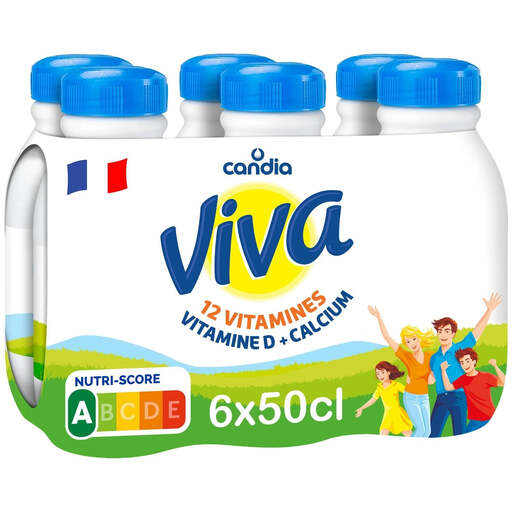 Image unavailable
Consider this if the drink or recipe on the menu calls for milk rather than yoghurt. The pack contains six 50 cl cartons. Check the storage instructions for this product and make sure it meets the resident’s needs.
Not automatically: UHT milk is used differently and has different storage requirements from a yoghurt dessert. Check that it fits the menu, the planned texture and the resident’s dietary plan.
Follow the storage temperature shown on the packaging. The French Ministry of the Economy lists yoghurt among fresh dairy products that may carry a use-by date; check the date when serving it too.
It depends on the product: PassionFroid says a 10 L Lactel pouch can be kept chilled for 72 hours, while Auchan says its whole UHT milk should be kept at no more than +6 °C and used within four days. Follow the instructions on the product you use.
No. Its protein content alone does not establish that it is suitable for every resident. If a nutritional need has been identified, compare the portion actually served, then have the ingredients and texture assessed as part of the resident’s individual care plan.