
Livraison le jour même ou le lendemain

Qualité garantie

Débloquez vos offres de bienvenue: Livraison GRATUITE | Jusqu'à -80 % | 30 jours d'essai gratuits à JoyPlus
Téléchargez l'application
Choosing a new carbon fishing rod is a real headache. Between the technical jargon and marketing promises, it's easy to get lost and regret your purchase. To help you see things more clearly, we've broken down the subject. The goal: to focus on the facts so you can choose the gear that truly matches your fishing style, far from the siren song of advertising.
Before we get into the selection criteria, let's identify three common pitfalls that can be costly, even for the most seasoned anglers.
To avoid these pitfalls, you just need to look at a few objective technical characteristics. This data will give you a clear picture of a rod's real performance, well beyond the marketing speak.
An essential duo for any lure fishing rod.
The choice between a spinning rod (reel underneath) and a casting rod (reel on top) will also depend on your technique. Spinning is more versatile and easier to get started with, while casting offers greater control and accuracy for heavier lures and heavy-duty fishing.
The quality of the carbon directly affects the rod's weight and sensitivity. It is often designated by a number followed by a "T" (e.g., 24T, 30T, 40T), which indicates its modulus of elasticity.
But the blank isn't everything. Check the quality of the guides. Mentions like Fuji SiC or Alconite are true marks of quality. These materials limit heat and friction, protecting your line and optimising your casts. This is a non-negotiable criterion for saltwater fishing, where corrosion wreaks havoc.
The length of the rod, expressed in metres or feet/inches, should be adapted to your fishing spots.
Here is a selection of models that meet specific needs, analysed according to the objective criteria we've just discussed.
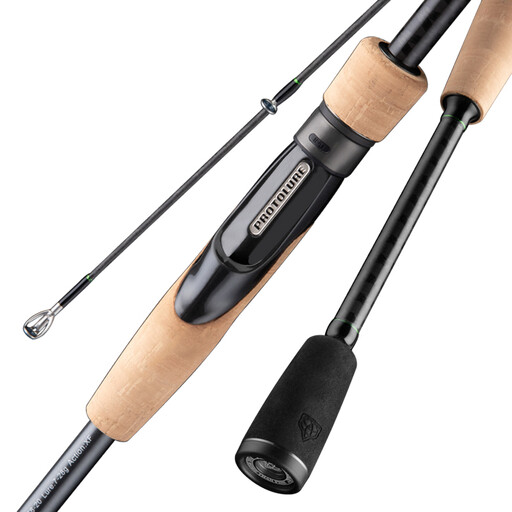
Why it stands out: This model is designed for anglers who switch between hunting pike in lakes and targeting sea bass in estuaries. Its hybrid design means you don't have to invest in two separate rods.
Its specific design for both freshwater and saltwater ensures that the components (guides, reel seat) are treated to resist corrosion, a detail often overlooked on non-specialised rods.
Versatility: Suitable for a wide variety of predators. Transport: Its two-piece design (2sec) makes it easy to carry.
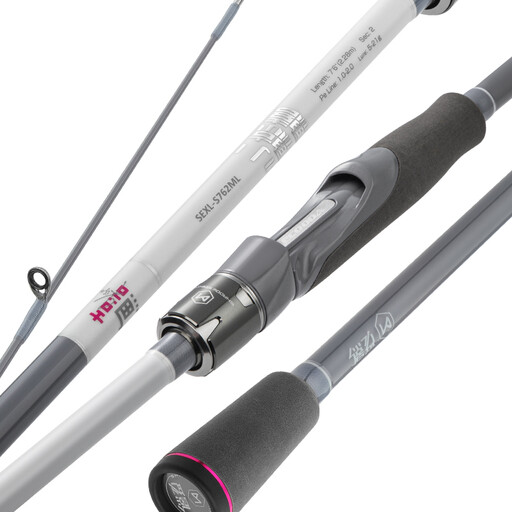
Why it stands out: For the discerning angler seeking maximum sensitivity to detect the most subtle bites, especially from wary fish like zander or perch.
This model directly counters the pitfall of low-end components. The explicit mention of Fuji SIC guides guarantees perfect line flow, better resonance, and increased overall durability.
High sensitivity: The carbon blank paired with Fuji SIC guides transmits the slightest feedback. Durability: Components renowned for their reliability.
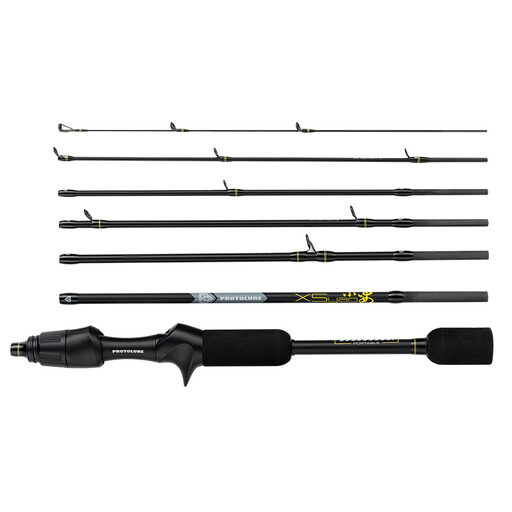
Why it stands out: Designed for sea bass fishing, this rod has the power reserve and reach needed to launch lures great distances from the coast and tame the powerful runs of this hard-fighting fish.
It's the perfect answer to the power/action mismatch pitfall. Developed for sea bass, its power range and action are calibrated for the most common topwater and soft plastic lures used for this pursuit.
Casting distance: Its length is optimised for shore fishing. Power reserve: Capable of controlling a good-sized sea bass in the current.
Discover our full selection of gear that meets our quality charter and current standards.
The longevity of a carbon rod primarily depends on its maintenance. Properly cared for, it can last you for many, many seasons. Since carbon is more brittle than fibreglass, it's crucial to avoid impacts. The essential habit: a systematic rinse with fresh water after every saltwater trip to prevent corrosion of the metal parts.
The choice depends on your technique and the lures you use. The spinning rod is very versatile, more intuitive for a beginner, and particularly effective with light lures. The casting rod, on the other hand, offers superior control and precision with heavier lures. It is often favoured by experienced anglers for specifically targeting large predators.
Not necessarily. The price is often linked to the carbon modulus and the quality of the components. A model with an intermediate-modulus carbon (between 24T and 30T) and reliable components, without being top-of-the-line, offers an excellent price-to-performance ratio for most fishing situations. The most important thing is to choose a balanced rod that matches your fishing style.