
Livraison le jour même ou le lendemain

Qualité garantie

Débloquez vos offres de bienvenue: Livraison GRATUITE | Jusqu'à -80 % | 30 jours d'essai gratuits à JoyPlus
Téléchargez l'application
A car polisher can restore shine to bodywork, reduce certain superficial marks or revive dull headlights. However, you need to choose a machine and accessories suited to the job in hand. A machine that is too powerful, an incorrectly sized disc or an unsuitable pad could instead create holograms, heat up the clear coat or turn a simple polishing session into a real chore.
Before comparing models, here are the main pitfalls to avoid.
High power does not guarantee better results. For private users, controlling the speed, keeping the machine stable and being able to work gradually often matter more than the figure shown on the specification sheet.
A car dual-action polisher generally reduces the risk of staying in one place for too long thanks to its eccentric movement. Even so, it requires the same precautions: moderate pressure, a clean pad and regular passes.
Car polishing pads and discs must be compatible with the machine’s backing plate. A 100 mm accessory will not automatically fit a 5-inch polisher. Also check whether it has a hook-and-loop system, an adaptor or a compatible backing plate.
A poor fit can cause vibrations, misalignment or the accessory to come loose during use.
The colour of polishing foam is not governed by any universal standard. From one brand to another, it may indicate a different hardness or function. It is better to consult the manufacturer’s description and reserve each pad for a specific use:
No polisher can replace a visual inspection of the paintwork. If a scratch goes through the clear coat and exposes the layer underneath, car polishing will generally not be enough to make it disappear.
For versatile use, choose a machine offering several speed settings. This allows you to adapt the process to the product being used and the surface being treated. A low speed is more suitable for applying wax or carrying out light finishing work. A higher speed can be useful for correcting paintwork, provided you use a compatible pad and polish.
With a corded machine, also consider the cable length, weight and grip. A side handle or D-handle makes the machine easier to control, particularly on a bonnet or roof.
The backing plate diameter affects both precision and coverage speed. A 100 mm backing plate is practical for small areas, pillars, headlights and narrow surfaces. A 5-inch model covers more bodywork while remaining easy to handle.
For a car polishing with a drill project, be sure to check the adaptor type, thread and maximum permitted speed. A drill is not designed like a dual-action polisher: avoid applying heavy pressure and stopping for long periods on edges.
A washable accessory can help reduce spending on consumables, but only if it is maintained properly. After each use, remove any polish residue, rinse the pad with clean water in accordance with the manufacturer’s recommendations, then leave it to air-dry away from any heat source.
Do not reuse a pad loaded with abrasive particles for delicate finishing work. Replace any pad that is misshapen, torn or heavily worn.
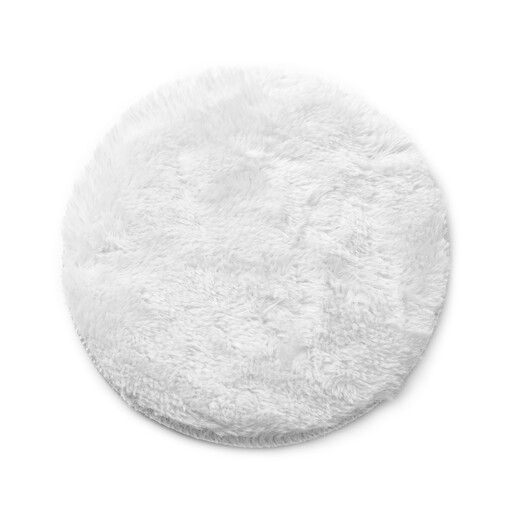
Why this choice suits this profile : This accessory is suitable for small touch-ups, headlights and hard-to-reach areas, without requiring you to buy a complete machine.
Its 100 mm diameter and hook-and-loop backing make it easy to check compatibility before buying.
Synthetic fibre, hook-and-loop fastening, suitable for use with liquid or powder polish, washable and reusable.
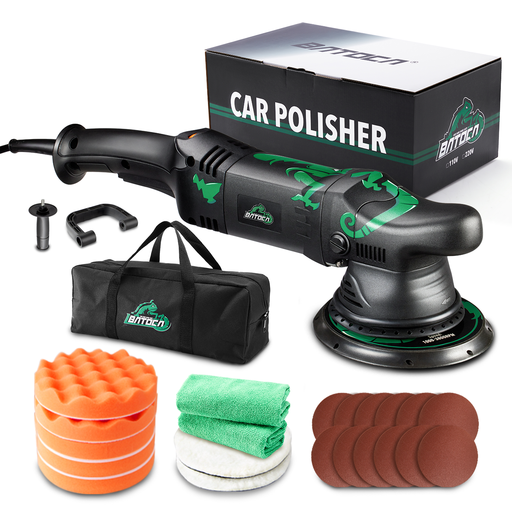
Why this choice suits this profile : Its size and settings are suitable for users who want to work on several vehicles or large areas on a regular basis.
The six adjustable speeds help you avoid using the same setting for different tasks.
Advertised 1 100 W motor, six settings from 2 500 to 5 500 rpm, side handle and D-handle, orbital design.
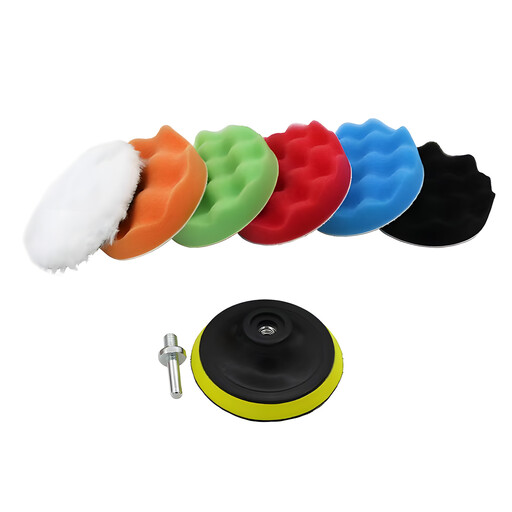
Why this choice suits this profile : This kit is designed for those who alternate between correction, finishing, waxing and work on different types of surface.
The variety of accessories means you do not have to use the same pad at every stage; the M10 adaptor makes certain tasks easier when using a compatible drill.
Advertised as an eight-piece set, with several foam densities, a synthetic wool pad, hook-and-loop fastening and washable accessories.
We have put together a comprehensive, real-time updated selection of products that meet these demanding criteria and European safety standards.
Yes, provided you use a compatible adaptor and backing plate. However, a drill generally offers less control than a dedicated polisher. Respect the discs’ maximum speed, avoid applying too much pressure and do not linger on edges. This solution is mainly suitable for small areas and occasional jobs.
It depends on how often they are used, the abrasive product, the pressure applied and the quality of cleaning. A washable pad can be used several times, but it should be replaced if it loses its shape, tears or remains loaded with residue. Regular maintenance also helps reduce the risk of micro-scratches.
A simple accessory costs less than a complete machine. A kit containing several foam pads, a backing plate and an adaptor will, however, cover more needs. Above all, compare compatibility, the number of pads you will genuinely use, the availability of replacement parts and the polisher’s specifications, rather than focusing solely on the displayed price.