
Livraison le jour même ou le lendemain

Qualité garantie

Débloquez vos offres de bienvenue: Livraison GRATUITE | Jusqu'à -80 % | 30 jours d'essai gratuits à JoyPlus
Téléchargez l'application
A car phone holder makes navigation, hands-free calls and accessing useful information during a journey much simpler. But a rushed purchase can quickly lead to disappointment: a mount that peels off, a phone that slides on a rough road, or a position that reduces your visibility.
Before choosing a car phone mount, it’s worth looking at the fixing system, compatibility with your smartphone and the sturdiness of the mechanism. Here are the criteria to consider when comparing models available in the UK and finding a phone holder that suits your needs.
The word “universal” doesn’t mean the holder will fit every car. A fragile air vent may struggle to support a heavy phone. Meanwhile, a suction cup needs a smooth, clean and non-porous surface. A textured or heavily curved dashboard is likely to reduce its grip.
Start by checking the type of mount supplied: vent clip, suction cup, adhesive base or magnetic system. In an SUV, van, commercial vehicle or motorhome, the stability of the surface is just as important as compatibility with your phone.
An anti-vibration car phone holder must hold the smartphone securely without excessive play. A simple marketing claim doesn’t tell you much about the actual design. Instead, look at the depth of the cradle, the presence of non-slip pads, the locking mechanism of the clamp and the rigidity of the adjustable arm.
On cobbled streets, over speed bumps and during long journeys, a double-locking clamp or a triangular structure can help limit movement. That said, it’s still worth checking the mount before every trip.
A wireless car charger only works if your smartphone supports the technology. A magnetic mount may also require a metal plate or specific compatibility, particularly with MagSafe. Your phone case, its thickness and material can affect the holding strength or prevent charging altogether.
Read the stated dimensions carefully. Some models accept phones from 4 to 7.2 inches, while others specify a maximum thickness rather than a screen diagonal.
In the UK, always position your phone so it doesn’t block the road, mirrors, instruments or controls. Set up your navigation before you set off and never handle the device while driving.
Check the following:
ABS, polycarbonate, metal and silicone are the most common materials. Silicone pads reduce scratches and improve phone grip. A 360° rotation lets you switch from portrait to landscape view, but the joint must be tight enough to stop the phone from gradually drooping.
With a suction cup, clean the surface and the base carefully with a suitable cloth. Some models come with a washable, reusable suction cup. After prolonged exposure to sunlight, inspect the soft parts and the mechanism before you set off again.
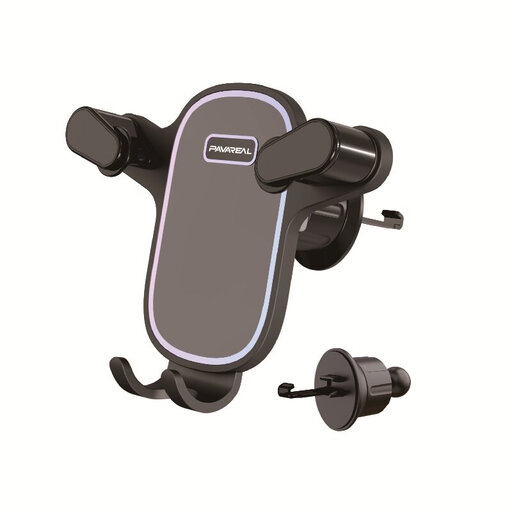
Why this choice suits this profile: its gravity mechanism and stated compatibility with phones from 4 to 7 inches make it a simple solution for a first installation and everyday navigation.
The listing mentions a universal mount and a non-slip hook structure. Still, check which mounting accessory is actually included in the box.
360° multi-angle adjustment, automatic gravity grip and stated compatibility with several vehicle types.

Why this choice suits this profile: this model combines a magnetic mount, extendable arm and wireless charging to avoid juggling cables during your journeys.
The charging and magnet don’t remove the need to check your phone’s compatibility, your case and the power supply available in the vehicle.
The listing states a PD power output of 60 W for the power supply, plus an adjustable extendable arm. The actual power delivered will depend on your phone and charger.
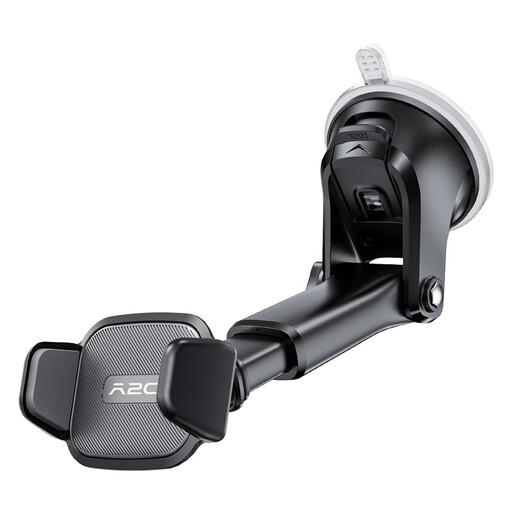
Why this choice suits this profile: its 3-in-1 design adapts to cars, vans and vehicles where available space changes from trip to trip.
The suction cup is advertised as washable and reusable, reducing the need for replacements, while the triangular structure is designed to minimise shaking.
Three installation modes, one-handed operation, silicone cushions and a stated one-year warranty, according to the product listing.
For a standard air vent, a lockable metal clip model, such as a universal phone holder, can be very practical. On a flat surface, a suction cup or adhesive base will often be more suitable. Drivers of electric cars should check that the mount doesn’t rest on a sensitive area of the screen or controls.
A magnetic car mount works well if you’re happy to use a compatible plate or ring. With a heavy phone, a thick case or on uneven roads, go for a deep cradle or a lockable clamp rather than a magnet whose holding capacity isn’t clearly stated.
We’ve put together a complete, real-time updated list of products that fully meet these strict selection criteria and European safety regulations.
Clean the surface with a lint-free cloth, dry it, then press the suction cup firmly. Activate the locking lever if there is one. Wait a few moments before fitting your phone, then test the mount by applying gentle pressure.
Its lifespan depends on heat, sun exposure, vibrations and how often you use it. Clean the contact surfaces regularly, avoid leaving the mount exposed unnecessarily, and replace it if the clamp, suction cup or joint no longer holds your device securely.
It can cause a slight additional power draw when your phone is charging. In practice, the impact depends on how often you drive, your battery capacity and the system’s efficiency. Also check that your vehicle’s USB port or socket provides the power stated by the manufacturer.