
Livraison le jour même ou le lendemain

Qualité garantie

Débloquez vos offres de bienvenue: Livraison GRATUITE | Jusqu'à -80 % | 30 jours d'essai gratuits à JoyPlus
Téléchargez l'application
A car phone holder makes GPS navigation easier, enables hands-free calls and, with the right model, allows charging while you're on the road. But you need to pick a mount that actually works. A poorly designed holder can vibrate on a country road, come loose in the first hot spell or block your view. To avoid a disappointing purchase, it's worth looking beyond promises like "ultra-stable", "universal" or "instant installation".
A car smartphone mount needs to accommodate the width and thickness of your device, including its case. Some models support phones with a diagonal of 10.2 to 18.3 cm (4.0 to 7.2 inches), while others specify a precise width, for example 60 to 90 mm or up to 8.3 cm. A foldable smartphone, a case with a built-in power bank or an unusually heavy model can exceed the stated limits.
So check the dimensions of your phone with its case on, rather than relying solely on the screen diagonal.
A car phone holder for the air vent is compact and generally keeps the dashboard clear. However, not all vents are the same. A short clip may struggle to grip a fragile slat, whereas a metal mount with a rotating lock will offer a very different level of hold compared to a simple hook.
Suction cup or adhesive disc models, on the other hand, need a smooth, clean and dry surface. A textured, dusty or sun-baked dashboard can reduce adhesion. After applying an adhesive, follow the curing time stated in the instructions before attaching your phone.
A phone holder with a wireless charger won't charge every smartphone automatically. Your device must be compatible with inductive charging. For a magnetic mount, it also needs the right compatibility or you'll have to use a metal ring. The advertised power, such as 15 W, can also vary depending on your phone, the mains adapter and the charging conditions.
An anti-shake mount needs a properly secured base, non-slip surfaces and a joint that won't loosen at the first pothole. Silicone pads can reduce scratches and improve grip, but they won't make up for a poorly fitted suction cup or an unsuitable air vent.
For rough roads, go for a locking mechanism, a short arm where possible and a ball joint you can tighten. A 360° rotation makes it easy to switch between portrait and landscape mode, as long as the mechanism stays firm enough not to move during the journey.
A compact model will be less intrusive for the driver, while a long arm offers more adjustment options. In any case, fit the car phone mount before you set off, adjust the angle when stationary and never operate the device while driving.
In the UK, using a hand-held phone while driving is illegal. A mount does not permit texting or adjusting navigation while you're behind the wheel. Use voice commands where possible and keep your view completely clear.
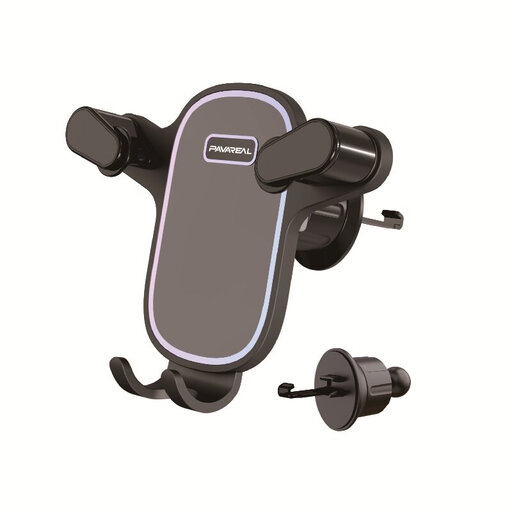
Why this choice suits this profile: Its gravity mechanism and stated compatibility with phones from 10.2 to 17.8 cm diagonal make it ideal for a first purchase with no complicated adjustments.
The hold doesn't rely on a magnet you have to stick to the case. The listing also mentions 360° rotation and an anti-slip design.
One-handed insertion and removal, multi-angle adjustment and stated compatibility with several vehicle types.
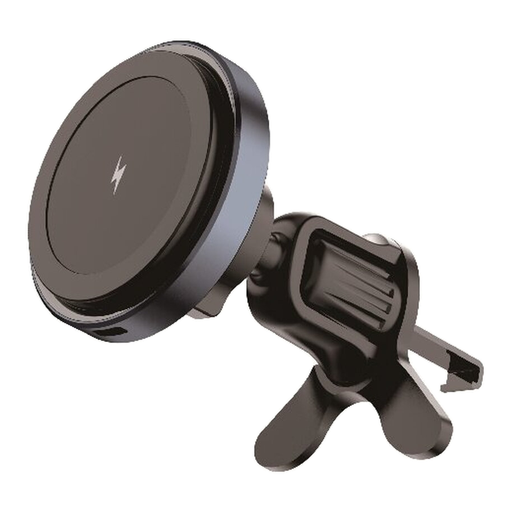
Why this choice suits this profile: This magnetic car mount is aimed at drivers who want to combine hold, orientation and wireless charging in a single accessory.
Charging is advertised at 15 W, but you need to confirm compatibility with your phone, case and vehicle power supply.
Aluminium base, reportedly strong magnetisation, 360° rotation and anti-slip hold.
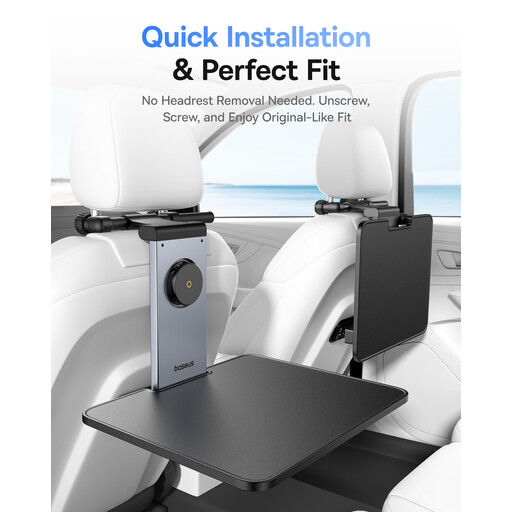
Why this choice suits this profile: Its design for the rear headrest meets the needs of passengers, families and long business journeys.
It doesn't need to be fixed to the windscreen or the driver's air vent, freeing up space at the front.
Stated materials: aluminium alloy, PC, ABS and composite panel. The listing also mentions a magnetic ring, a sticker and an alcohol wipe among the accessories.
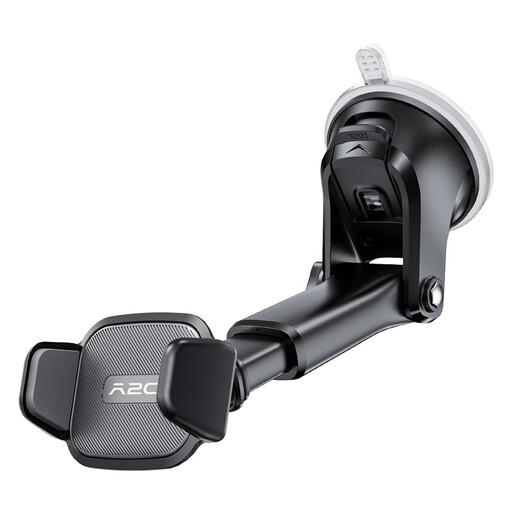
Why this choice suits this profile: Drivers who regularly switch vehicles or positions can take advantage of its three stated mounting modes: dashboard, windscreen and air vent.
You can adapt the mounting type to the available surface, rather than relying on a single location that may not be suitable.
Triangular structure claimed to be anti-vibration, washable and reusable suction cup, silicone pads and a one-year quality guarantee stated on the listing.
We've put together a comprehensive, real-time updated selection of products that meet these strict criteria, as well as European safety requirements.
The air vent suits compact installations, the dashboard works for flat surfaces and the windscreen is for drivers who need a position further away. The location must never obscure the road, mirrors, controls or an airbag deployment zone.
It all depends on the quality of the surface, temperature, dust and the weight of the phone. Clean the area, let it dry, lock the suction cup properly and check the mount regularly. For an adhesive, follow the stated curing time and inspect it after journeys on rough roads.
Not necessarily. Check for MagSafe, a built-in magnet or a compatible metal plate. A thick case, a poorly positioned ring or a heavy device can reduce the hold. To choose a universal iPhone Android mount, always check the dimensions and accessories listed on the product page.