
Livraison le jour même ou le lendemain

Qualité garantie

Débloquez vos offres de bienvenue: Livraison GRATUITE | Jusqu'à -80 % | 30 jours d'essai gratuits à JoyPlus
Téléchargez l'application
Getting your hands dirty to maintain your car is not only rewarding, but it's also the best way to save money and truly know your vehicle. The problem? The automotive tool market is a jungle of offers where it's easy to get lost. Between "all-in-one" cases with disappointing contents and tools with inflated spec sheets, making a purchasing mistake is all too common.
As a product expert at Joybuy, my mission is to help you see things more clearly. Let's forget the marketing jargon and focus on what's essential: how to build a reliable and durable car mechanic tool kit. Here are the three most common pitfalls to avoid and the crucial points to check before you pull out your credit card.
The promise of an XXL case is often a deceptive lure. These sets are packed with uselessly sized or poor-quality sockets and bits, made from alloys that will deform under the slightest pressure. In reality, the essentials boil down to a handful of robust, well-chosen tools.
A jack that gives way or a wrench that breaks mid-use represents a very real danger. Specifications like a jack's lifting capacity or an impact wrench's torque are not just marketing points—they are safety guarantees. A tool that's undersized for your vehicle (especially an SUV or van) is an accident waiting to happen.
A cordless impact wrench is a powerful ally for a tyre changing kit, but on one condition: its battery has to go the distance. Too many entry-level models are sold with a single, low-capacity battery (measured in amp-hours, or Ah) that dies before you've even loosened two stubborn nuts. The tool then becomes useless at the most critical moment.
To perform DIY car maintenance with complete peace of mind, three technical aspects deserve your full attention.
The hydraulic jack is the cornerstone of your safety. Beyond the load capacity, which must absolutely include a safety margin (a 3t hydraulic jack is a solid baseline, even for a standard saloon), check two other points:
For a cordless impact wrench, power is measured in Newton-metres (N.m). High torque (over 1000?N.m) is essential to tackle corroded or over-tightened wheel nuts from the garage. The motor technology is just as crucial: a brushless motor offers better efficiency, less wear, and greater battery life than a conventional brushed motor.
For jobs like an oil change, a suitable oil filter plier is non-negotiable. Universal models with serrated jaws and a long handle provide a powerful grip on greasy surfaces, where a cheap strap wrench would slip uselessly. Likewise, a good set of tyre levers should be made of a robust composite material to avoid scratching your alloy wheels, unlike simple raw steel levers.
Rather than steering you towards a single kit, which often means compromise, we have selected tools that excel in their category, based on the performance and safety criteria we've just discussed.
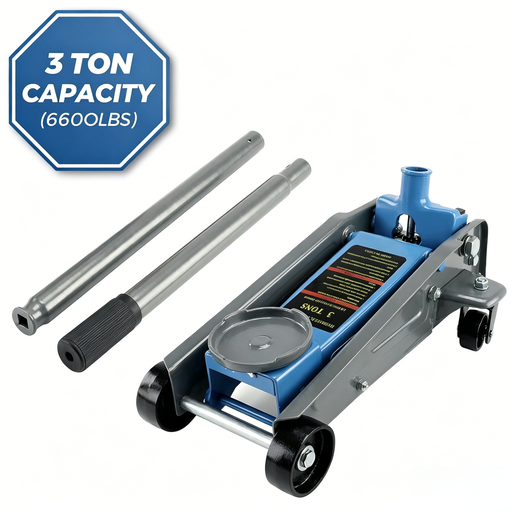
Why this tool? Ideal for the home mechanic managing seasonal tyre changes and oil changes on their saloon or SUV. It offers the versatility and safety margin essential for working with peace of mind.
It eliminates the risk of an undersized tool. Its 3-tonne capacity and lifting range up to 460 mm make it compatible with the vast majority of cars on the road, saving you from a purchase you'll quickly regret.
Its robust steel construction and 360° swivel castors ensure excellent manoeuvrability and rock-solid stability, even on an imperfect garage floor.
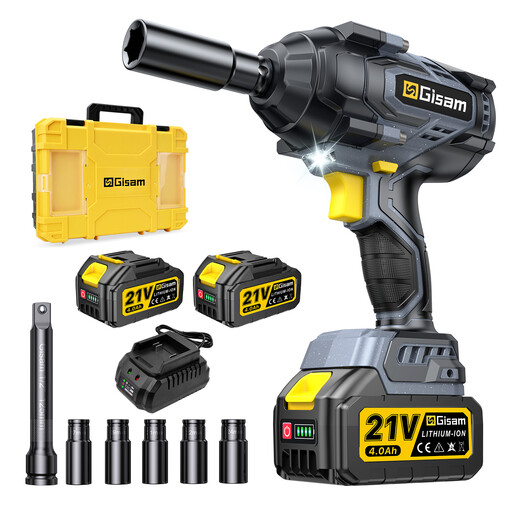
Why this tool? Perfect for the enthusiast who regularly tackles heavier mechanical projects (suspension, chassis) or manages tyres for multiple vehicles. Here, power and endurance are the key priorities.
It solves the illusory battery life problem by coming with two 4.0 Ah batteries. This guarantees continuous work without any interruptions, even on the longest jobs.
Its 1800 N.m of torque and brushless motor make it a powerhouse that can rival pneumatic models, offering total freedom of movement for spectacular gains in time and efficiency.
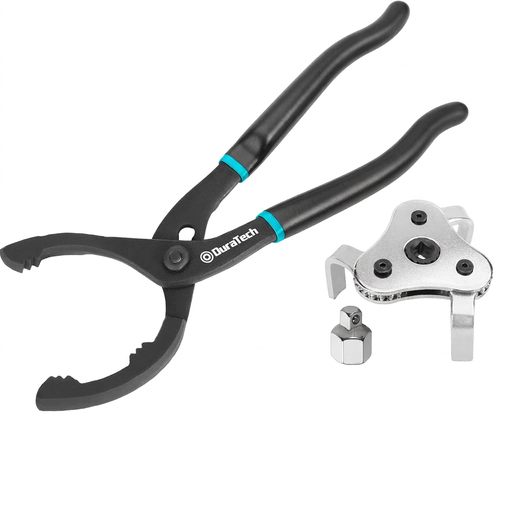
Why this tool? Essential for anyone who wants to perform an oil change by the book. This specialised tool ensures an effective grip without damaging the filter or risking injury from a makeshift solution.
It puts an end to dangerous workarounds (like stabbing the filter with a screwdriver or using slipping multi-grips...). Its universal design (63-103 mm) saves you from having to buy a specific cup-style wrench for each vehicle.
The 2-in-1 set includes long-handled pliers for easy access and maximum torque, as well as a 3-jaw wrench that can be used with a 3/8" or 1/2" ratchet for fast, controlled loosening, even in the tightest corners of the engine bay.
Building your own tool kit is undoubtedly the best approach. To complete your setup, we've curated a selection of tools that meet demanding specifications for quality and safety.
Not at all. Using a jack with a capacity far exceeding the vehicle's weight (which, remember, is distributed over 4 points) is primarily a safety measure. It reduces stress on the mechanism, extends its lifespan, and gives you complete peace of mind. Plus, you'll already be equipped for a future, heavier vehicle without having to reinvest.
The longevity of your tools depends on two key factors: the quality of the steel (look for Chrome-Vanadium or hardened steel) and your maintenance discipline. A good tool, cleaned after each use and stored away from moisture, can literally last a lifetime. Conversely, cheap tools made from soft alloys can deform or rust after just a few uses.
Keep an eye on two values: voltage (V) and amp-hours (Ah). Voltage affects raw power, while amp-hours determine the runtime. For regular or intensive use, a battery of 4.0?Ah or more is highly recommended. The ideal setup is a pack that includes two batteries to ensure a perfect rotation: while one is charging, the other is working.