
Livraison le jour même ou le lendemain

Qualité garantie

Débloquez vos offres de bienvenue: Livraison GRATUITE | Jusqu'à -80 % | 30 jours d'essai gratuits à JoyPlus
Téléchargez l'application
Getting your hands dirty to maintain your car is both rewarding and cost-effective. But be warned: the tool market is a jungle of marketing promises where it's easy to make a bad purchase. To avoid falling into the trap, you need to learn how to equip yourself smartly.
Between "all-in-one" tools that are good at nothing, discount pressure washers that can't even remove mud, and teaser offers that hide overpriced accessories, the pitfalls are numerous. A purchase that seems clever at first can quickly turn into a money pit.
This guide deciphers the spec sheets for you and gives you the keys to choosing the right equipment, whether for car cleaning or more advanced car maintenance.
To be sure of your choice, don't be blinded by marketing. Focus on the technical specifications: they are the true measure of a tool's performance and durability.
Power is the crucial factor. But be careful, it's not measured the same way for all tools. Learn to read between the lines to judge the actual performance.
Cordless means freedom. But it's a freedom that depends entirely on the quality of the battery.
A good tool is one that's ready to use right out of the box. The quality and relevance of the included accessories are as crucial as the machine itself. For car detailing, for example, a car polisher that comes with several pads (wool, hard foam, soft foam) will allow you to handle the entire process, from correcting micro-scratches to applying finishing wax. Similarly, a pressure washer equipped with an adjustable spray lance, a rotary nozzle, and a foam cannon multiplies its capabilities compared to a basic model.
To move from theory to practice, here are a few products that tick all the boxes, suited for different needs and budgets.
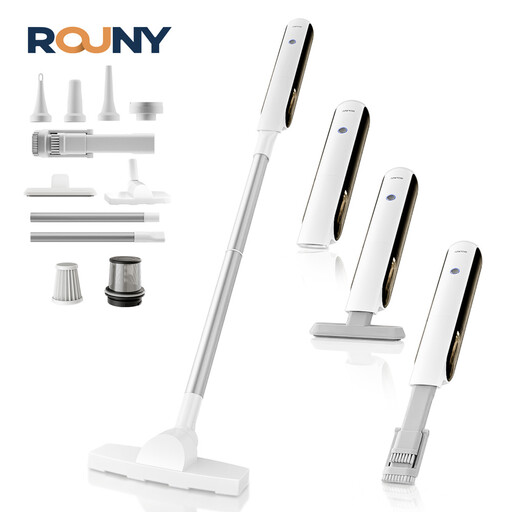
Why it's the right choice: Perfect for keeping your car's interior spotless day-to-day. Lightweight and compact, it fits in the glove box for a quick clean-up after a trip or to get rid of crumbs from child seats.
This model avoids the "incomplete kit" trap. With its 7 nozzles, extension hose, and floor brush, it's just as useful in the car as it is at home.
Its dual vacuum and blower function is a real bonus. The integrated LED light is perfect for hunting down dirt under the seats.
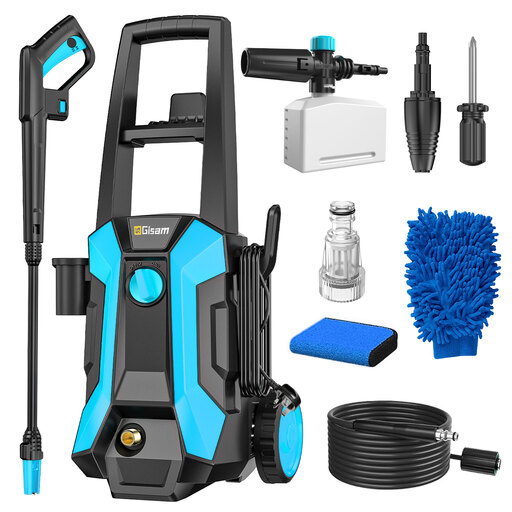
Why it's the right choice: The essential tool for anyone aiming for a professional result. Its power ensures an effective pre-wash, a deep clean of the wheel wells, and perfect preparation of the bodywork before polishing and waxing.
With its 180 bars of pressure and a flow rate of 480 L/H, it leaves entry-level models in the dust. No more falling for the trap of an underpowered tool that struggles with stubborn dirt.
Its accessory kit is very comprehensive, including a proper foam cannon and a rotary nozzle. The integrated hose reel makes storage much easier.
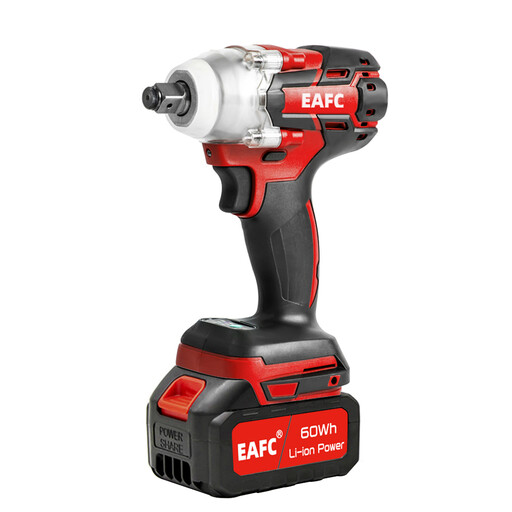
Why it's the right choice: The perfect ally for the amateur mechanic who handles their own summer/winter tire changes and other jobs. The freedom of cordless and its power turn a chore into a pleasure.
Its 200 N.m of torque is perfectly calibrated for the wheel nuts on passenger cars. It avoids the trap of an impact wrench that lacks power and leaves you stranded.
Brushless motor for increased durability and zero maintenance. Its high-capacity battery ensures excellent runtime.
Discover our full selection of equipment tested and approved by our editors, all meeting our performance criteria.
For an effective and safe wash, a pressure of 120 to 140 bars is ideal. Too much pressure could damage the paint, seals, or fragile plastics. Remember to keep a distance of 20 to 30 cm between the nozzle and the bodywork, and always use a fan-shaped jet, which is less aggressive than a straight jet.
Absolutely, provided you choose the right one. Recent models, equipped with brushless motors and good lithium-ion batteries, easily rival some compact canister vacuums in terms of suction power (in kPa). For a flawless clean of carpets and seats, aim for a model with at least 10-12 kPa, ideally supplied with a mini motorized brush.
For a simple oil change or brake pad replacement, no. But a car diagnostic tool (or OBD2 scanner) quickly becomes indispensable as soon as an engine light comes on. It reads the error codes from the car's computer, gives you a reliable lead for the repair, and saves you a trip to the garage (and the accompanying bill) for a simple diagnosis. For any serious amateur mechanic, it's an investment that pays for itself very quickly.