
Livraison le jour même ou le lendemain

Qualité garantie

Débloquez vos offres de bienvenue: Livraison GRATUITE | Jusqu'à -80 % | 30 jours d'essai gratuits à JoyPlus
Téléchargez l'application
More and more car owners want to get their hands dirty and maintain their own vehicles. A great idea! But be careful: the car maintenance equipment market is a jungle where marketing promises can be misleading. A poor choice isn't just a waste of money; it can directly compromise your safety. This guide is here to help you see things more clearly and identify the essential criteria for a smart, risk-free purchase.
Before comparing products, let's start by identifying the most common traps so you don't fall for them.
To avoid these unpleasant surprises, nothing beats objective data. Here are the points to check before buying your garage tools.
This is the maximum weight the equipment can support without faltering. For a hydraulic jack or jack stands, always aim for a capacity greater than your vehicle's weight. For example, for a car weighing 1.5 tons, 2-ton or 3-ton equipment provides a comfortable safety margin.
The choice of materials is just as crucial. A welded steel trolley jack will generally be more robust for heavy-duty workshop use, while an aluminium alloy model will offer welcome portability for home use, without sacrificing strength if the design is high-quality. For jack stands, a wide base and a cast iron or forged steel ratchet bar are indicators of stability and durability.
The lifting range, which is the difference between the minimum and maximum height, determines your jack's versatility.
For a car battery booster, two values are fundamental:
To help you choose, here is our selection of products suited for different profiles, all validated against our safety and performance criteria.
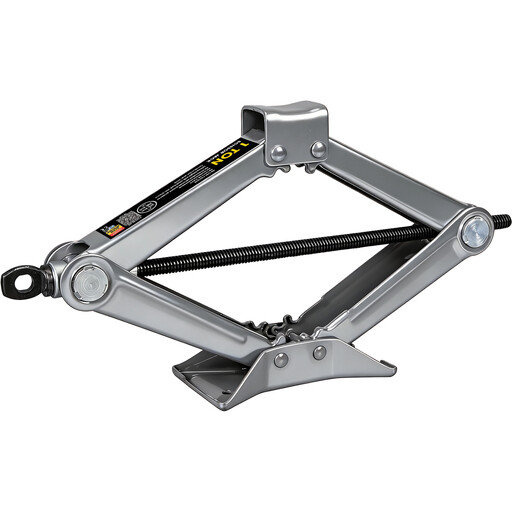
Why we chose it: Perfect for common roadside repairs, like a flat tire. Its foldable design and 88 mm minimum height allow it to be easily stored in the trunk, even in the spare wheel compartment, and make it compatible with most sedans and compact SUVs.
Its entry height of 88 mm is verifiable and genuinely suitable for low-clearance vehicles, unlike products with vague promises. Its forged steel structure ensures reliability that matches its 1-ton capacity.
Extremely compact and lightweight, it can be stored without taking up much space. The crank handle is designed for lifting without excessive effort.
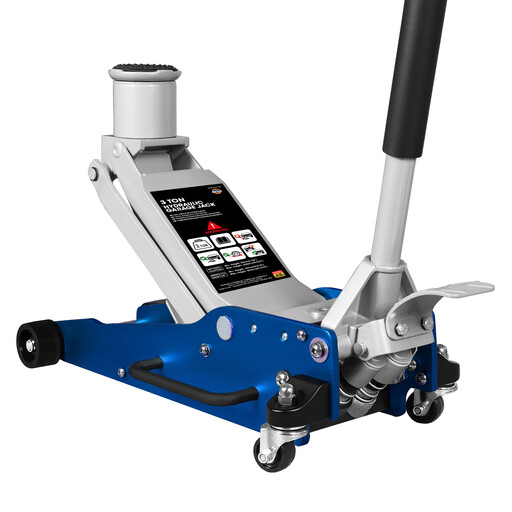
Why we chose it: Designed for demanding enthusiasts, this jack combines a 3-ton capacity, a lightweight aluminium body, and a dual-pump system for rapid lifting. Its versatility is its strong suit, capable of lifting everything from a sports car to a large SUV.
It is EN 1494 + CE certified, a guarantee that its 3-ton capacity is real and has been tested under load. Its entry height of 85 mm is a precise specification that ensures compatibility with low-ground-clearance vehicles.
The dual-pump system significantly reduces the number of pumps needed to reach maximum height. The included riser allows for a quick switch from a low-profile car to an SUV.
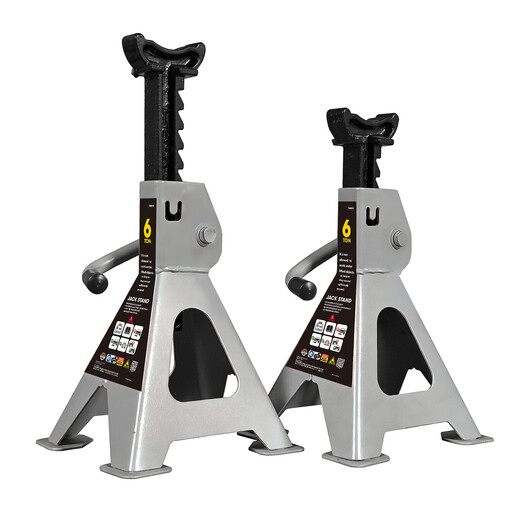
Why we chose it: Safety is non-negotiable under a 4x4, van, or RV. These 6-ton jack stands offer a very high load capacity and a welded steel structure designed for heavy-duty use and total peace of mind.
The 6-ton capacity is EN 1494 certified, which guarantees it is not overstated. The welded steel construction and cast iron ratchet bars are a testament to their durability under heavy loads.
The wide adjustable height range (388-580 mm) makes them perfect for vehicles with high ground clearance. The rubber saddles protect the vehicle's chassis.
We have curated a complete range of products that meet our selection criteria and European safety standards.
1. Are jack stands really necessary if I have a good jack? Yes, absolutely. A jack, even a high-quality hydraulic one, is a lifting device, not a support device. Hydraulic systems can fail over time or experience a slow loss of pressure. Never work under a vehicle supported only by a jack. Jack stands are the only equipment designed to hold a static load stably and securely over a long period.
2. What's the difference between a trolley jack and a scissor jack? A trolley jack (often hydraulic) is mounted on wheels, offers a higher lifting capacity, better stability, and faster, less strenuous lifting. This makes it ideal for regular use in a garage. A scissor jack is more compact, lightweight, and budget-friendly. It's the ultimate roadside solution, perfect for a flat tire on the side of the road, and it stores easily in a trunk.
3. How do I maintain a battery booster to maximize its lifespan? To preserve the internal battery of a car battery booster, fully recharge it after each use and perform a full charge every 2 to 3 months, even if it hasn't been used. Avoid storing it in extreme temperatures (very hot or very cold) and do not attempt to jump-start a vehicle if the booster's charge is below 25%, as this could damage its cells.