
Livraison le jour même ou le lendemain

Qualité garantie

Débloquez vos offres de bienvenue: Livraison GRATUITE | Jusqu'à -80 % | 30 jours d'essai gratuits à JoyPlus
Téléchargez l'application
Upgrading to LED lighting for your car is an increasingly popular idea among drivers. Better visibility, lower power consumption, a modernised look—the appeal is undeniable. But be warned: the market is saturated with options and marketing claims that often lead to buyer's remorse. To avoid falling into common traps, it's essential to understand the pitfalls.
As a product expert at Joybuy, my mission is to clear the path for you. Here are the two most common mistakes we see:
To avoid these disappointments, it's best to focus on objective technical specifications. These are the true arbiters of a car LED kit's quality and suitability.
This is the non-negotiable starting point.
An overheating LED is an LED whose performance and lifespan will plummet. Reputable manufacturers understand this and invest in robust cooling systems:
A product with no clear mention of its cooling system is a risky long-term bet.
Not all LEDs are created equal, nor do they serve the same needs.
Rather than an exhaustive list, we've matched specific products to user profiles. The goal: to help you find the solution that's truly right for you.
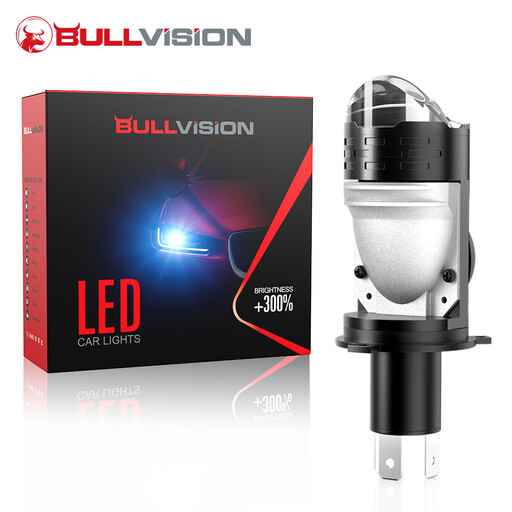
Why this choice? This user is primarily looking for a direct and reliable improvement in their night-time visibility, without unnecessary frills. The goal: to replace their original H4 halogen bulbs with a higher-performance, more durable solution for a more relaxed driving experience.
This model is designed to replicate the beam pattern of original halogen bulbs, thus avoiding dazzling other drivers. Its "plug-and-play" design is credible here because it respects the standard form factor and includes a Canbus driver, ensuring compatibility with 99% of vehicles.
The light beam is sharp and precise, with no dark spots, significantly improving the range and width of the illumination. Its fan-based cooling ensures stable performance over time.
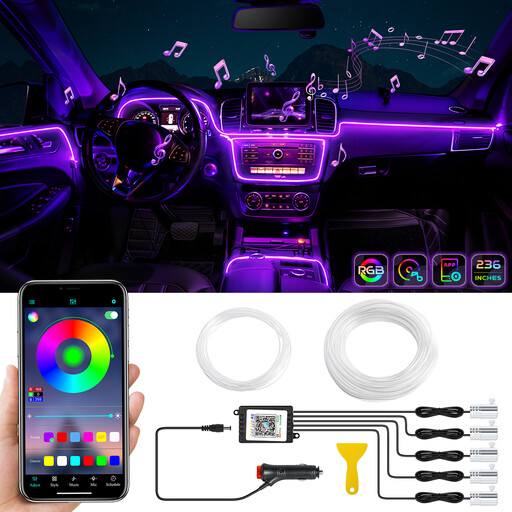
Why this choice? This user wants to transform their vehicle's cabin into a personalised sanctuary. They are looking for a flexible, controllable, and visually dynamic ambient lighting solution, typical of the car tuning scene.
This kit is designed for "Do It Yourself" (DIY) installation. It includes the fibre optic cable, LED sources, and instructions, which makes the required installation level clear from the start. The standard and safe 12V power supply prevents risky electrical setups.
Total control via a mobile app (iOS/Android) that lets you choose from 16 million colours, 29 preset modes, and even synchronise the lights with music or your voice.
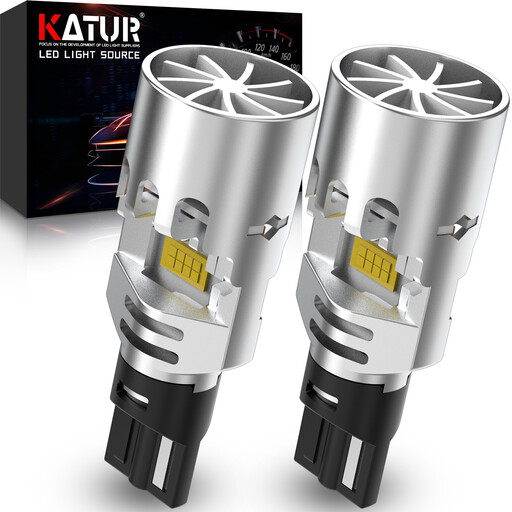
Why this choice? This profile doesn't just stop at the headlights. They love to perfect every detail of their vehicle. An ultra-powerful reverse light bulb is a functional detail that is a game-changer for safety and convenience during manoeuvres—an often-overlooked upgrade.
This product targets a specific compatibility (T15/W16W/921/912) and integrates a Canbus system, which eliminates the two main risks of errors. The presence of a cooling fan on a bulb of this size is a true sign of a serious approach to performance management.
It delivers intense white illumination (6500K) for maximum visibility when reversing. Manoeuvring at night or in low light becomes a breeze.
We have compiled a complete and up-to-date selection of products that meet our strict selection criteria and current regulations.
No, compatibility depends on two key factors: the bulb's socket (H4, H7, T10, etc.), which must be identical to your vehicle's, and the electronic system. For cars made after the 2000s, it is almost essential to choose bulbs with an error-free Canbus LED system to avoid dashboard warnings.
Regulations are very clear on this point. To be used on public roads, replacement LED headlight bulbs must have European approval (ECE marking). If the LED kit is not approved, the vehicle will fail its technical inspection, and you risk a fine during a traffic stop. It is the buyer's responsibility to verify the product's certification and comply with current legislation. Interior or ambient lighting is generally not subject to this requirement.
The simplest and most reliable solution is to choose bulbs or kits labelled "Canbus Ready," "Error-Free," or "Anti-Error" from the outset. These products include an electronic circuit that tricks the onboard computer by simulating a normal power draw, thus preventing it from detecting a fault. For some particularly sensitive vehicles, an additional external Canbus decoder may sometimes be necessary.