
Livraison le jour même ou le lendemain

Qualité garantie

Débloquez vos offres de bienvenue: Livraison GRATUITE | Jusqu'à -80 % | 30 jours d'essai gratuits à JoyPlus
Téléchargez l'application
Upgrading to LED lighting for your car is an excellent move to boost visibility, enhance safety, and give your vehicle a modern look. The problem is, the market is saturated with options and marketing promises that can quickly turn the selection process into a headache. A poor choice can not only be a waste of money but could also cause you to fail your technical inspection or, worse, dazzle other drivers.
As a product expert at Joybuy, my role is to help you see things more clearly. Let's break down the most common pitfalls and the essential criteria for making an... enlightened choice.
Before you click "Add to Cart," take a moment to check these three fundamental points. They will be the difference between a successful purchase and a disappointment.
To move from theory to practice, here are a few concrete examples tailored to different needs.
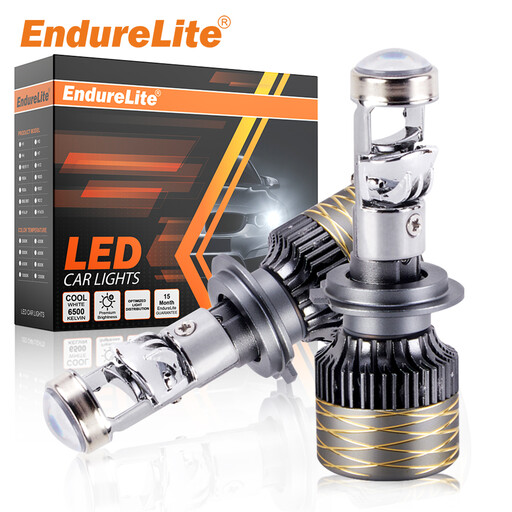
Why we chose it: This versatile kit covers the most common base types (H7, H11, etc.) and is designed for a straightforward installation. It represents a simple and effective upgrade for a wide range of vehicles, without requiring complex modifications.
It includes an active cooling fan to counter the risk of overheating and ensure a long lifespan. Its "CANbus ready" design is engineered to prevent errors on 99% of vehicles, according to the manufacturer.
Its integrated projector lens helps focus the light for a sharper beam, thereby reducing glare compared to entry-level LED bulbs.
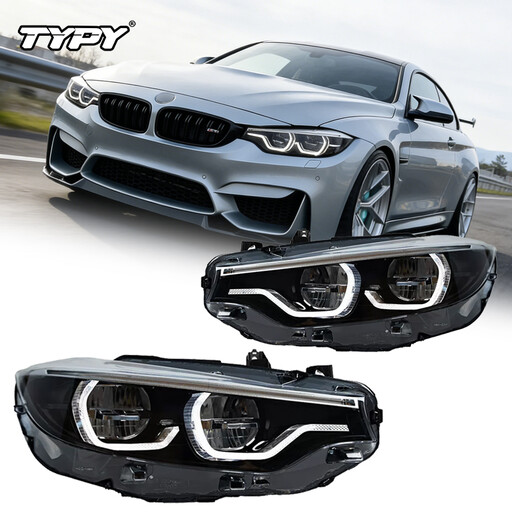
Why we chose it: For owners of specific models like a BMW 4 Series, a complete headlight assembly is the ultimate solution for a radical transformation. This is no longer just a bulb swap, but a new look for the car, complete with modern features.
By replacing the entire headlight, it eliminates all beam compatibility and physical fitment issues at once. The projector is designed specifically for the vehicle, guaranteeing perfect performance and integration.
It adds aesthetic features like daytime running lights (DRLs) and projector lenses, which give the vehicle a real facelift while improving the quality of the lighting.
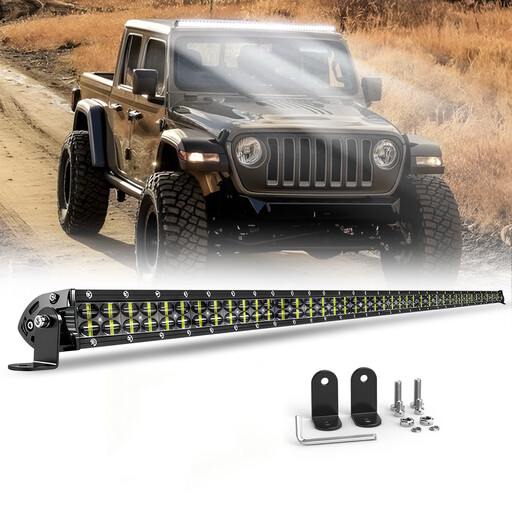
Why we chose it: For 4x4 excursions, on private trails, or over difficult terrain, raw power is king. A 4x4 LED light bar like this one is built for ruggedness and maximum illumination, turning night into day.
Warning: this equipment is intended exclusively for off-road use. It does not replace the original headlights and is therefore not subject to the same beam pattern constraints. Its design is focused on durability and resistance to the elements (water, dust, shocks).
The combination of "Spot" (long-range) and "Flood" (wide beam) patterns offers exceptional lighting versatility to adapt to any off-road driving situation.
We have selected a full range of products for you that meet these quality criteria and current regulations.
Regulations are strict. To be street-legal, a LED kit for cars must have an ECE approval. To date, very few aftermarket kits have this certification. Using non-approved bulbs on public roads is therefore at your own risk and may result in failing a technical inspection. This restriction does not apply for use on a racetrack or private land.
As a general rule, if your vehicle was manufactured after 2005 and/or is a European brand (Volkswagen, BMW, Audi, Peugeot, Renault, etc.), it is highly likely to be equipped with a CANbus system. If your dashboard displays an alert when a bulb is burnt out, you will need a "CANbus Ready" LED kit to avoid error messages.
Not necessarily. Price isn't everything, far from it. A moderately priced bulb with high-quality LED chips (like CSP), an effective cooling system (a fan or a heatsink made of copper/aerospace-grade aluminium), and a precise design will outperform and outlast an expensive but poorly designed model. Rely on the technical specifications, the quality of the cooling system, and the product's design rather than its price tag alone.