
Livraison le jour même ou le lendemain

Qualité garantie

Débloquez vos offres de bienvenue: Livraison GRATUITE | Jusqu'à -80 % | 30 jours d'essai gratuits à JoyPlus
Téléchargez l'application
Seeing and being seen at night is the cornerstone of driving safety. Your dull, yellowish halogen headlights don't just reduce your field of vision; they also make your car look seriously dated. Upgrading to LED lighting is the go-to solution for a growing number of drivers looking to improve clarity, style, and longevity.
However, the market can be overwhelming, and the technical jargon is often daunting. Between lumens, CANbus compatibility, and different socket types, it's easy to get lost.
As product experts at Joybuy, our mission is to demystify the topic for you. This guide has one simple goal: to give you practical advice and present a selection of reliable products to help you make the right choice, without the marketing fluff.
Before you make the switch, let's review the key criteria to ensure your new lighting is both compatible and high-performing.
The first step is obviously to check your vehicle's bulb type. Each function (low beams, high beams, turn signals, interior car lighting) uses a specific socket. The most common headlight references are H7, H4, or H1. For parking lights or license plate lights, you'll often find T10 (W5W) bulbs.
There are two ways to do this: consult your vehicle's owner's manual or, for a more direct approach, remove a bulb to read its reference number. Also, verify that the new LED car bulb has similar dimensions to the original, especially in depth, so it can fit into the headlight housing without force or modification.
Most modern cars (roughly, those made after 2005) are multiplexed using a system called CANbus. It constantly monitors the proper functioning of all electrical components, including the bulbs. Since an LED bulb consumes far less power than a halogen one, the CANbus system might interpret this as a burnt-out bulb and trigger a warning on your dashboard.
To avoid this minor inconvenience, opt for an error-free Canbus LED model. These integrate a resistor that "tricks" the onboard computer by simulating the power consumption of a standard bulb. Problem solved!
Brightness is measured in lumens (lm). But be careful—a very high lumen value doesn't guarantee superior lighting. A poorly designed beam can create dark spots or, worse, dazzle oncoming drivers. A good LED conversion kit must therefore replicate the original halogen beam pattern as closely as possible. Look for products that mention a "perfect beam pattern" or a "1:1 design" compared to the original. As for colour temperature (measured in Kelvin, K), it defines the light's hue. Around 6000K produces a pure white light, highly valued for its modern look.
Here is our selection of products that meet different needs, whether you want to modernise your headlights, upgrade your interior lighting, or equip your 4x4.
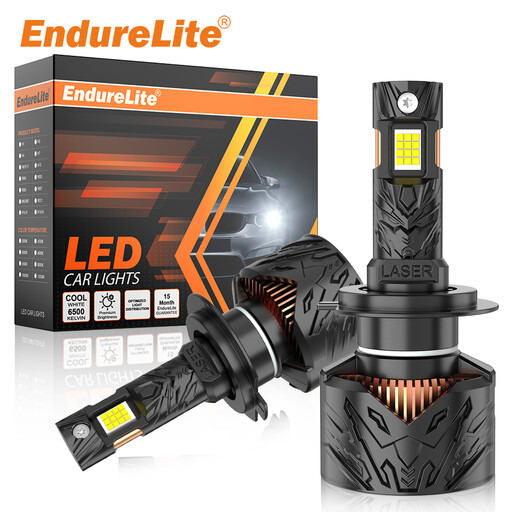
Why It Stands Out: The ENdureLite H7 kit was designed for an incredibly simple installation. Its size is modelled after a standard H7 halogen bulb, making it truly 'Plug and Play'. The manufacturer emphasizes its design, which produces a clean beam pattern, thus minimising the risk of glaring other road users.
Key Features:
Who Is It For? For drivers who want a significant upgrade for their low or high beams with an easy-to-install LED conversion kit that delivers a powerful, white light.
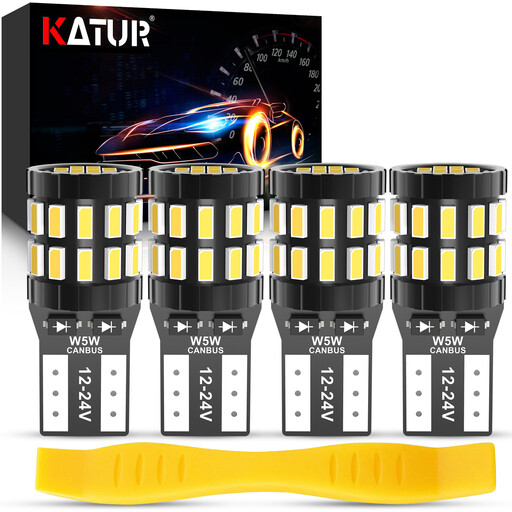
Why It Stands Out: These small bulbs are incredibly versatile. The T10 (or W5W) format is a standard found everywhere: interior car lighting (dome lights, map lights, glove box), parking lights, and even license plate lights. Their key advantage? The integrated error-free Canbus LED function.
Key Features:
Who Is It For? For those who want to modernise all the small light points in their car with a reliable, bright, and hassle-free solution.
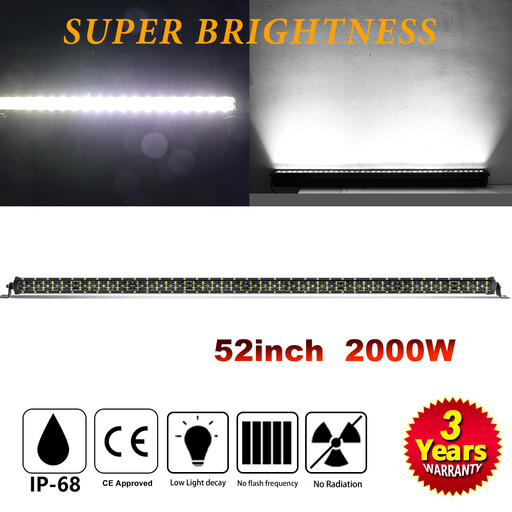
Why It Stands Out: Here, we're moving into the heavyweight category. This 4x4 LED light bar is built for off-roading and heavy-duty use. Its dual-row LED design and combo beam (wide on the sides, focused in the centre) create a spectacular field of vision. The amber and white Daytime Running Light (DRL) function is a bonus for both style and visibility.
Key Features:
Who Is It For? For off-road enthusiasts and owners of 4x4s, SUVs, pickups, or trucks looking for high-performance auxiliary lighting for their nighttime adventures off the beaten path.
Our selection covers the most common needs, but every vehicle and driver is unique. If these models don't match what you're looking for, or if you want to explore other formats and power levels, feel free to browse our full category.
? Explore Our Full Range of 12v Spotlights on Joybuy
Regulations on this are very strict and vary by region. To be approved for public roads, replacement headlights and bulbs must often have a specific certification (e.g., ECE marking in Europe, DOT in the US). Many LED conversion kits are therefore sold with the disclaimer "for off-road or track use only." Before equipping your main headlights, it is crucial to verify that the product is certified for your vehicle model. This is essential for complying with traffic laws and passing safety inspections.
For most 'Plug and Play' bulbs, installation is a breeze: with the ignition off, access the original bulb, unplug it, and then clip in the new LED bulb. For more complex installations like a 4x4 LED light bar, which requires wiring into the electrical system, follow the manufacturer's instructions carefully. If automotive wiring isn't your strong suit, it's best to consult a professional.
Not necessarily. Glare is less about raw power (lumens) and more about the quality of the beam pattern. A quality LED car bulb is designed to project light exactly where it's needed on the road, with a sharp cut-off line, just like a good halogen bulb. This is why it's important to choose products known for their precise beam geometry. Also, remember to check your headlight alignment after installation, as this is a common cause of glare.