
Livraison le jour même ou le lendemain

Qualité garantie

Débloquez vos offres de bienvenue: Livraison GRATUITE | Jusqu'à -80 % | 30 jours d'essai gratuits à JoyPlus
Téléchargez l'application
LED car lighting is no longer just a gimmick. It's a key component for transforming your vehicle's aesthetics while also enhancing safety. However, the market is flooded with products that make tempting promises but often disappoint in practice. Navigating obscure spec sheets and aggressive marketing all too often leads to a poor choice. This guide separates fact from fiction to help you find the LED kit that truly meets your expectations.
Before you dive in, it's best to know the most common traps to prevent a promising purchase from turning into a nightmare.
To avoid buying blind, focus on these few non-negotiable technical points.
The Canbus (Controller Area Network bus) is your car's nervous system, allowing different electronic components to communicate. Since an LED bulb consumes far less power than a halogen one, the system might think there's a fault and trigger a false warning. The solution? You must opt for a W5W LED Canbus bulb or a model labelled "Canbus Ready" or "OBD Error-Free". These models integrate a resistor that tricks the onboard computer.
Each location (low beams, turn signals, licence plate lights, etc.) uses a specific type of bulb. The first step is to check your original bulb's base type (H7, T10/W5W, HIR2, 9012, etc.) in your vehicle's manual. But the base isn't everything! The dimensions of the car LED bulb are just as crucial. A model saddled with a bulky heat sink might not fit inside the housing of an LED headlight, especially if space is tight.
A high-performance LED chip generates heat; it's unavoidable. And poor heat dissipation is the number one cause of premature failure.
The goal isn't to find a one-size-fits-all solution, but the product that perfectly matches your needs. Here is our selection for three distinct profiles.
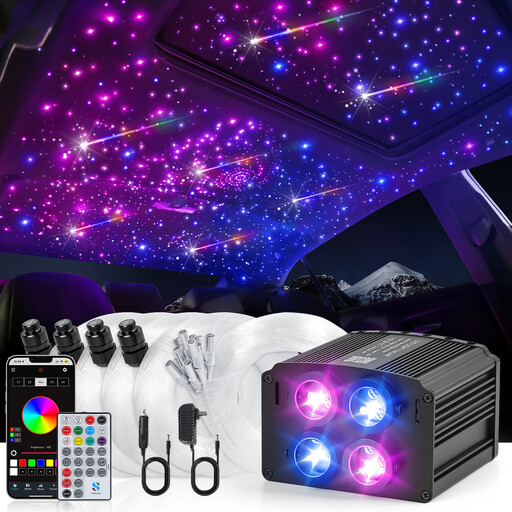
Why it's the right choice: Ideal for anyone wanting to transform their car's interior into a unique space. This starlight headliner with a meteor effect and mobile app control offers deep customisation, perfect for tuning enthusiasts and fans of ambient car lighting.
This complete car LED kit includes its own control box and clear instructions, avoiding the trap of an installation that turns into a headache. Compatibility depends only on available space, not the vehicle's electronics.
Dual control (RF remote and app) and a high fibre count (1000) for a dense and immersive visual effect.
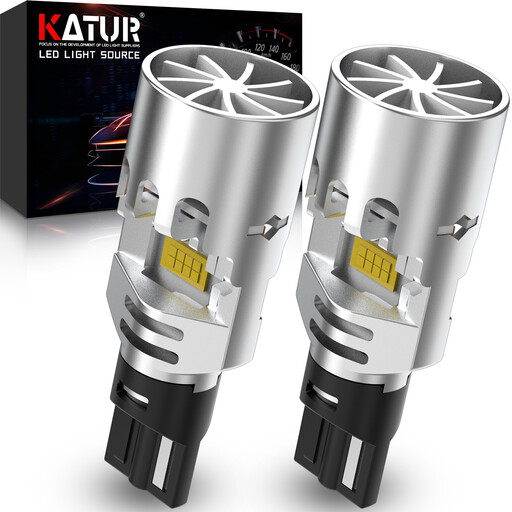
Why it's the right choice: For those who prioritise safety, especially for their reverse lights. This bulb dramatically increases brightness compared to halogen, which is a game-changer when manoeuvring. A simple, direct, and incredibly effective upgrade.
The "Canbus Error Free" label completely eliminates the compatibility problem. Its 1:1 design, identical in size to a T15/W16W bulb, guarantees a hassle-free installation.
Intense brightness (6000 LM) and active cooling via a fan: the winning combination for performance that lasts.
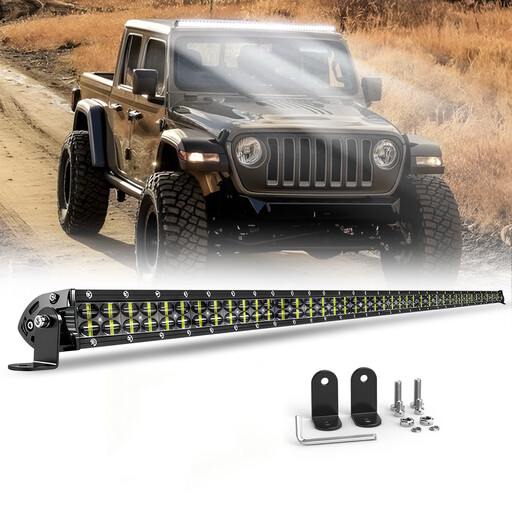
Why it's the right choice: Built for 4x4s, SUVs, and quads, this 4x4 LED bar delivers the powerful, long-range beam essential for venturing off the beaten path at night. Its rugged design is engineered for the harshest conditions.
There's no universal promise here: this is a specialised product for off-roading. Its aluminium chassis and IP67 certification are guarantees of rock-solid durability, a far cry from the trap of flimsy gadgets.
Combination beam (30° Spot for range and 100° Flood for width) to see far and wide. Ultra-rugged die-cast aluminium construction.
Discover our full selection of products that meet our quality standards and current regulations.
French regulations are very clear on this subject. For exterior lighting (low beams, high beams, etc.), replacement bulbs must have ECE approval for use on public roads. Fitting non-approved LEDs for your vehicle model can lead to failing your technical inspection, or even a fine. For interior lighting (ambient car lighting, starlight headliner) or private land use (4x4 LED bar), the legislation is much more permissive.
The most reliable solution is to choose bulbs specifically designed to be Canbus compatible. Look for labels like "Canbus Ready," "Error Free," or "Anti-OBD Error." These models integrate a resistor that tricks your car's diagnostic system into thinking everything is normal.
The real danger isn't the electrical power (an LED consumes less than a halogen), but the heat it generates. A low-end bulb that can't dissipate heat properly will overheat and could permanently damage your headlight's reflector or plastic housing. This is why it's crucial to choose models equipped with a high-performance cooling system (aluminium heat sink, fan).