
Livraison le jour même ou le lendemain

Qualité garantie

Débloquez vos offres de bienvenue: Livraison GRATUITE | Jusqu'à -80 % | 30 jours d'essai gratuits à JoyPlus
Téléchargez l'application
Switching to a car LED kit is an excellent way to improve night-time visibility and give your vehicle a modern look. However, the market is a confusing maze of options and marketing promises. Making the wrong choice not only means money down the drain but also risks compatibility issues or, even worse, dazzling other drivers.
As a product expert at Joybuy, I'm here to help you see things more clearly and make the right decision. This guide breaks down the essential criteria for a successful LED upgrade, helping you avoid the most common pitfalls.
Before diving into the technical details, let's review the classic mistakes that can turn a promising purchase into a real disappointment.
To choose the right LED conversion kit, three technical aspects must be scrutinised.
This is the non-negotiable starting point. The base of your new LED bulb must be identical to your original halogen bulb. The most common types are H7, H4, H1, HB3, and HB4.
To be sure, check your vehicle's manual or look at the inscription on the original bulb itself. A 1:1 design kit (identical dimensions to the halogen) radically simplifies installation, especially in headlight housings where space is tight.
To avoid the issues mentioned earlier, choose a Canbus LED bulb. These models include a resistor or decoder that simulates the power consumption of a halogen bulb, thus tricking the onboard computer. The majority of vehicles produced since the 2000s are equipped with one. Look for "Canbus Ready" or "Error-Free" to ensure a hassle-free experience.
Colour temperature, measured in Kelvin (K), defines the hue of the light. A temperature of 6000K produces a pure white light, similar to daylight, offering striking contrast and a modern look.
But the design of the LED chip itself is even more critical. A good kit must position its LED chips to perfectly replicate the filament of a halogen bulb. This is the key to achieving a sharp, precise beam pattern that effectively illuminates the road without blinding other road users.
Here are a few options that meet different needs, based on the objective selection criteria we've just discussed.
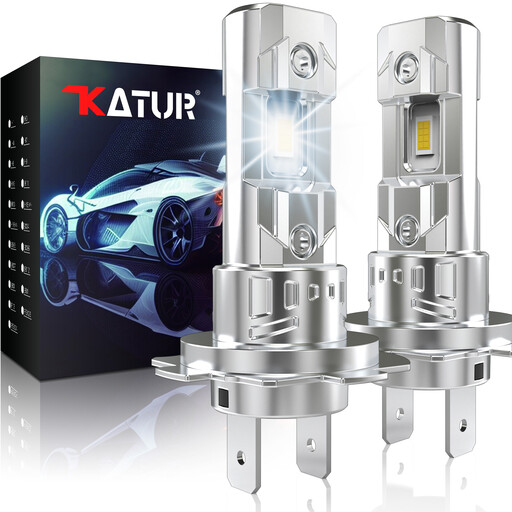
Why we chose it: Ideal for anyone seeking a simple, reliable upgrade. The fanless design eliminates any risk of mechanical failure and noise, while its compact size ensures a quick installation.
Its fanless design relies on an aviation-grade aluminium body for effective passive dissipation, thus avoiding the overheating pitfall typical of entry-level models.
Ultra-simple "Plug and Play" installation thanks to its 1:1 mini design and no external driver. Silent operation and high reliability.
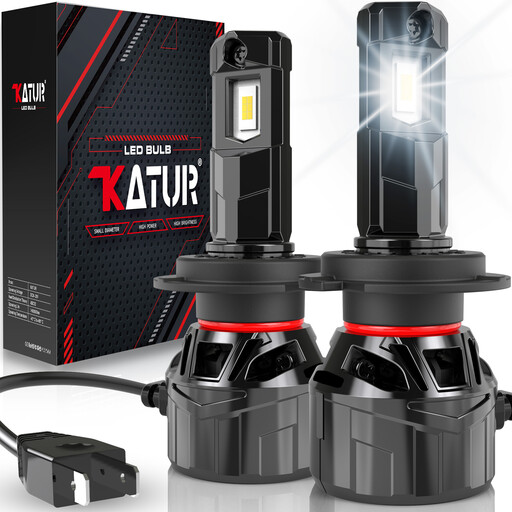
Why we chose it: For those who demand maximum light output and rock-solid durability. The active cooling system, with its turbo fan, ensures consistent performance, even under heavy use.
Its advanced cooling system (16,000 RPM fan, copper heat pipe) neutralises the risk of overheating, thereby preserving optimal brightness and lifespan.
Extremely high light output (30,000 lm per pair) for maximum visibility. The built-in Canbus decoder ensures compatibility with 99% of vehicles.
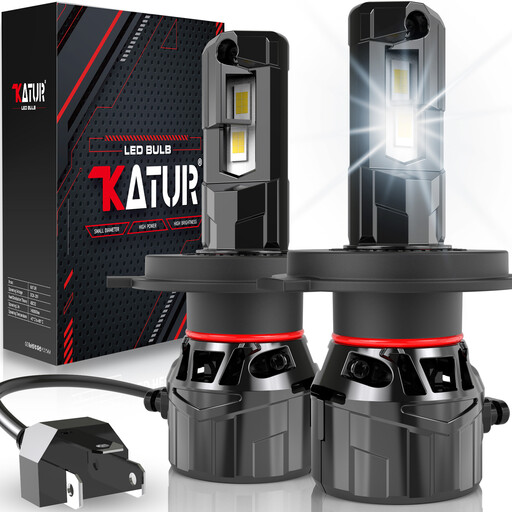
Why we chose it: Specifically designed for vehicles that use a single H4 bulb for both low and high beams. This kit provides a complete upgrade in a single installation.
Its integrated Canbus system is specifically designed to manage the switch between low and high beams without generating errors, a common pitfall with low-end H4 LED bulbs.
1:1 design for direct fitment, without needing to modify the dust cover. The high-performance cooling system ensures a record-breaking lifespan (up to 60,000 hours).
Discover our complete and up-to-date selection of products that meet these demanding selection criteria and current standards.
1. Are car LED kits road-legal? In order to be used on public roads in many regions, including Europe, lighting must be ECE approved. Most LED conversion kits are sold for "off-road" use only (e.g., on circuits or private land). It is therefore crucial to choose a kit designed to perfectly replicate the original halogen bulb's beam pattern to avoid dazzling other drivers, a critical point during vehicle inspections (like the MOT test in the UK). We recommend you always check current local regulations and the terms of your insurance policy.
2. Is installing an LED conversion kit difficult? The majority of modern kits are "plug and play". Thanks to their compact 1:1 design, they install exactly like a halogen bulb, with no modifications to the headlight housing or wiring. The trickiest part is often just accessing the bulb, which can vary in difficulty depending on your car model.
3. Will I get a dashboard error message? This is indeed a risk on multiplexed vehicles (with a Canbus system) if you don't choose a compatible kit. To avoid it, you must select a Canbus LED bulb or a kit labelled as "error-free". These models integrate circuitry that tricks the onboard computer and prevents any warnings.