
Livraison le jour même ou le lendemain

Qualité garantie

Débloquez vos offres de bienvenue: Livraison GRATUITE | Jusqu'à -80 % | 30 jours d'essai gratuits à JoyPlus
Téléchargez l'application
Switching to LED lighting is an excellent way to improve night-time visibility and give your vehicle a modern look. But with an overwhelming number of options, how do you navigate the choices? Replacing your old halogen bulbs with a high-performance car LED kit requires an informed decision to ensure compatibility, efficiency, and safety.
Follow our guide: we'll explain the essential criteria to check before you buy and present a selection of models that have caught our eye.
Before taking the plunge, there are three key points to verify to ensure your new lighting will be a perfect fit for your vehicle and meet your expectations.
This is the essential starting point: the physical and electronic compatibility of the bulb.
Be aware, the performance of a powerful LED bulb isn't just measured in lumens—far from it.
The lifespan of an LED bulb is directly dependent on its ability to dissipate the heat it generates. An effective cooling system, whether passive (aluminium heat sink) or active (mini-fan), is therefore essential to ensure its longevity. A robust design, often certified with an Ingress Protection (IP) rating like IP68, also guarantees excellent resistance to water and dust—an indispensable protection against the hazards of the road.
Let's get practical! Here are a few models that caught our attention for their performance-to-compatibility ratio.
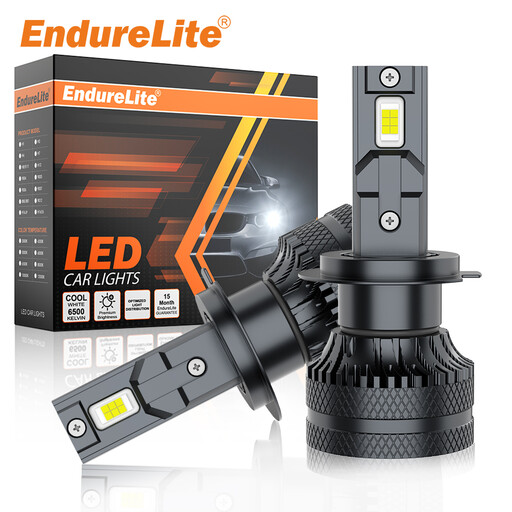
Why this model stands out: This kit is all about simple installation. Its “1:1” design, with no external driver or extra wiring, allows you to replace the original halogen bulb in minutes. The active cooling system with a fan is integrated directly into the aluminium alloy body, ensuring stable performance over time.
Key features:
Who is it for? For drivers looking for a simple and quick replacement solution for their 9006/HB4 type bulbs, without the hassle of external drivers or complicated assembly.
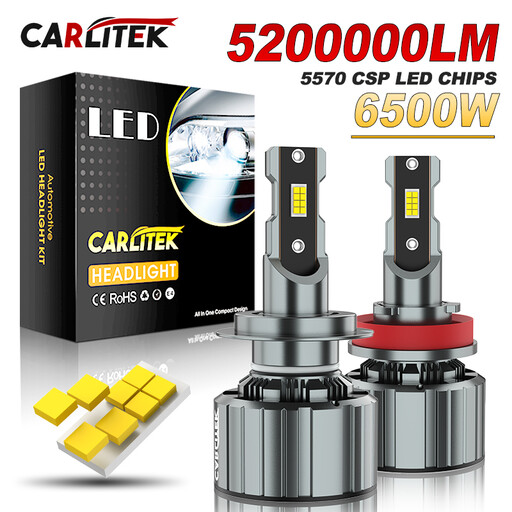
Why this model stands out: Following the same philosophy as the previous model, this kit is specifically designed for headlights using a 9005/HB3 base. It stands out with a highly focused beam, achieved through a minimalist gap between the LED chips. The manufacturer promises up to 300% more brightness than halogens for significantly increased visibility.
Key features:
Who is it for? Ideal for motorists whose vehicles are equipped with 9005/HB3 bulbs and who want a significant gain in range and width for their main lighting.

Why this model stands out: This kit addresses a special case: replacing original Xenon bulbs (type D1S or D1R). It allows you to switch to LED technology without changing the entire headlight assembly. The manufacturer highlights a direct installation and a CANBUS system designed to neutralise radio interference and error messages.
Key features:
Who is it for? Specifically intended for owners of vehicles equipped with Xenon headlights (D1S/R) who want to enjoy the advantages of LED technology, such as instant-on and a more modern white colour.
Of course, this selection is just a glimpse of the market. If your bulb base isn't on this list or if you're simply curious, our full catalogue is packed with other solutions.
? Discover our full range of CANBUS car lighting
1. Is it legal to install LED bulbs in my car? In France, as in the rest of the European Union, the legislation is very strict. To be used on public roads, replacement bulbs must have a specific ECE approval for their intended use. Many aftermarket LED kits are, on paper, reserved for track or “off-road” use only. It is the driver's responsibility to ensure their vehicle remains compliant with legislation and roadworthiness test requirements.
2. How do I know if I need a CANBUS LED bulb? To put it simply: if your car was manufactured after 2005, there's a high chance it uses a CANBUS system. The tell-tale sign is a “defective bulb” error message on the dashboard after installing standard LEDs. Opting for an error-free CANBUS LED model from the start is the safest way to avoid such issues.
3. Does a more powerful LED bulb always provide better light? Absolutely not. It's a common pitfall! A powerful LED bulb that is poorly designed will create a blinding “wall” of light just in front of the bonnet, dazzle other road users, and paradoxically, reduce long-distance visibility. The quality of lighting is judged primarily on the precision of its beam pattern and its ability to illuminate the right areas. This is why the bulb's design and the positioning of the LED chips are far more crucial than the raw lumen count.