
Livraison le jour même ou le lendemain

Qualité garantie

Débloquez vos offres de bienvenue: Livraison GRATUITE | Jusqu'à -80 % | 30 jours d'essai gratuits à JoyPlus
Téléchargez l'application
Driving at night or in bad weather with yellowish halogen headlights is a bit like driving with sunglasses on. It's uncomfortable and, more importantly, dangerous. Visibility is reduced, colours are washed out, and eye strain sets in much faster. Upgrading to a car LED kit is no longer just a cosmetic touch-up; it's a genuine upgrade for your safety.
But with an overwhelming number of options on the market, how do you find your way? Between lumens, colour temperature, and compatibility, the choice can quickly become a headache. As a product expert at Joybuy, my mission is to clear the path for you. This guide breaks down the essential criteria and offers a selection of products to help you make an informed choice, without the unnecessary marketing jargon.
Before you take the plunge and replace your halogen bulbs with LEDs, a few technical points need to be checked. They are your guarantee of a smooth installation and optimal performance.
This is the essential starting point.
The power of an LED bulb isn't just a single number. Two indicators are crucial:
An LED's longevity depends entirely on its ability to dissipate heat. Overheating can damage the chips and drastically reduce their lifespan. The two main systems are:
Good thermal management is the key to achieving the lifespans promised by manufacturers, often between 30,000 and 60,000 hours—that's years of peace of mind compared to the few hundred hours of a halogen bulb.
We have selected three products that perfectly illustrate different use cases, whether you're looking for a simple upgrade, to replace xenon headlights with LEDs, or for robust lighting for your quad/ATV.
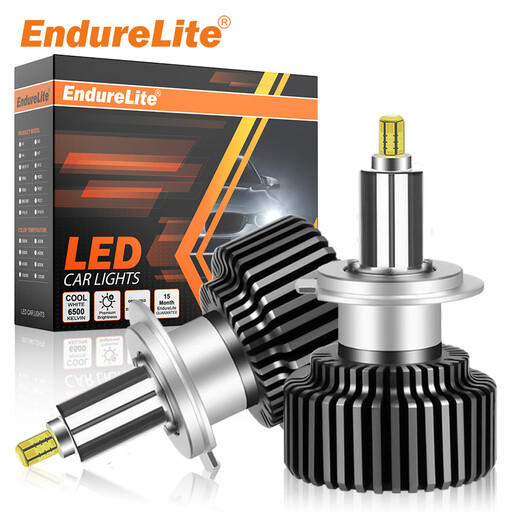
Why we chose it: This kit stands out for its "1:1" design, meaning it's the same size as the original bulbs. This feature ensures a "plug-and-play" installation without any modifications and a clean, precise beam pattern that doesn't dazzle other road users.
Key features:
Who is it for? Ideal for drivers looking for a simple and effective upgrade for their high beams or fog lights, without worrying about complex compatibility or installation issues.

Why we chose it: Designed specifically for replacing original xenon headlights (D1S/D1R sockets), this kit offers instant-on performance. Unlike HID/Xenon bulbs that need a warm-up time, these LEDs reach full power in a fraction of a second.
Key features:
Who is it for? For owners of vehicles equipped with xenon headlights who want to switch to LED technology for immediate illumination, a whiter light, and a significantly longer lifespan.
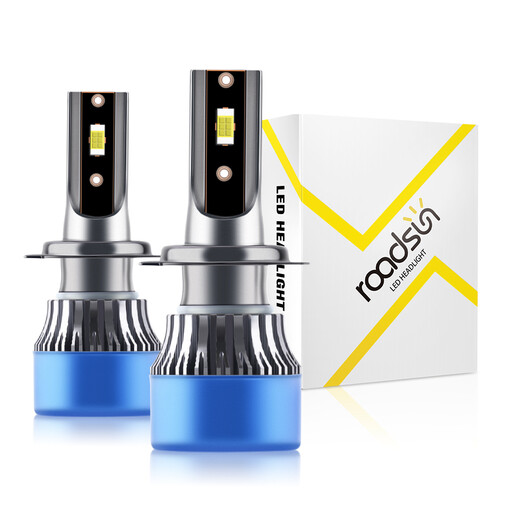
Why we chose it: This model is built for adventure and the extreme conditions faced by quads (ATVs), UTVs, and other 4x4s. Its rugged construction is designed to withstand vibrations, shocks, and harsh weather.
Key features:
Who is it for? Perfect for off-road enthusiasts and owners of quads or UTVs who demand a reliable and durable LED car headlight that can withstand the harshest conditions.
Our selection focuses on specific uses, but the LED bulb market is vast. Every vehicle and every driver has unique needs.
To discover a wider range of LED conversion kits and find the perfect models for your car, we invite you to explore our full category: Bright LED Projector Bulbs.
1. Is it legal to replace halogen bulbs with LEDs in Europe? European regulations are strict: replacement bulbs must be type-approved (ECE marking) for road use. However, many aftermarket LED kits do not have this certification. Their installation is therefore often tolerated for off-road or private track use only. Before any purchase for on-road use, it is crucial to check the current legislation and the product's homologation status.
2. Will my on-board computer (OBD) show an error? This is a common issue in modern vehicles. The on-board computer interprets the low power draw of an LED as a burnt-out bulb and displays an error. To bypass the system, choose a "CAN bus Ready" or "Error-Free" car LED kit. It integrates a resistor that simulates the consumption of a halogen bulb and silences the warnings.
3. Does the light colour (Kelvin) affect visibility? Absolutely. A cool white light (around 6000K-6500K) excels at bringing out contrasts and details in dry weather. However, in heavy rain or fog, a slightly warmer light (around 4300K-5000K) can be more effective, as it reflects less off water droplets. Your choice will therefore also depend on your most frequent driving conditions.