
Livraison le jour même ou le lendemain

Qualité garantie

Débloquez vos offres de bienvenue: Livraison GRATUITE | Jusqu'à -80 % | 30 jours d'essai gratuits à JoyPlus
Téléchargez l'application
Is driving at night or in the rain a nightmare with your stock headlights? If you're tired of that dull, yellowish glow, you're not alone. Upgrading to LEDs is the upgrade of choice today for improving safety and modernizing your vehicle's look.
The problem? The market is flooded with models and technical jargon. How do you navigate it all? Don't worry. This guide is here to demystify the topic, help you choose the perfect car LED bulb for your needs, and introduce you to the best models of 2026.
Before you purchase a car LED kit, there are three criteria to examine closely for a successful and hassle-free purchase.
The first step is to check the socket type of your original bulbs. The most common types are the H7 LED bulb (often for low beams) and the H4 LED bulb (which combines high and low beams). Consult your vehicle's manual or remove a bulb to identify the exact model.
On newer vehicles (generally post-2005), another point is crucial: multiplexing. The on-board computer (OBC) can interpret the low power consumption of an LED as a burnt-out bulb and display an error message. The solution? Opt for an error-free Canbus LED model. It integrates a resistor that tricks the on-board computer by simulating the power draw of a halogen bulb, ensuring flawless operation.
Luminous output, expressed in lumens (lm), is a key indicator. A powerful LED bulb promises better visibility, but don't be blinded by the numbers: the quality of the beam pattern is paramount. A good LED headlight should illuminate the road broadly and far ahead, without creating dark spots or dazzling oncoming drivers. The "1:1" design, which mimics the size and position of a halogen bulb's filaments, is the best guarantee of a precise beam.
Colour temperature, measured in Kelvin (K), defines the hue of the light. A cool white car light, typically between 6000K and 6500K, closely resembles daylight. This hue enhances contrast and the perception of details on the road, reducing eye strain during long night drives.
The replacement of a halogen bulb with an LED should be straightforward. Most quality kits are designed to be "plug-and-play," meaning they fit directly into the original housing without any wiring modifications.
Finally, durability is directly linked to the quality of the cooling system. An overheating LED loses performance and its lifespan plummets. High-performance models combine an aviation-grade aluminum body with an active fan to dissipate heat effectively, allowing for lifespans of 50,000 hours or more.
Now that you know the basics, here is a selection of models that have caught our eye for their performance and meticulous design.
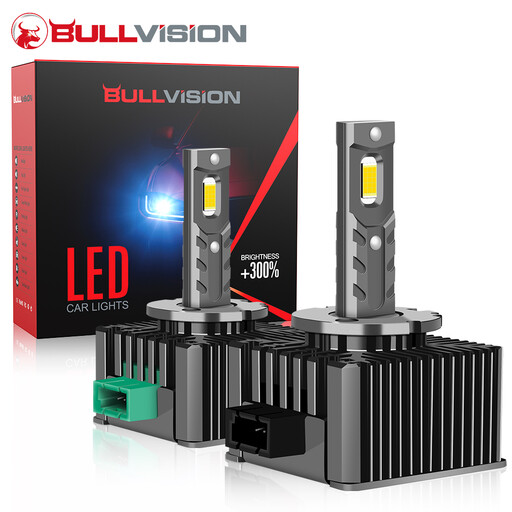
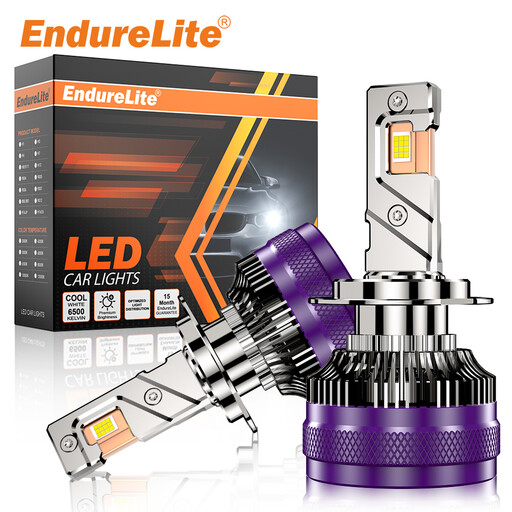
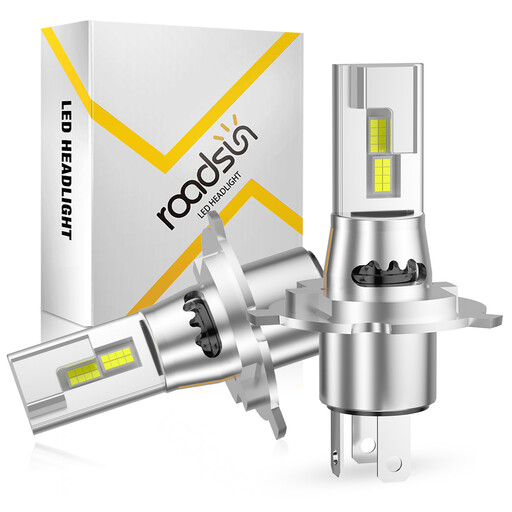
Thermal management is key to performance and longevity, whether for your headlights or other high-tech equipment. If optimization is your passion, you might be interested in other components where heat dissipation is king. For example, discover our selection of White Cooling Fans.
Regulations on replacing halogen bulbs with LEDs (or "retrofitting") can be complex. To be used on public roads, bulbs must have the proper regional certification (e.g., ECE marking in Europe, DOT in the US). In practice, many LED kits are designated for "off-road" use only (on a track or private property). It is therefore imperative to check the product's compliance and your local laws before driving on public roads.
The Canbus (Controller Area Network bus) is the system that allows your car's various electronic components to communicate. In modern vehicles, it also monitors the proper functioning of the light bulbs. Since an LED consumes much less power than a halogen, the system may think the bulb is faulty and display a dashboard warning. An error-free Canbus LED bulb integrates a circuit to fool the on-board computer and prevent this message. It's a must-have for most cars produced since the mid-2000s.
High power (expressed in lumens) does not necessarily mean glare. The most important factor is the bulb's design and the quality of its beam pattern. Well-made LED bulbs are designed to replicate the focal point and light distribution of a halogen bulb. This projects the light onto the road, where it's needed, and not into the eyes of other road users. Correctly adjusting your headlight alignment after installation is also essential.