
Livraison le jour même ou le lendemain

Qualité garantie

Débloquez vos offres de bienvenue: Livraison GRATUITE | Jusqu'à -80 % | 30 jours d'essai gratuits à JoyPlus
Téléchargez l'application
Switching to LEDs for your car's lighting? The promise is tempting: better visibility, a record-breaking lifespan, and lower energy consumption. But in the jungle of offers and sometimes misleading marketing claims, it's hard to know where to turn. Our guide is here to help you see things more clearly, focusing on the criteria that really matter to make the right choice and avoid unpleasant surprises.
Before taking the plunge, it's best to know the common mistakes that can turn a good idea into a real headache.
To successfully complete your halogen to LED bulb replacement, three technical points must be scrupulously checked.
This is the non-negotiable starting point. Each location on your vehicle (low beams, high beams, LED fog lights, turn signals) requires a specific socket type. The most common for main headlights are:
Editor's Tip?: The most reliable way to find out the socket type is to check your vehicle's manual or, even simpler, remove the original bulb to inspect it.
The Canbus (Controller Area Network bus) system is a network that allows your car's various electronic components to communicate. If your car is equipped with it, the on-board computer analyses the power consumption of the bulbs. To bypass its monitoring and avoid error messages, you must choose a car LED kit labelled "Canbus Ready" or "Error-Free". These models integrate a resistor or circuit to simulate the consumption of a halogen bulb.
Rather than an endless list, we've selected models that meet specific needs, based on the technical criteria mentioned above.
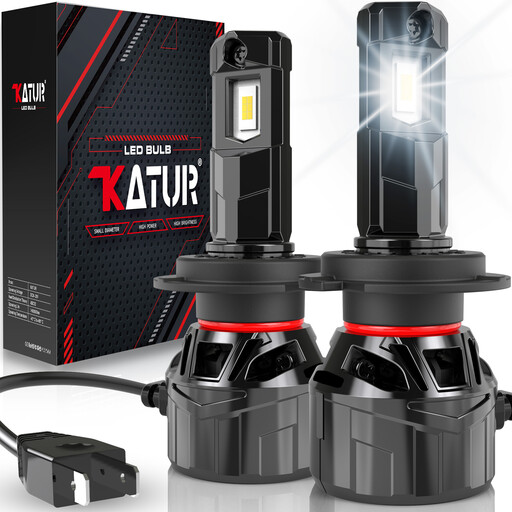
Why we chose it : Ideal for a first, simple, and effective upgrade to LEDs. This H7 model installs directly in place of halogens, with no modifications needed. Perfect for drivers who want better everyday visibility without the hassle.
Its integrated Canbus system, compatible with 99% of vehicles, neutralises the risk of dashboard errors. The 16,000 RPM fan and aluminum body ensure excellent cooling, eliminating the risk of overheating and premature failure.
Ultra-simple "plug-and-play" installation thanks to its 1:1 compact design. Its 6000K temperature provides a crisp, white light, ideal for improving night-time visibility.
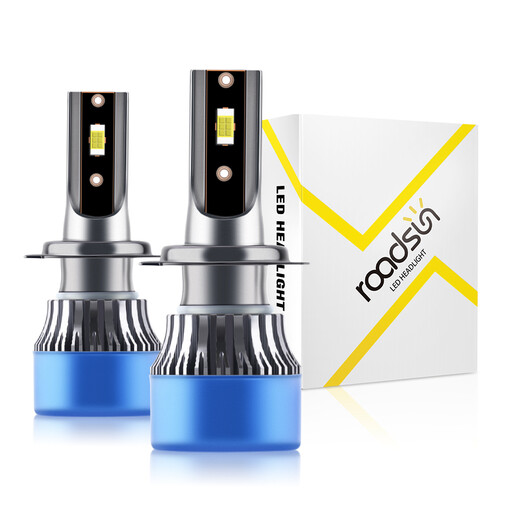
Why we chose it : Engineered for extreme conditions (off-road, ATV, UTV), this model is for those who demand unbeatable durability and maximum brightness for their excursions or intensive use. Its design is built to withstand vibrations and the elements.
Its reinforced, waterproof design directly addresses the problem of long-term reliability. The very high brightness, often a marketing trap, is fully justified here for uses where maximum visibility is a matter of safety (off-road).
High brightness (6000K) and an ultra-rugged build for flawless reliability in tough conditions. Its low power consumption is a real bonus, preventing overload on the electrical systems of recreational vehicles.
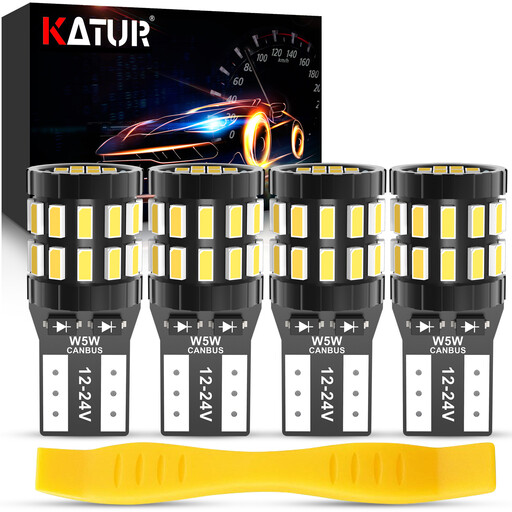
Why we chose it : Ideal for perfectionists who want to modernise their car's lighting down to the smallest detail. This set of W5W bulbs is perfect for replacing the yellowish lights in the cabin (dome lights, map lights), parking lights, or license plate with a pure, modern LED white.
The "Canbus Error Free" compatibility is crucial here. Even these small bulbs are often monitored by the OBC. This kit therefore guarantees an upgrade without the dreaded error message—a very common pitfall with auxiliary lighting.
Highly versatile (compatible with T10/W5W sockets) and incredibly simple to install. The 360-degree lighting ensures a perfectly uniform light with no dark spots.
We have put together a complete selection of products that meet our selection criteria and safety standards.
Regulations on this are very clear. To be used on public roads, a replacement LED bulb must have European approval (an ECE mark, such as E1, E9, etc.). Furthermore, the beam pattern must be identical to the original to avoid dazzling other drivers. It is the driver's responsibility to ensure their installation complies with the law. When in doubt, it is best to consult a professional or check the official regulations.
It all depends on the age of your vehicle. Generally, cars produced after 2005 are almost all equipped with a diagnostic system that monitors the bulbs. If you install a standard LED, an error light will almost certainly appear on your dashboard. Opting for a Canbus LED bulb model is therefore the hassle-free solution to avoid this problem.
The advertised figures (sometimes over 50,000 hours) are theoretical maximums measured in a lab. In real-world use, the actual longevity depends on one single factor: the quality of the cooling system. A well-designed bulb, with an aluminum heat sink and a good fan, will operate at a controlled temperature and can live up to its promises. Conversely, a low-end model will inevitably overheat and fail long before its time.