
Livraison le jour même ou le lendemain

Qualité garantie

Débloquez vos offres de bienvenue: Livraison GRATUITE | Jusqu'à -80 % | 30 jours d'essai gratuits à JoyPlus
Téléchargez l'application
Driving at night or in poor weather can be stressful when visibility is low. Ageing halogen headlights or end-of-life xenon bulbs often fail to provide the clarity needed to anticipate road hazards. Upgrading to LEDs is the ultimate modern solution to enhance safety while also modernising your vehicle's appearance.
However, the car LED bulb market can be overwhelming. Navigating the different socket types, lumen claims, and compatibility issues makes choosing correctly a crucial task. This guide is here to light the way, offering practical advice and a curated product selection to help you find the right car LED kit for your needs—without the unnecessary marketing jargon.
Before you take the plunge and invest in an LED conversion kit, several technical criteria must be checked to ensure a successful installation and optimal performance.
It all starts with the socket type. This is the non-negotiable first step. The most common references are indicated by a code, such as H1 LED bulb, HB3 LED bulb, or D2S LED bulb for a xenon bulb replacement. You can find this information in your vehicle's owner's manual or, more simply, by inspecting the bulb you need to replace.
The second point to watch for is the multiplexing system (CANbus), found in most modern vehicles. It monitors the proper functioning of electrical components. Since an LED bulb consumes far less power than a halogen one, the onboard computer may interpret this difference as an error and display a warning on your dashboard. The solution? Opt for models labelled "CANbus Error Free" or "error-free," which integrate a resistor to trick the system.
Don't be blinded by the lumen (lm) count! The performance of a car LED headlight isn't just about its raw light output. Colour temperature, expressed in Kelvin (K), is just as important. A value around 6000K to 6500K produces a crisp white light, similar to daylight, which is ideal for better perceiving contrasts and colours.
But the most critical factor remains the quality of the light beam. A poorly designed beam pattern is a double penalty: your visibility is reduced, and you risk dangerously dazzling other drivers. Quality bulbs therefore adopt a "1:1" design, mimicking the original halogen bulb to ensure a perfect, safe beam projection.
No one wants to spend hours in the garage, so ease of installation is a key factor. Plug-and-play models are the most sought-after: they install directly in place of the original bulb, with no need to modify wiring or accommodate an external driver. Remember to check the bulb's dimensions, especially its depth, to ensure it fits inside the headlight housing, where space can be tight.
Finally, an LED's lifespan is directly linked to its cooling system. There are two main approaches: active cooling, which uses a fan (often silent and very fast), and passive cooling ("fanless"), which relies on an aviation-grade aluminium heat sink. Both solutions are effective; the choice will largely depend on the space available behind the headlight housing.
To move from theory to practice, here is our selection of models that tick all the right boxes.
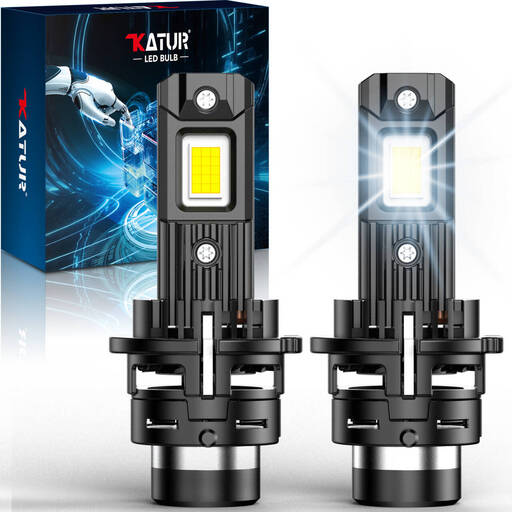
Why this model stands out: Specifically designed to replace D2S xenon bulbs, this model offers a spectacular upgrade in brightness and responsiveness. The manufacturer claims a near-instant start-up (0.01s), eliminating the typical warm-up time of HID bulbs.
Key features:
Who is it for? For owners of vehicles originally equipped with D2S xenon bulbs who want to upgrade to superior LED technology without a complicated installation.
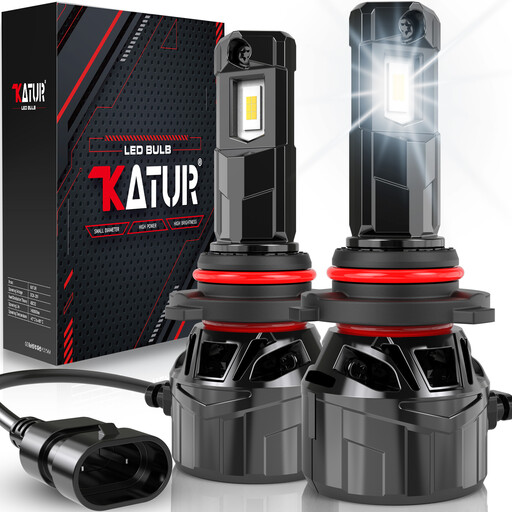
Why this model stands out: This HB3 reference (also known as 9005) is the perfect example of a balance between light output, high-performance cooling, and ease of installation. Its compact 1:1 design allows it to fit into most headlight housings without issue.
Key features:
Who is it for? For drivers looking for a powerful and reliable solution for their HB3 headlights (high or low beams) who want a hassle-free installation.
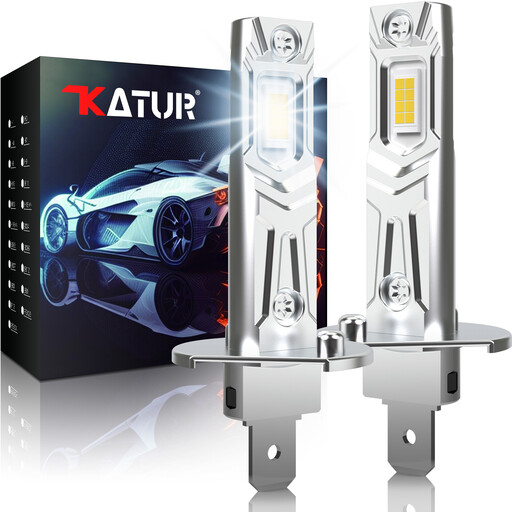
Why this model stands out: The main strength of this H1 LED bulb is its compact and completely silent fanless design. It relies on passive heat dissipation thanks to its 6063 aluminium structure. The result: zero noise and no risk of fan failure.
Key features:
Who is it for? The perfect solution for vehicles with tight headlight access, where a fan-cooled bulb simply wouldn't fit. A sensible choice for those seeking simplicity, reliability, and pin-drop silence.
Our selection highlights highly-rated models, but the range of options is much wider. If you can't find what you're looking for, whether in terms of socket type or specifications, feel free to explore other products.
Discover our complete collection of LED lighting accessories to find the perfect solution for your car.
Regulations on LED conversion kits can be a sensitive topic. In theory, to be 100% legal for use on public roads, replacement bulbs must have specific regional approvals (e.g., ECE marking in Europe). In practice, the vast majority of aftermarket conversion kits do not have this certification. Using them may cause you to fail a technical inspection, especially if the beam is poorly aligned and dazzles other road users. Our advice: always have your headlight alignment checked by a professional after installation.
This is a common but often unfounded concern. A halogen bulb generates significant heat through infrared radiation, which can cause the plastic housing to yellow over time. In contrast, a quality LED bulb generates most of its heat at its base. Its cooling system (fan or heat sink) is specifically designed to dissipate this heat away from the transparent lens of the headlight. Ultimately, its operating temperature is much better controlled and is less harsh on the housing than a halogen bulb's.