
Livraison le jour même ou le lendemain

Qualité garantie

Débloquez vos offres de bienvenue: Livraison GRATUITE | Jusqu'à -80 % | 30 jours d'essai gratuits à JoyPlus
Téléchargez l'application
Replacing old halogen bulbs with LEDs has become a go-to upgrade for many drivers. And for good reason: with the promise of better visibility, a longer lifespan, and a modernised look, the benefits are tempting. The only catch? The market is a real jungle, and the technical jargon can be daunting for the uninitiated.
This guide is here to break down the essential criteria and present our selection of the best models, helping you make an informed choice that's right for your vehicle.
Before you buy, a few technical checks are necessary to ensure perfect compatibility and optimal performance.
Each light on your vehicle (low beams, high beams, fog lights, interior lighting, etc.) requires a specific type of bulb, identified by its base. The most common references are H1, H4, H7, H15, and W5W.
The easiest way? Check your vehicle's manual or remove the original bulb to identify the exact reference. Replacing a halogen bulb with an LED of the same base type is usually a breeze.
On modern cars (generally post-2005), an electronic system called Canbus (Controller Area Network bus) constantly monitors the proper functioning of all equipment, including the bulbs. The problem is that an LED bulb consumes far less power than a halogen one. The Canbus system, not detecting the expected power draw, may interpret this as a fault and trigger a warning on your dashboard.
To avoid this minor inconvenience, simply opt for models labelled "Canbus error-free" (or error free). These integrate a resistor that tricks the onboard computer by simulating the power consumption of a standard bulb. Compatibility guaranteed!
The performance of a car LED kit is measured by two main criteria?:
We have selected a few models that meet different needs, whether it's to improve safety in foggy weather, modernise your interior lighting, or boost the power of your high beams.
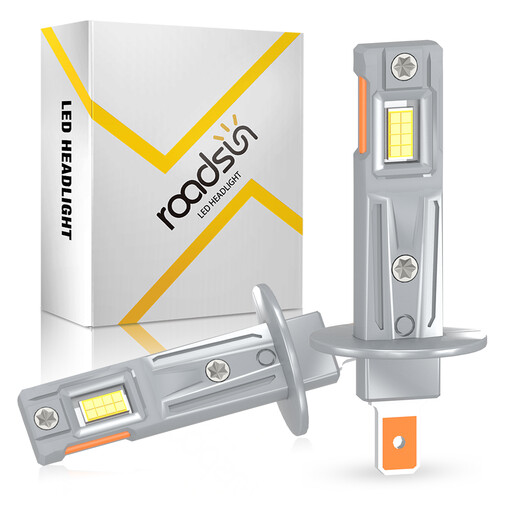
Key features?: This model is specifically designed to perform when visibility is poor. The manufacturer claims a brightness 800% greater than a standard halogen bulb, with a 6000K white light that literally cuts through fog, rain, or snow.
Advantages?:
Who is it for? Drivers who often face foggy areas or severe weather and want to replace their halogen bulbs with a simple and effective solution for their fog lights.
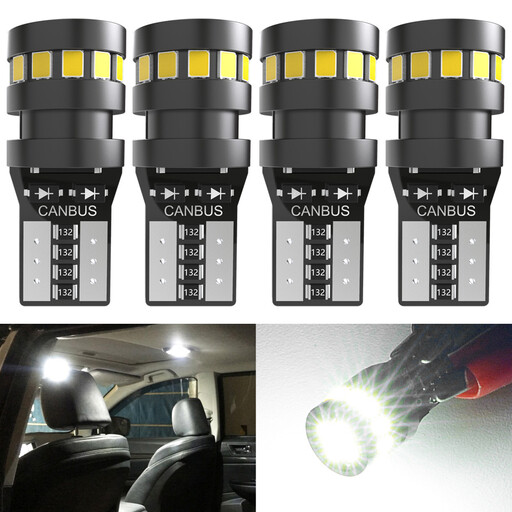
Key features?: Versatility is the name of the game for this W5W LED bulb. Compatible with a multitude of references (T10, 501, 194, 168), it's perfect for giving a modern touch to all your car's interior lighting (dome lights, map lights, glove box) and certain exterior lights (number plate, sidelights).
Advantages?:
Who is it for? For those who want to modernise and standardise all the small light points in their car with a reliable, cost-effective, and ultra-simple solution to install.

Key features?: Dedicated to high beams and daytime running lights, this H15 LED bulb is all about raw power. The manufacturer claims a brightness 600% greater than halogen, with an output of 30,000 lumens per pair. Enough to significantly extend the range of your headlights and see the road as if it were daytime.
Advantages?:
Who is it for? For demanding drivers who want a radical upgrade to their high beams for maximum visibility, and a more modern look for their daytime running lights.
The LED revolution doesn't stop at headlights or interior lights. Want to replace your indicator bulbs for more instant activation and a sharper light? Specific models for that exist too.
? Discover our selection of indicator bulbs
Regulations are very clear on this point. To be used on public roads, headlight bulbs must have European approval (ECE marking). However, most aftermarket LED kits do not have this certification. Their use is therefore, in theory, restricted to track or private land use. It is crucial to check the product's compliance and the current legislation in your region before starting the installation.
As a general rule, if your car was manufactured after 2005, it is highly likely to be equipped with a Canbus system. The most obvious symptom? A "bulb out" warning light appearing on the dashboard right after installing a standard LED. To avoid any issues, choosing a car LED bulb labelled "Canbus error-free" is the simplest and safest solution.
Yes, by a long shot. Unlike a halogen bulb with its fragile, energy-hungry incandescent filament, an LED is a much more robust electronic diode. It generates far less heat, dissipates it more effectively, and has infinitely better resistance to vibrations. The result: its lifespan is measured in tens of thousands of hours, whereas a halogen bulb barely surpasses a thousand.